Samuel Woods
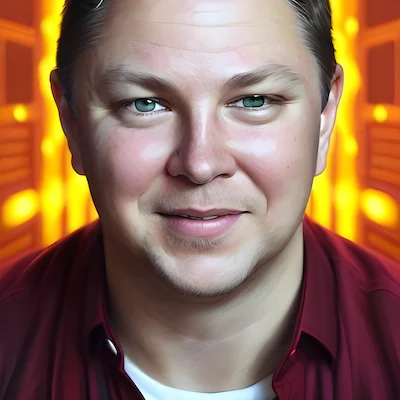
AI creates opportunities for online businesses. Agents and workflows make them yours. I find those openings, build the systems that capture them in my own companies first, and document every one in full, including what breaks.
Every week I send Bionic Business to thousands of online entrepreneurs: the agent architectures, workflows and context engineering I am running in my own business, written the week I run them.
I’ve worked across 37+ markets, from financial services to supplements, and have generated over $217M in revenue for myself and clients. My focus has been copywriting, conversion rate optimization, and growth marketing, which led me to start with machine learning in 2016 and generative AI in 2019. I’m the founder of Daring Robot, an applied AI agent studio, and of Stimulead, where I work as a Fractional Chief AI Officer.
Where to go next
If you want to build this yourself
Start with the Bionic Business roadmap, then autonomous business systems and context engineering in practice.
If you run the business alone or with a small team
Read one person business with AI for the whole system, then the quick intro to AI agents for online businesses to pick your first build.
If you’re a marketer or copywriter
I have spent a decade on conversion copywriting and Copywriting & Persuasion collects the rest.
The marketing books, broken down
Full summaries of the books worth reading. Every law, every principle, not a selection.
- The 22 Immutable Laws of Marketing: all 22, with what each one means now
- Great Leads: the six ways to open a sales message
- Pre-Suasion: 30 principles from Cialdini
- Cashvertising: Whitman on why people buy
- Words That Work: Luntz on language that lands
- Buyology: what brain scans said about buying
Browse by topic
- AI Agents
- AI Marketing
- AI Automation & Operations
- AI Models & Prompting
- Customer & Market Research
- Sales & Revenue
- Copywriting & Persuasion
Latest writing
- How to Turn an SOP Into an AI Agent
- How to Tell If Your AI Agent Is Working
- How I Built an AI Marketing Campaign Generator That Works
- How to Learn Marketing Automation the Right Way
- AI Market Forecast Playbook for Founders and Marketers
- Email Marketing Performance Metrics That Actually Matter
About Sam Woods
I build AI systems for online businesses and judge them by the revenue they move. That work has covered 37+ markets, including ecommerce, SaaS, supplements, health and financial services, and has produced more than $217 million in documented client revenue.
It started in conversion copywriting and funnels. Over a decade I built my own methods for growing online businesses, along with proprietary copywriting and conversion datasets drawn from real campaigns rather than scraped. I started with machine learning in 2016 and generative AI in 2019, which meant writing production prompts and fine-tuning models before there was a name for it.
Today most of my building happens at Daring Robot, my AI agent lab. It builds and operates agent-run businesses, and it is where the workflows on this site get tested before I write about them. At Stimulead, the firm I founded in 2012, I work as a Fractional Chief AI Officer, helping companies decide where AI belongs in their marketing and sales and training their teams to run it. What works, and what breaks, goes out every week in Bionic Business.
More about me and how to verify my profiles.
Get Bionic Business
Goes out weekly, to thousands of online entrepreneurs. Agent workflows and architectures that are actually running, with the failures included.