
Most “top AI content tools” lists are useless because they rank software like you're buying kitchen appliances. You're choosing a force multiplier. A bad choice gives you faster mediocre content. A smart choice gives you a repeatable system your competitors can't match.
I've been deploying AI in businesses since 2016, and I've worked with generative AI since 2019. The pattern is always the same. Teams obsess over features, then ignore workflow design, governance, and verification. That's why they produce more content and still lose.
The advantage comes from matching the tool to your growth stage, your team structure, and the bottleneck that's blocking revenue right now, more than from the tool itself. In practice, that might mean brand governance, SEO execution, campaign repurposing, CRM-grounded personalization, or creative throughput.
That matters because adoption is already mainstream. Marketing is now a priority area for generative AI adoption at 50% of organizations, and AI adoption in marketing jumped from 21% in 2022 to 74% in 2023 according to the roundup at Sequencr's generative AI statistics overview. The market is moving whether your stack is ready or not.
If you want a broader overview before this list, skim PostClaw's guide to AI tools. Then come back and make an actual buying decision.
Table of Contents
- 1. Jasper
- 2. Copy.ai
- 3. Writer
- 4. Anyword
- 5. Writesonic
- 6. Surfer
- 7. Semrush Content Toolkit
- 8. Grammarly
- 9. HubSpot AI Content Assistant Breeze
- 10. Canva Magic Studio
- Top 10 AI Content Tools: Core Features Comparison
- Your Next Move Is Not About the Tool
1. Jasper
If you need on-brand output at scale, Jasper is one of the strongest picks in this category. I don't put it at the top because it's flashy. I put it there because it's built for marketing operations rather than one-off prompting.
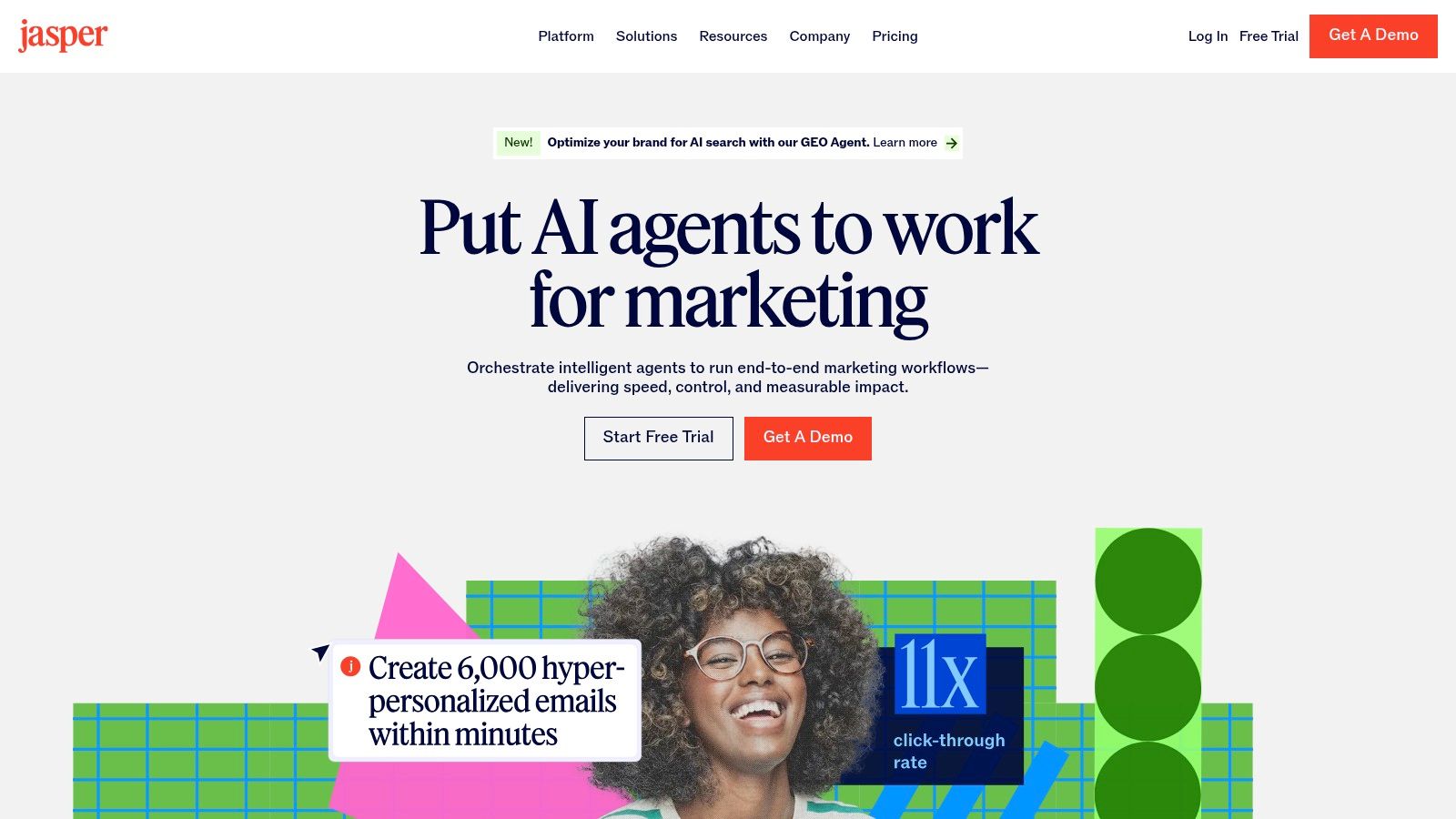
Jasper gives you a structured environment for long-form drafting, brand voice control, reusable agents, and programmatic production through Jasper Grid. That combination matters when your problem is “produce campaigns across channels without tone drift and process chaos” rather than “write one blog post.” You can review the platform at Jasper.
Where Jasper wins
I recommend Jasper for brands that already know who they are. If your messaging is loose, your ICP is fuzzy, and your offer positioning changes every month, Jasper won't save you. It will just help you scale inconsistency faster.
Its real edge is governance. Multi-model flexibility, enterprise controls, and a privacy posture that doesn't train models on customer data make it easier to deploy across teams without turning content ops into a compliance argument.
A practical rule: use Jasper when your bottleneck is consistency across campaigns, not raw ideation.
There's a trade-off. Some advanced capabilities consume credits, so finance and ops need to watch usage before “cheap automation” turns into a messy monthly surprise. I also wouldn't use Jasper as your final research authority. AI still produces fictitious references in approximately 18% of cases even with newer models, which is exactly why I treat these systems as junior assistants and not truth engines, as discussed in Optimizely's piece on AI for content research.
If you're a writer trying to use AI without flattening your voice, my framework in AI for content writers will help you get more out of a platform like Jasper.
2. Copy.ai
Copy.ai is for teams that need more output from the same headcount. I use it when the growth problem is execution speed across repeated go to market motions, not high-touch editorial quality.
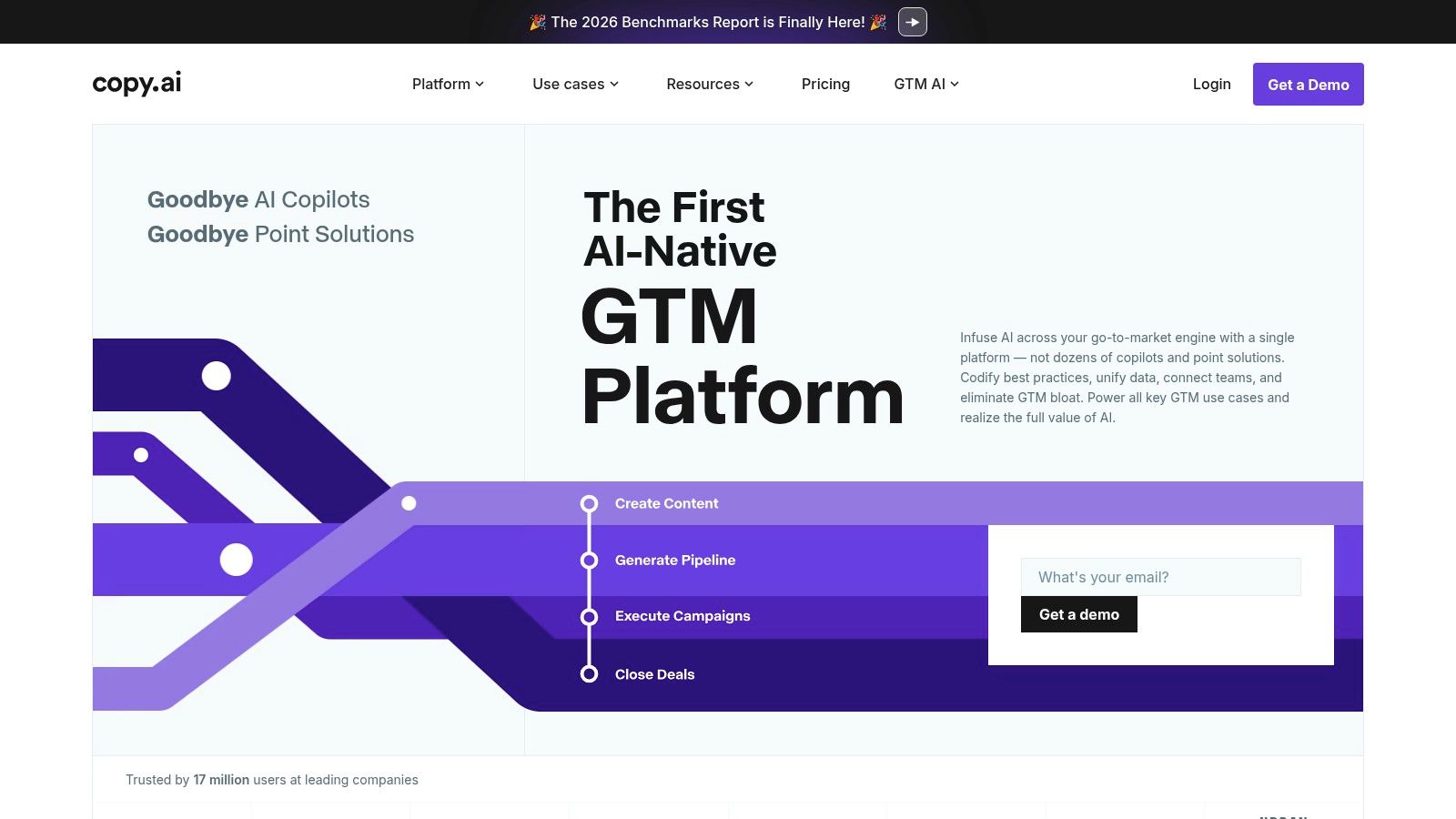
That distinction matters. A lot of AI content tools sell writing help. Copy.ai is more useful as a workflow system for marketing and sales teams that need to turn one input into many assets, fast. Research prompts, outlines, landing page variants, outbound sequences, repurposed social posts, bulk drafts. With integrations and API access, it starts to function like a lightweight GTM operations layer. You can explore it at Copy.ai.
Best fit for go to market execution
I recommend Copy.ai for B2B teams with repeatable campaigns and clear offers. If your positioning changes every quarter or your messaging is still being argued over in Slack, fix that first. This tool will scale your process. It will not fix your strategy.
The biggest mistake I see is using it like a chatbot and stopping there. That leaves a lot of value on the table. The advantage comes from turning proven motions into repeatable systems your team can run every week with less manual work. If you want a stronger framework for that, my guide to using AI for content creation as an operating system lays out the approach.
Here's how I'd deploy it.
- Start with one revenue-linked workflow. Build a single motion tied to pipeline, such as webinar to recap blog to email follow-up to LinkedIn posts.
- Put one person in charge. Someone needs to own prompts, QA, usage, and workflow updates as offers and messaging evolve.
- Keep human review on high-risk claims. Product accuracy, customer proof, legal language, and competitive comparisons still need a human editor.
Copy.ai gets stronger as your process gets clearer.
That's why I like it for demand gen, content ops, and sales enablement teams that already know what good output looks like. They can codify it, reuse it, and produce more without adding process chaos.
The trade-off is planning and control. Credit-based workflow usage can get messy once multiple teams start automating at once, and the writing quality is not the main reason to buy it. Buy Copy.ai if your goal is throughput and repeatability. If your goal is governance, strict brand control, or compliance-heavy review, I'd rank Writer and Jasper higher.
3. Writer
Writer is the tool I recommend when content mistakes create real business risk. If you operate in a regulated category, sell to large companies, or run content across several functions, governance is part of the revenue engine.
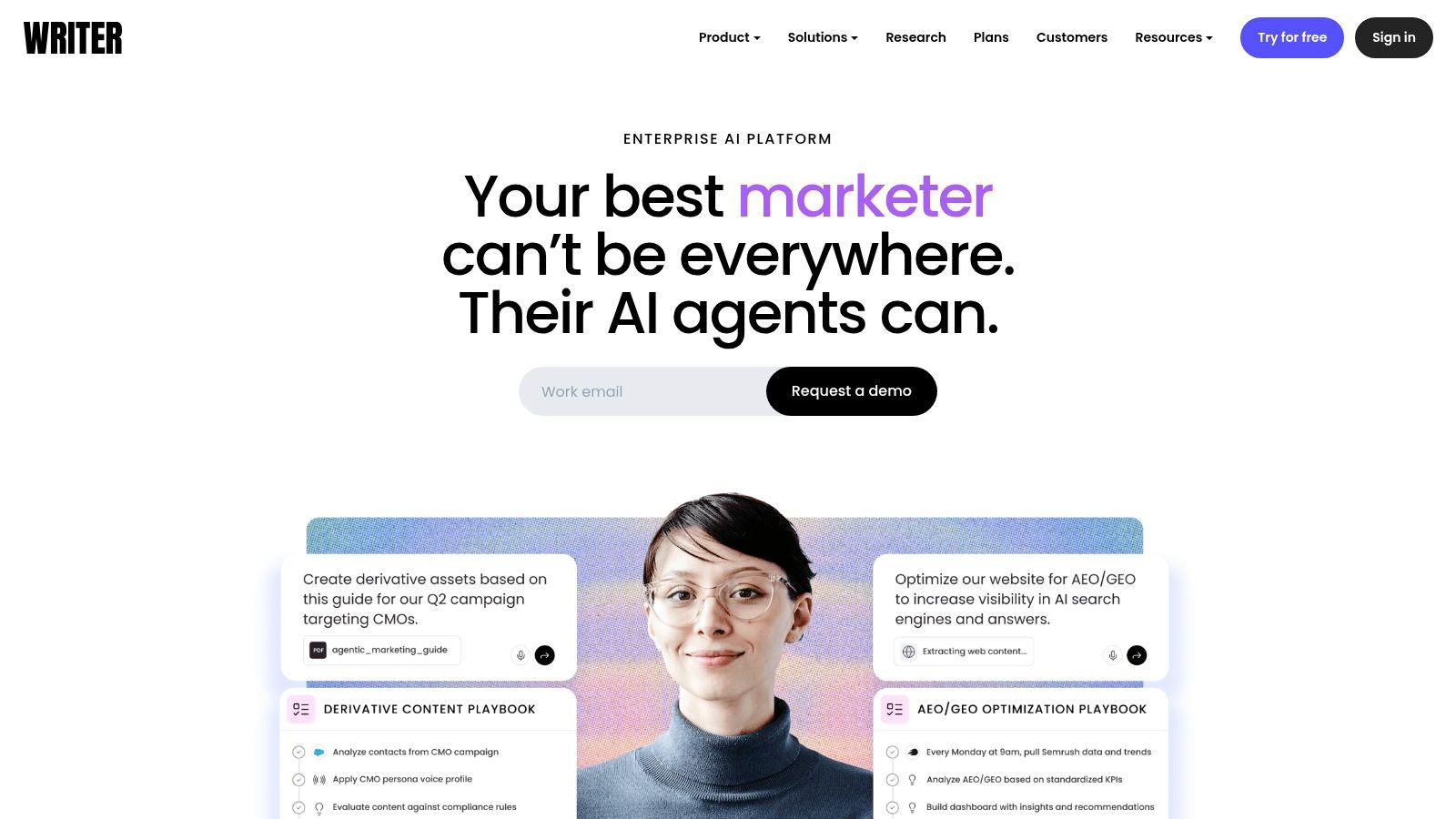
Writer is built for control. You get brand rules, terminology management, approval flows, role-based permissions, knowledge connections, and support for building AI agents around internal processes. That matters because enterprise AI adoption is shifting from experimentation to governed deployment, a trend Writer highlights in its enterprise generative AI research. I see the same pattern with clients. The companies that win with AI standardize judgment instead of simply generating more content.
That is why I frame Writer as content infrastructure rather than a writing app.
If you treat it like a faster blank page, you will overpay. If you use it to enforce messaging discipline across marketing, product marketing, customer success, legal, and sales, it can reduce review cycles, cut rework, and lower the risk of publishing claims your team has to clean up later. That is a stronger strategic outcome than raw output volume.
Writer fits a specific operating model:
- It fits larger teams with legal review, strict terminology, approval chains, and multiple contributors publishing under one brand.
- It fits poorly for small teams still testing positioning, offers, and voice.
- Its best use is standardizing high-stakes workflows such as product launches, regulated content, executive communications, and sales enablement assets.
I would buy Writer for control, consistency, and scalability. I would not buy it for speed alone.
The trade-off is obvious. Writer usually needs implementation work, owner accountability, and clear policy design before it pays off. That is why I pair it with a defined operating model, not ad hoc prompting. My framework for using AI for content creation as an operating system is the right companion if you want to deploy a platform like this without creating another layer of process clutter.
That is the key decision. Do you need another tool that helps you draft faster, or do you need a governed content system your business can trust at scale? If the second one drives the business, Writer belongs on the shortlist.
4. Anyword
Anyword is a buying decision for teams that treat copy as a revenue variable. I care less about how fast a tool can draft and more about whether it helps a team put stronger messages in market before paid spend, email volume, or sales traffic expose weak judgment.
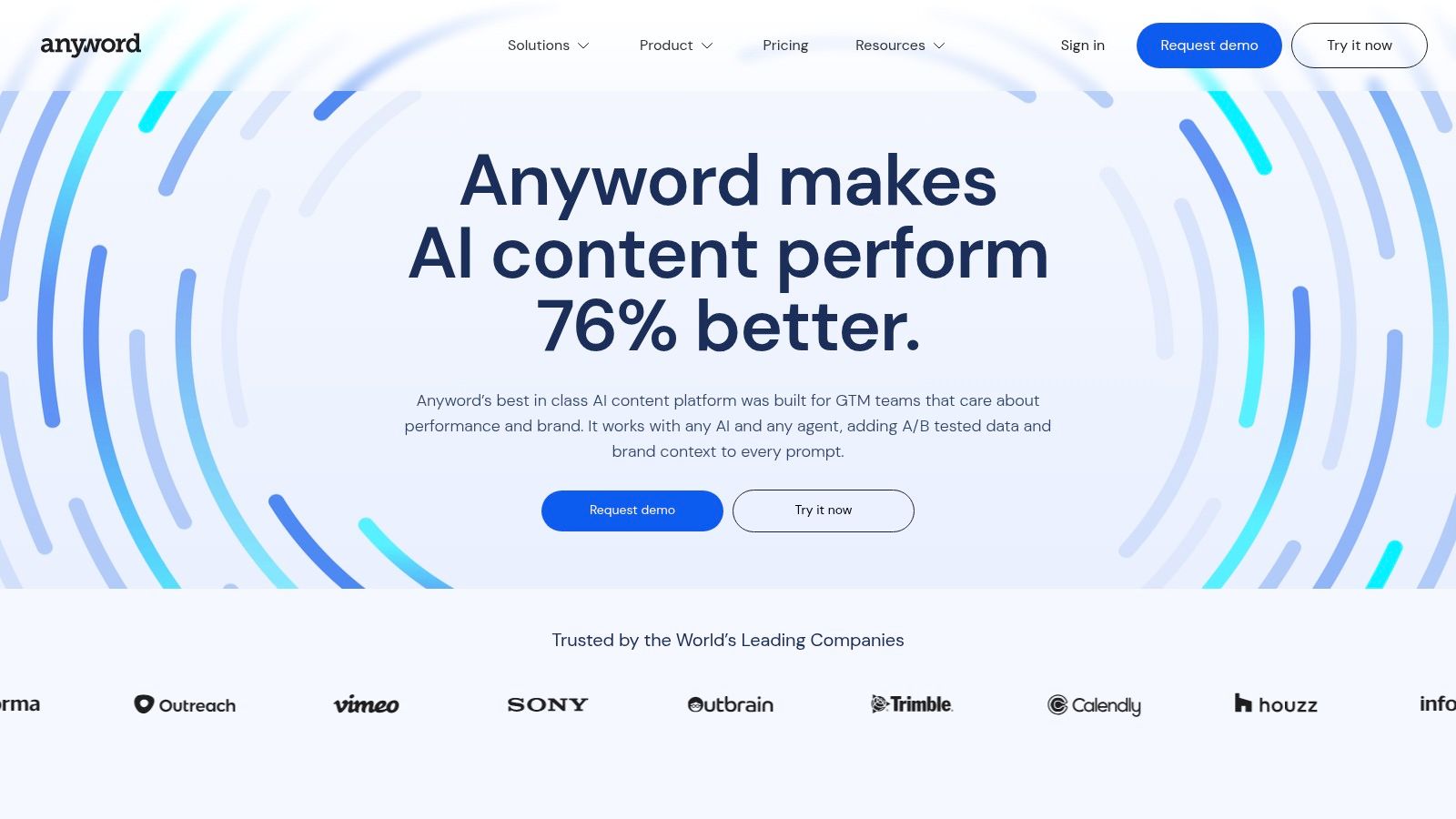
Its value is simple. It generates multiple versions of ads, emails, landing page copy, and other campaign assets, then adds a predictive scoring layer to rank likely performance before launch. You can review the platform at Anyword.
That matters if you run a serious demand generation engine.
I recommend Anyword for teams with real traffic, real budget, and enough conversion data to make message testing worth operationalizing. In that environment, copy selection stops being a creative preference and becomes a performance decision. The platform is strongest when a small lift in click-through rate, conversion rate, or email response has an immediate effect on pipeline economics.
This also makes it a useful fit for operators already evaluating SERP API solutions and broader go-to-market infrastructure. The pattern is the same. Mature teams win by building tighter feedback loops, not by adding another generic writing app.
I'd buy Anyword for message optimization under pressure. I would not buy it to figure out what the market wants in the first place.
That distinction matters. Predictive scoring can help your team choose among variants, but it cannot fix weak positioning, an undifferentiated offer, or poor customer insight. If the strategic inputs are wrong, the tool will help you scale polished mediocrity faster.
I also would not make Anyword the center of a long-form content operation. It is better suited to conversion-oriented assets where testing speed and message iteration drive measurable outcomes. That gives it a clear role. Use it to improve high-frequency marketing decisions after your positioning is clear, your channels are working, and your team needs sharper copy choices at scale.
5. Writesonic
Writesonic is one of the more practical all-in-one choices if your content operation sits at the intersection of writing and search visibility. That matters more now because publishing content and being visible inside AI-driven search surfaces are no longer the same thing.
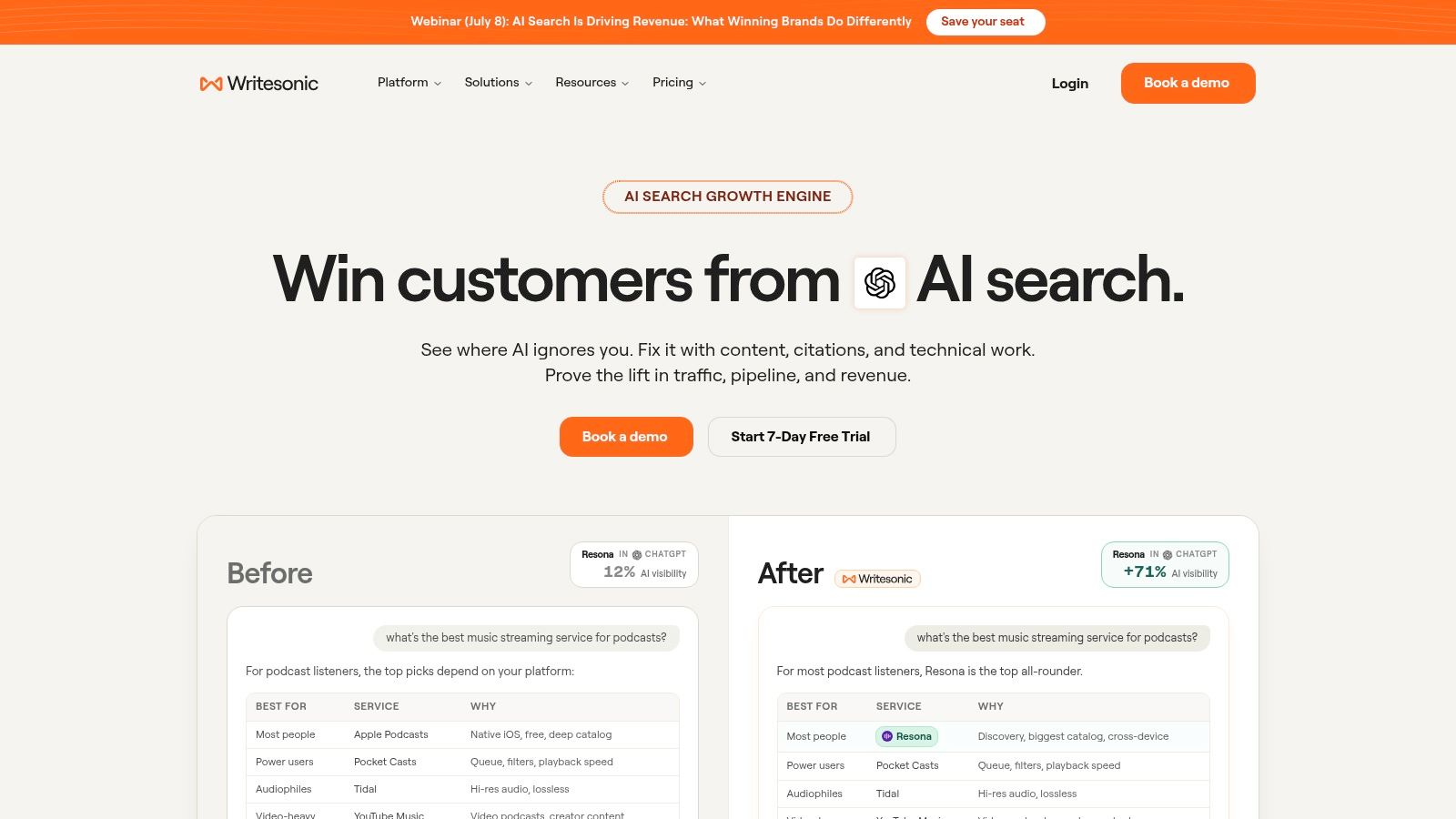
The platform combines article generation, optimization, technical and on-page audits, internal linking support, and AI search visibility tracking across surfaces like Google AI Overviews and ChatGPT. That makes it more operationally useful than a drafting-only tool. You can review it at Writesonic.
Why I'd choose it
The big appeal is consolidation. If your team is juggling a writer, an optimizer, a basic audit tool, and a separate process for monitoring AI visibility, Writesonic can reduce stack sprawl.
That said, I want to be blunt about citations. “Has citations” doesn't mean “is accurate.” AI-generated research still needs verification by a human who clicks links and validates claims. That's one reason I push teams toward a disciplined workflow like the one I explain in AI for content creation.
The broader market tailwind is real. The global AI content creation tool market reached USD 0.95 billion in 2025, is projected at USD 1.1 billion in 2026, and is forecast to reach USD 3.9 billion by 2036, with a CAGR of 13.6% from 2026 to 2036 according to Future Market Insights on the AI content creation tool market. Tools that blend production and optimization are growing because teams want fewer handoffs.
The trade-off is cost layering. Higher-tier search visibility and audit features push the value up only if you'll use them. If you only need first drafts, there are cheaper options.
6. Surfer
Surfer is one of my favorite constraint tools, though far from my favorite drafting tool. That distinction matters.

Surfer helps writers work against search reality instead of personal preference. Its editor, content scoring, topical planning, and SERP-informed guidance create useful boundaries. For SEO teams, that often means fewer opinion-driven debates and more executable briefs. The product is at Surfer.
Where Surfer is strong
I recommend Surfer when your team already has a content engine but struggles with SEO discipline. Agencies, in-house SEO teams, and content managers who need writers to hit structural targets usually get value fast.
Surfer also fits a bigger workflow pattern. ChatGPT reportedly has 66% adoption among content professionals globally for tasks like outlines and rewrites, according to Kontent.ai's review of AI tool adoption. That combination makes sense to me. Use a general model for ideation and drafting, then use Surfer to force optimization discipline before publishing.
- Use it for briefs. It's excellent at aligning writers before the first draft.
- Use it for refreshes. Older pages benefit from structured optimization.
- Don't use it blindly. Search similarity can create safe, forgettable content.
Surfer helps you match what already ranks. It does not help you become memorable there.
That's the trap. If your team follows SEO recommendations without injecting original proof, sharp positioning, or audience language, you'll publish competent content that nobody remembers. Good rankings with weak differentiation won't build a moat.
7. Semrush Content Toolkit
Semrush Content Toolkit is a practical choice for teams already living inside the Semrush ecosystem. I like it because it cuts down context switching, and context switching is one of the silent killers of content velocity.
The toolkit ties topic discovery, drafting, optimization, and publishing into the same environment many SEO teams already use for keyword and competitor work. It is efficient, if unglamorous. You can review the offer at Semrush Content Toolkit.
Best for operators already living in Semrush
If your team already trusts Semrush for planning, this toolkit is a logical extension. It keeps search data and writing workflow closer together, which helps content leads move from topic to draft to publish with less friction.
I'd especially consider it if your operation depends on competitor tracking and SERP analysis. In that case, pairing editorial execution with stronger data extraction matters, and that's why teams evaluating workflow depth often also spend time evaluating SERP API solutions.
The downside is packaging complexity. Semrush can feel modular in a way buyers either love or hate. Before you buy, confirm exactly what's included, what's an add-on, and how your writers will use it day to day.
I'd choose it for operational efficiency inside an SEO-first team, and look elsewhere for pure creative excellence.
8. Grammarly
Grammarly earns its place in a serious AI content stack for one reason. It reduces preventable quality failures at scale.
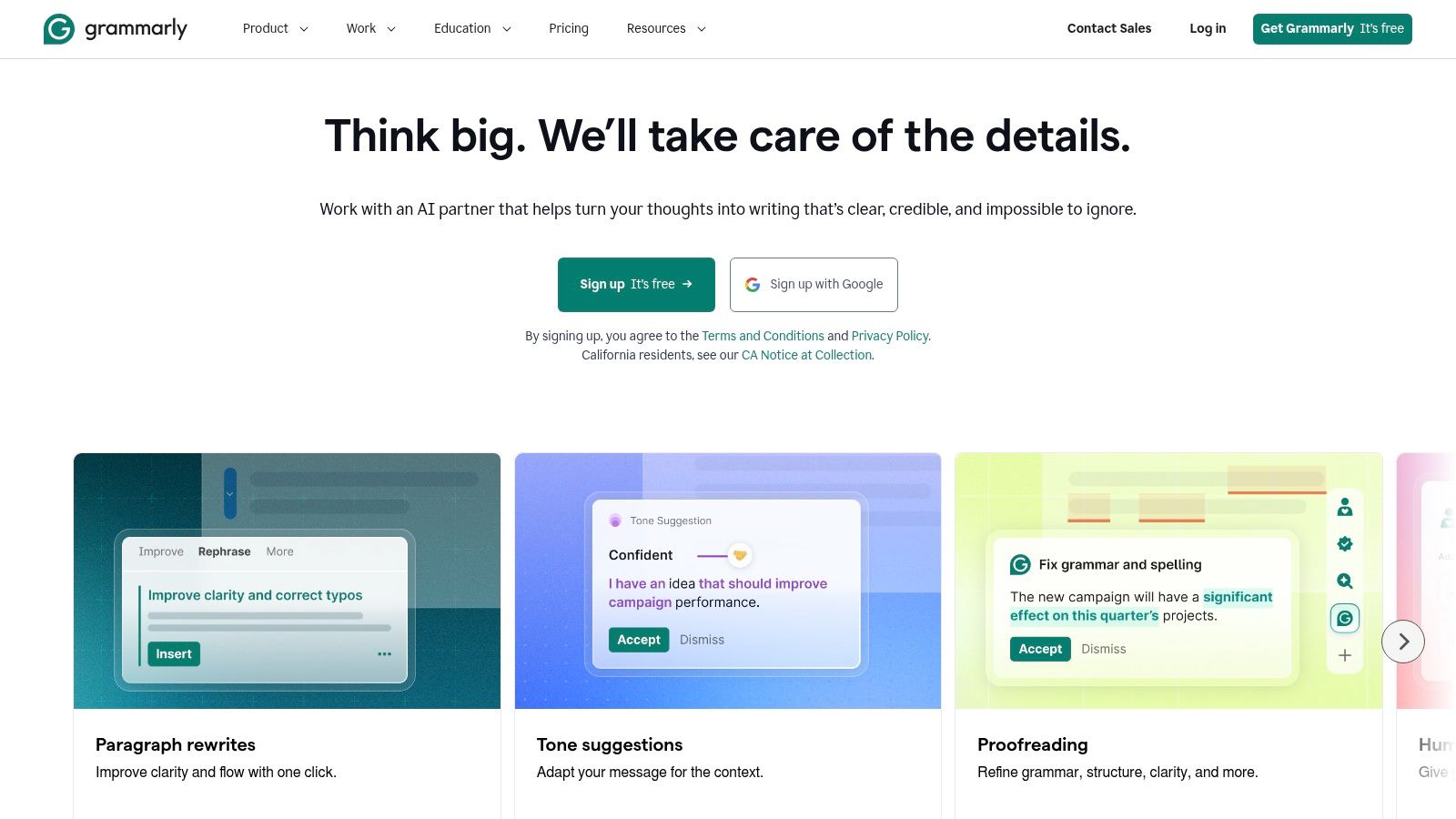
I do not buy Grammarly for ideation or differentiation. I buy it to protect output quality once strategy, messaging, and draft production are already in motion. That distinction matters. Teams that expect Grammarly to create original market insight will be disappointed. Teams that use it to enforce clarity, correctness, and brand consistency across hundreds of daily touchpoints usually get fast value. You can access it at Grammarly.
What Grammarly Is For
Grammarly works best as a final-mile editing layer across email, docs, browser inputs, Slack, and shared workflows. That broad coverage is the product. If writers have to leave their workflow to get help, adoption drops. Grammarly shows up where the work already happens, which is why it sticks.
I recommend it for distributed marketing teams, RevOps-heavy organizations, and any company pushing a high volume of customer-facing copy through multiple hands. As noted earlier, AI is already saving marketers meaningful time. Grammarly captures part of that gain by tightening review cycles and reducing avoidable edits from managers, legal reviewers, and brand leads.
- Its best use is final review before content goes live or leaves your organization.
- It is not a fit for primary research, original thought, or category positioning.
- For a team, brand tones, style guidance, and shared snippets keep output consistent across channels.
My view is simple. Grammarly will not give you a competitive angle, but it will stop weak execution from diluting one. In a market flooded with AI-written copy, that quality control layer protects trust, speed, and brand discipline.
9. HubSpot AI Content Assistant Breeze
Buying another writing tool will not fix a broken content operation. If your team already runs on HubSpot, though, Breeze can turn the system you already pay for into a faster content engine because the prompts, outputs, and customer context live in one place.
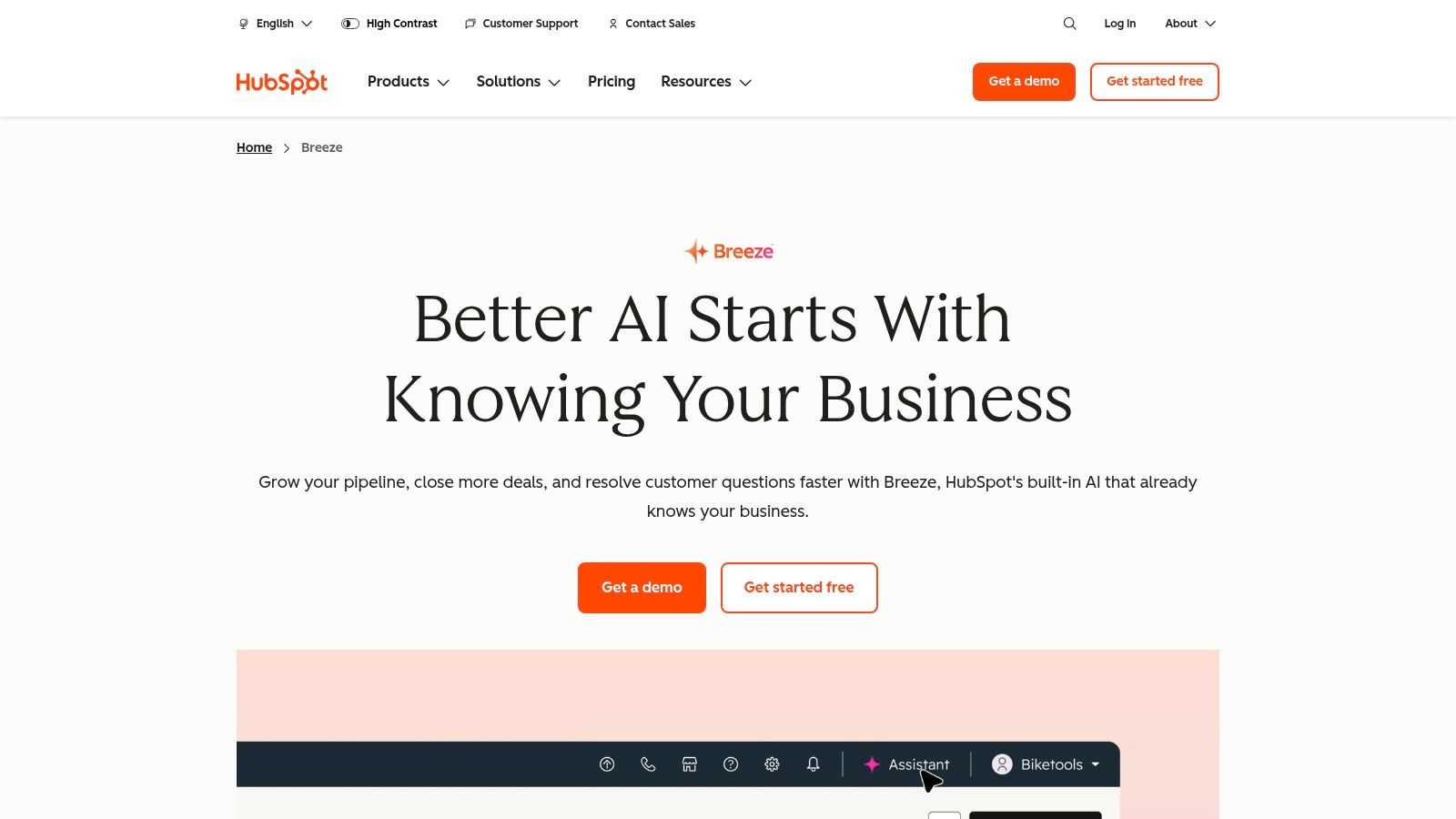
HubSpot AI embeds drafting, rewriting, summarization, and workflow support across blogs, emails, landing pages, and the broader HubSpot platform. That matters more than another standalone generator with nicer prompts. I care about speed to publish, cleaner handoffs, and tighter alignment between content and pipeline. You can use it at HubSpot AI.
Where HubSpot AI Has the Edge
I recommend Breeze when CRM context should directly shape what your team publishes. That includes lifecycle emails, nurture sequences by segment, sales enablement content tied to deal stages, support content based on real ticket themes, and campaign assets built around actual account activity.
The strategic value is simple. Your writers, marketers, and revenue teams stop wasting time moving data between systems and rewriting the same message for different channels. That usually produces better execution than a standalone tool because the content starts closer to the customer record.
As noted earlier, AI use in marketing is widespread. Everyone has access to generation. The primary advantage is deployment inside the systems that already run demand gen, sales follow-up, and customer communication.
The closer content creation sits to customer data, the easier it is to personalize at scale without creating workflow drag.
There is a clear trade-off. Breeze gets stronger as your dependence on HubSpot grows. Pricing, credits, permissions, and feature access all tie back to your HubSpot plan. I would not buy HubSpot just to get AI writing. I would use Breeze aggressively if HubSpot is already your operating system, because that is how you turn an existing platform into a revenue asset instead of another software bill.
10. Canva Magic Studio
Canva Magic Studio is what I recommend when your bottleneck is visual throughput. Not art direction. Throughput.
It gives non-designers a fast path to social graphics, one-pagers, ads, decks, short-form copy, and lightweight image edits inside a familiar design environment. Brand kits and templates do a lot of the heavy lifting. You can use it at Canva.
Where Canva creates speed
This is the tool for marketing teams that need to ship creative every week without waiting on a designer for every asset. Campaign support, social packs, event promos, lead magnet visuals, sales one-pagers. Canva makes those workflows easier to delegate.
It also matches broader operational reality. Global companies now use AI widely in daily operations, with 78% doing so and 56% using it for customer service automation, according to Exploding Topics on companies using AI. Canva fits the same shift toward embedded AI in everyday execution. Not specialized magic. Practical advantage.
I wouldn't use Canva Magic Studio for high-end brand campaigns where originality is the whole game. Template gravity is real. Teams can start looking like everyone else fast.
Still, for speed and accessibility, it's hard to beat.
- Choose Canva when you need more assets shipped by more people.
- Avoid Canva when premium differentiation depends on custom creative direction.
- Watch for AI allowances and add-on costs if your team uses generative features heavily.
Top 10 AI Content Tools: Core Features Comparison
| Tool | Core focus | Key features | Best for / Target audience | Pricing model / Cost note | Standout advantage |
|---|---|---|---|---|---|
| Jasper | Marketing‑focused long‑form & programmatic content | Canvas editor, brand voice controls, no‑code agents, Jasper Grid, LLM‑agnostic governance | Marketing teams & enterprises needing brand governance at scale | Subscription + credits for advanced features; monitor usage | Mature brand‑voice controls + programmatic at‑scale output |
| Copy.ai | GTM ideation & workflow automation | Chat with model choice, No‑code Workflows, 20+ integrations, API | GTM teams, solo creators to mid‑sized teams automating pipelines | Subscription with Workflow credits; usage forecasting needed | Reusable multi‑step Workflows for end‑to‑end automation |
| Writer | Enterprise brand governance & compliant content ops | Org guardrails, WRITER Agent orchestration, Studio for datasets, optional self‑hosting | Regulated industries & enterprises requiring compliance | Enterprise contracts / custom pricing and scoping | Strong compliance, governance, and deployment flexibility |
| Anyword | Performance‑driven copy with prediction layer | Real‑time performance predictions, blog wizard, messaging bank, templates | Paid media and conversion‑focused teams optimizing CTR/CVR | Tiered plans with prediction quotas; higher tiers for heavy testing | Proprietary performance scores to pick higher‑performing variants |
| Writesonic | All‑in‑one content, SEO & AI search visibility | AI articles with citations, content optimizer, SEO audits, AI search tracking | Brands needing integrated writing + SEO + AI visibility workflows | Tiered plans; GEO tracking and audits on higher tiers | Consolidates writing, SEO audits, and AI‑search tracking |
| Surfer | SEO content intelligence & on‑page optimization | NLP‑driven Content Editor, AI Articles, Topical Maps, add‑on rank tracking | SEO teams and agencies scaling briefs and on‑page optimization | Subscription with optional add‑ons; plan limits apply | Writer‑friendly SEO scoring and topical content planning |
| Semrush Content Toolkit | SEO‑driven content creation tied to Semrush data | Topic discovery, AI drafts informed by Semrush, SEO scoring, GSC integration | SEO teams already in Semrush wanting topic→publish workflow | Bundled or standalone; pricing/bundling varies, verify at checkout | Tight coupling with Semrush datasets for competitive content insights |
| Grammarly | Writing quality, clarity & final‑mile editing | Real‑time grammar/tone, rewrites, style guides, cross‑app integrations | Teams and editors needing consistent polish across apps | Freemium + paid tiers for generative/admin features; enterprise plans | Ubiquitous cross‑app coverage and strong final‑mile polish |
| HubSpot AI (Breeze) | CRM‑grounded AI generation & task agents | Content writer for HubSpot hubs, Breeze agents, governance docs, CRM integration | HubSpot customers seeking contextual AI inside CRM workflows | Tied to HubSpot subscriptions and credit usage | Native CRM context and governance within HubSpot ecosystem |
| Canva Magic Studio | Rapid visual content + AI copy for creatives | Magic Write, generative image/video edits, Brand Kits, templates | Non‑designers and marketing teams producing social & ad creatives | Freemium with AI allowances; AI Pass add‑on for heavy users | Fast path from idea to publish‑ready visual creative with templates |
Your Next Move Is Not About the Tool
The mistake I see most often is treating AI content tools like isolated apps. Buy one for writing. Buy one for SEO. Buy one for visuals. Then hope velocity alone creates growth. It won't.
Producing more content faster is the wrong goal. Build a bionic marketing system that collects market intelligence, reasons through it, and acts with speed and precision. Content is just one output of that system. If the system is weak, faster output only scales confusion.
That's why selection has to start with the bottleneck. If your issue is brand inconsistency, Jasper or Writer makes sense. If your issue is GTM repetition, Copy.ai is stronger. If you need conversion-focused experimentation, Anyword deserves attention. If search visibility is the bottleneck, Writesonic, Surfer, or Semrush Content Toolkit can carry more weight. If your team lives in HubSpot, native AI grounded in CRM context is usually the smarter move. If creative production is slow, Canva is the obvious fix. Grammarly then cleans up the final mile.
I also want you to stay disciplined about research quality. AI can help surface patterns, draft structures, and repurpose material. It should not be treated as a definitive source. One of the most underserved problems in this space is the gap between AI-generated research and verifiable evidence. If your team isn't validating claims, checking links, and confirming proof before publication, you're building a fragile content engine.
There's another strategic layer many teams overlook. Differentiation. Generic prompting produces generic content. The stronger move is to use AI to analyze competitor sameness, pull raw customer language from forums and communities, and identify angles your market has underexplored. That's where defensibility starts: better inputs and sharper judgment count for more than “better prompts.”
The market for these tools is expanding quickly, and adoption across marketing teams is already widespread. Your competitors are using AI content tools. That part is no longer the edge. The edge comes from how you wire the tools together, where you insert human review, how you govern claims, and how fast your team turns insight into execution.
Pick the tool that strengthens your current bottleneck. Then design the system around it. That's how you stop experimenting with AI and start using it to out-execute your market.