Your competitors aren't waiting for your quarterly review deck. They're using AI to watch your pricing page, your ad shifts, your hiring moves, your reviews, and the language your buyers use when they compare vendors. While you're still stitching screenshots into slides, they're making decisions on live signals.
That's the essence of AI tools for competitive analysis. Speed matters, but synthesis matters more. Miro notes that AI can track competitor website changes, new content, SEO rankings, ads, social engagement, customer reviews, job postings, patent filings, partnership announcements, and investor communications at the same time, which makes near real-time detection practical instead of relying on periodic reports (Miro on AI competitive analysis).
The market has already moved. By 2024, competitive intelligence software reached about $1.2 billion globally, with AI-driven tools accounting for over 35% of new enterprise deployments and the category growing at a 22% annual rate from 2020 to 2024. The same verified market summary says machine learning automation cut manual research time by an estimated 60% and that 68% of marketing leaders prioritized AI-powered competitive analysis tools in 2023, up from 34% in 2020 (verified market summary). I'm not interested in hype. I'm interested in whether you can see market shifts faster, respond faster, and take revenue before your competitors do.
If you want the bigger operating model behind this, read Busylike's agentic marketing insights.
Table of Contents
- 1. Samuel Woods
- 2. Similarweb
- 3. Semrush
- 4. Ahrefs
- 5. Crayon
- 6. Klue
- 7. Kompyte
- 8. AlphaSense
- 9. Contify
- 10. SpyFu
- Top 10 AI Competitive Analysis Tools Comparison
- The Real Advantage Comes From the System
1. Samuel Woods
If you want software only, skip me. If you want a system that turns AI into a competitive advantage, I would recommend starting with this.
I'm Samuel Woods. I've been working with ML since 2016 and generative AI since 2019. I skip the dashboard tourism. I help founders, small businesses, and agencies build bionic marketing systems that combine human judgment with AI agents so you can move faster than competitors without losing strategic control.
Why this is different
Most AI tools for competitive analysis stop at monitoring. That's useful, but incomplete. You still need prompts, workflows, context engineering, review loops, distribution logic, and clear ownership so intelligence turns into changes in positioning, content, sales messaging, and campaigns.
That's where my work fits. I publish implementation-first playbooks, practical guides, and hands-on frameworks for using ChatGPT, Claude, Gemini, and open-source models in real business workflows, and I build these systems with clients. The emphasis is simple. Faster market intelligence, better messaging, more output, tighter feedback loops, and stronger conversion performance.
My practical rule: if you can't turn competitor signals into a revised landing page, a sharper sales objection response, and a campaign brief within the same week, your intelligence process is too slow.
I also care about the part often overlooked. Governance. The U.S. Chamber of Commerce advises businesses to take a “safety first” approach, avoid sharing privileged or nonpublic information with AI tools, and verify AI-generated results before using them in decisions (U.S. Chamber guidance on AI competitive analysis tools). That's operational reality.
Best fit and trade-offs
I'm the right choice if you need more than a subscription. Especially if you want to design agent workflows across tools, ground copy in analytics and conversion data, and preserve brand voice while scaling output.
- Startups and small businesses get direction instead of a sprawling rollout.
- Agencies get reusable research systems across clients instead of one-off prompting.
- Owners who run their own marketing get AI embedded into planning, content, research, and decision-making.
There are trade-offs. Public pricing isn't listed. Client case studies and awards also aren't publicly listed on the site. Engagements are scoped case by case, so expect a custom proposal based on your team, data maturity, and goals.
My recommended agent recipe
Use one SEO data source, one broad signal source, one LLM, and one distribution layer. Then wire the workflow like this:
- At signal intake, pull competitor page changes, keyword gaps, reviews, and ad shifts into one queue.
- In the context layer, give the model your ICP, offer, positioning, objections, and current funnel goals.
- In the decision layer, have the model label each signal as ignore, monitor, test, or respond.
- In the execution layer, route outputs into sales battlecards, content briefs, landing-page revisions, and Slack alerts.
That's how you stop “research” from dying in a folder.
2. Similarweb
A competitor starts gaining share in a market you thought you understood. Paid traffic looks flat in your own dashboard. Pipeline softens anyway. That is the moment Similarweb earns its place.
Similarweb is the tool I recommend when you need a market view of traffic patterns, channel mix, audience behavior, and category shifts. It is built for teams asking bigger questions than keyword rankings. Where is demand moving? Which acquisition channels are carrying the category? Which rivals are winning attention before you see the impact in revenue?
Where Similarweb wins
Similarweb helps you size the field fast. You can benchmark site traffic, study referral sources, compare audience overlap, spot app and web trends, and get directional answers before you burn weeks stitching reports together. For strategy work, market entry, and planning big bets, that speed matters.
It also fits well in a broader research system. If you are building a stack for category analysis, Similarweb should sit on top of a sharper SEO platform and a workflow layer that turns findings into actions. For teams building that kind of system, this guide to AI tools for market research is the right companion.
One sentence summary. Similarweb is strongest when the question is market share, channel movement, or audience behavior across competitors.
Best fit and trade-offs
I recommend Similarweb for startups entering a crowded category, SMBs expanding into new segments, and agencies producing market briefings for clients who care about revenue impact more than rankings. It is especially useful when you need a fast outside-in view of the market before you commit budget.
The trade-off is straightforward. Similarweb gives you estimated external intelligence, not your source-of-truth analytics. That makes it powerful for pattern recognition and prioritization, but weaker as a stand-alone tool for hands-on SEO execution or content production.
Use it in the right stack:
- If you run a startup, pair Similarweb with Semrush or Ahrefs, plus an LLM that turns competitor movement into weekly actions.
- If you run a small business, use it for quarterly market reviews, channel reallocation decisions, and competitor benchmarking across regions.
- If you run an agency, use it as the market-intelligence layer, then feed findings into client briefs, battlecards, and campaign recommendations.
My recommended agent recipe
For Similarweb, the best automation play is signal triage.
Set an agent to pull competitor traffic shifts, referral changes, top-page movement, and audience overlap into a weekly report. Then have a model classify each change into three buckets: market shift, channel shift, or competitor execution win. Route only the meaningful items to your strategy, content, or paid work with a recommended response.
That is how Similarweb stops being a dashboard and starts becoming an operating input.
3. Semrush
Semrush is the broadest self-serve stack here for marketers who want competitive research without buying five different tools. If your world includes SEO, paid search, content, and increasingly AI-search visibility, Semrush is a practical choice.
That breadth is its advantage. You can compare domains, inspect keyword gaps, evaluate backlinks, watch paid competition, and work from a platform you can usually adopt without heavy onboarding.
Why Semrush makes this list
Another underserved angle in AI tools for competitive analysis is visibility inside LLM answers, beyond Google rankings or social metrics. Recent coverage points to a shift where teams now track how often models like ChatGPT, Claude, and Perplexity recommend a brand, which makes AI-search share of voice a real competitive surface (Figma resource on AI competitor analysis tools).
Semrush is relevant here because it has pushed beyond standard SEO into AI Visibility reporting. That gives you one place to monitor classic search competition and emerging AI-answer presence.
Best use case
If you're an SMB, in-house growth team, or agency that wants one roof over multiple workflows, Semrush is hard to beat. It's especially useful when you need your content, paid, and SEO work to run from the same competitive picture.
The limitation is simple. Some deeper traffic intelligence sits behind add-ons, and AI-visibility metrics are still newer than traditional SEO KPIs. You'll get value quickly, but you still need human judgment to decide which signals matter.
- All-around marketers get a strong mix of SEO, paid, content, and AI visibility.
- Agencies can standardize repeatable competitor workflows more easily.
- It is less ideal for deep CI programs, where a dedicated CI platform may still be worth it.
You can explore it at Semrush.
4. Ahrefs
Ahrefs remains one of my favorite tools when the competitive fight is happening in search and content. If you need to know where rivals rank, which pages earn links, and where your brand is absent, Ahrefs gets you to the gap quickly.
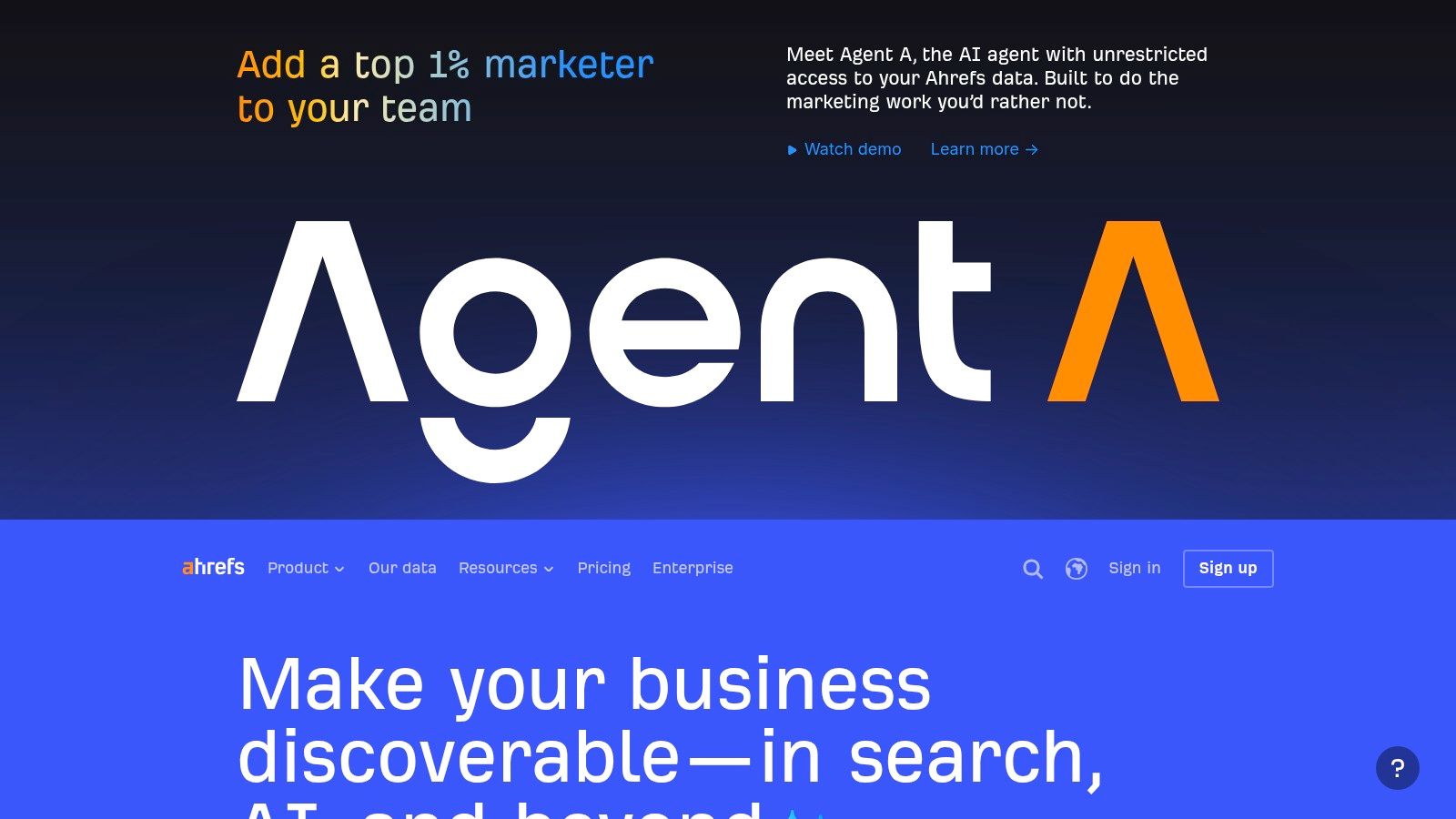
Its core advantage is depth in backlink and organic search intelligence. Newer AI features make packaging insights faster, but its core value is still the underlying dataset and the clarity of its gap analyses.
What I like most
Ahrefs is built for marketers who don't want vague “opportunities.” They want the exact domains, pages, and topics where competitors are winning. Site Explorer and Content Gap remain excellent for that. Brand Radar and agent-style workflows push it further by helping you package insights for Docs, Notion, HubSpot, and other systems.
This is a strong choice when you need search-led competitor analysis that feeds directly into content strategy, digital PR, and landing page planning.
What to watch
Ahrefs isn't the tool I'd buy first for broad market intelligence, social listening, or sales battlecards. It's centered on search and content competition. That's a strength if that's your battleground, and a limitation if you need broad market synthesis across many signal types.
I also wouldn't pretend the AI features replace operator skill. They speed up compilation. You still need judgment on which gaps are commercially worth chasing.
- Use Ahrefs when SEO drives pipeline, because it's built for search-first competition.
- Use it for content gap analysis to find where competitors own demand you don't.
- Skip it as a standalone CI hub, since it won't replace broader sales or market intelligence workflows.
See Ahrefs.
5. Crayon
A competitor changes pricing on Tuesday, updates product positioning on Wednesday, and you hear about both for the first time during a Friday sales call. That is how deals slip. Crayon exists to stop that failure mode.
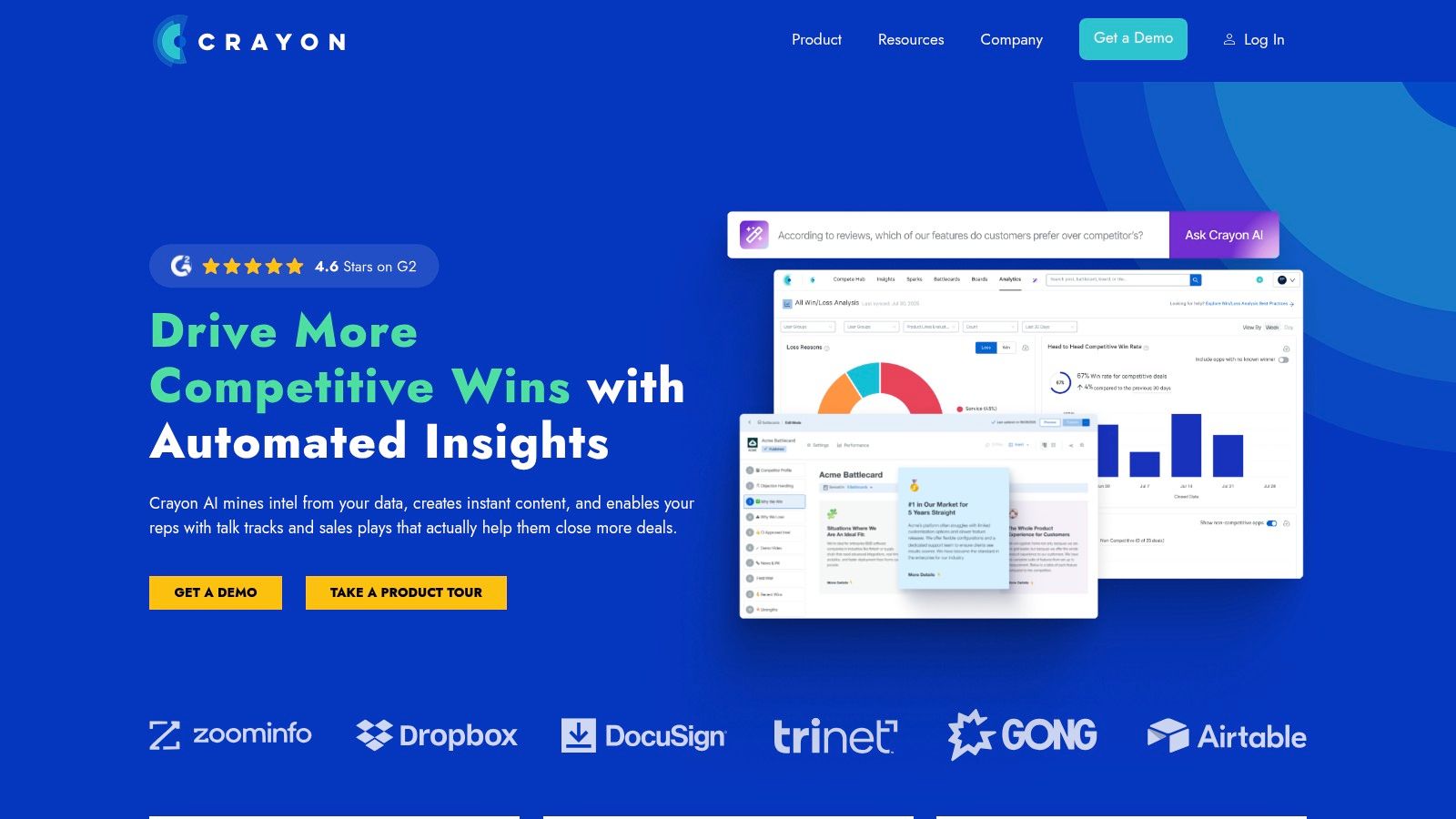
Crayon fits revenue teams that need competitive intelligence turned into action, not another research repository. It tracks competitor changes, prioritizes what matters, and routes the signal into battlecards, internal updates, and sales enablement workflows.
Why Crayon earns a spot
Crayon is strongest when the job is ongoing competitor monitoring across websites, messaging, pricing pages, product updates, and go-to-market signals. The point is speed. Whoever owns competitor tracking can stop wasting hours collecting screenshots and writing summaries by hand.
That matters because competitive analysis only affects revenue when it changes rep behavior. Crayon is built around distribution and activation as well as collection.
If you are building a broader intelligence operating model, read this guide on using AI market intelligence to get ahead.
Where it works best
I recommend Crayon for B2B companies with an active sales motion, a product marketing owner, and enough competitive noise that manual tracking breaks down. It is a strong fit for teams that need one shared source for competitor changes and want those changes translated into usable sales guidance.
It is also one of the better choices if you want to build a stack by company stage instead of buying isolated tools.
For an SMB stack, Crayon can sit with Semrush or Ahrefs for search intelligence and your CRM for field feedback. For agencies, it works best as the monitoring layer, while analysts use other tools to validate channel trends and package client-facing recommendations. For startups, I would usually wait unless multiple people already need the same competitor intel every week.
Agent recipe
A practical setup looks like this: Crayon detects a pricing or messaging change, an AI agent summarizes the update, compares it against your current positioning, drafts a battlecard revision, and sends a rep-ready brief into Slack or your enablement hub for approval.
That workflow saves time, but the main gain is consistency. You respond to competitor moves with the same process every time.
- Use Crayon for compete operations. It is built for monitoring, summarizing, and distributing competitor changes.
- Buy it when sales and product marketing both need it. Shared ownership is where the platform pays off.
- Skip it for early-stage SEO use cases. Smaller teams usually get more value from search and content tools first.
6. Klue
A rep is in a live deal review. Procurement has raised a competitor objection, the account executive needs an answer in minutes, and nobody is opening a 40-page intel doc. Klue fits that moment. It is built to turn competitive analysis into seller-ready guidance that shows up inside the workflow sales already uses.
That makes Klue a strong pick for businesses where revenue impact matters more than analyst depth. If your main goal is helping reps handle objections, use current battlecards, and respond to competitor moves without hunting through scattered notes, Klue is one of the better options in this category.
Best use case
Klue works best for mid-market and enterprise teams with a real sales process, a product marketing owner, and enough deal volume that competitive knowledge needs to be standardized. Its value comes from distribution and adoption. Insight only matters if reps can use it.
I would not buy Klue as a standalone research engine. I would buy it as the enablement layer in a broader system. Pair it with search and market data tools for discovery, then let Klue package the competitive narrative for sales. If you need a clearer frame for that operating model, this guide to market intelligence systems with AI lays out the difference between raw signals and decision-ready output.
Recommended stack fit
For SMBs, Klue usually makes sense only when sales enablement is already a formal function. Before that point, the cost and process overhead are hard to justify.
For mid-market teams, Klue fits well with Semrush or Ahrefs for search visibility, your CRM for opportunity context, and Slack for distribution. That stack covers signal collection, analysis, and rep adoption.
For agencies, I would usually skip it unless you run competitive enablement for clients with active sales teams. Agencies often get more value from tools that support broader monitoring and research across accounts.
Agent recipe
A practical workflow is simple. An agent monitors competitor pages, release notes, and field feedback from sales calls. It summarizes the change, checks which active deals mention that competitor, drafts a revised talk track and battlecard update, then routes the output to PMM for approval before pushing it into Slack and the CRM.
That is the right use of Klue. It turns competitive analysis into repeatable sales execution.
- Use Klue when seller adoption is the goal. It is strongest when compete intel needs to change rep behavior.
- Pair it with research tools. Klue distributes and operationalizes insight better than it discovers market-wide trends.
- Skip it if you're early-stage. If one founder or marketer still owns competitor tracking, lighter tools will give you better return.
7. Kompyte
Kompyte is the set-and-maintain option for teams that want CI automation without building a custom machine. If you need ongoing tracking of competitor sites, ads, reviews, jobs, and related signals, Kompyte is designed to reduce the manual grind.
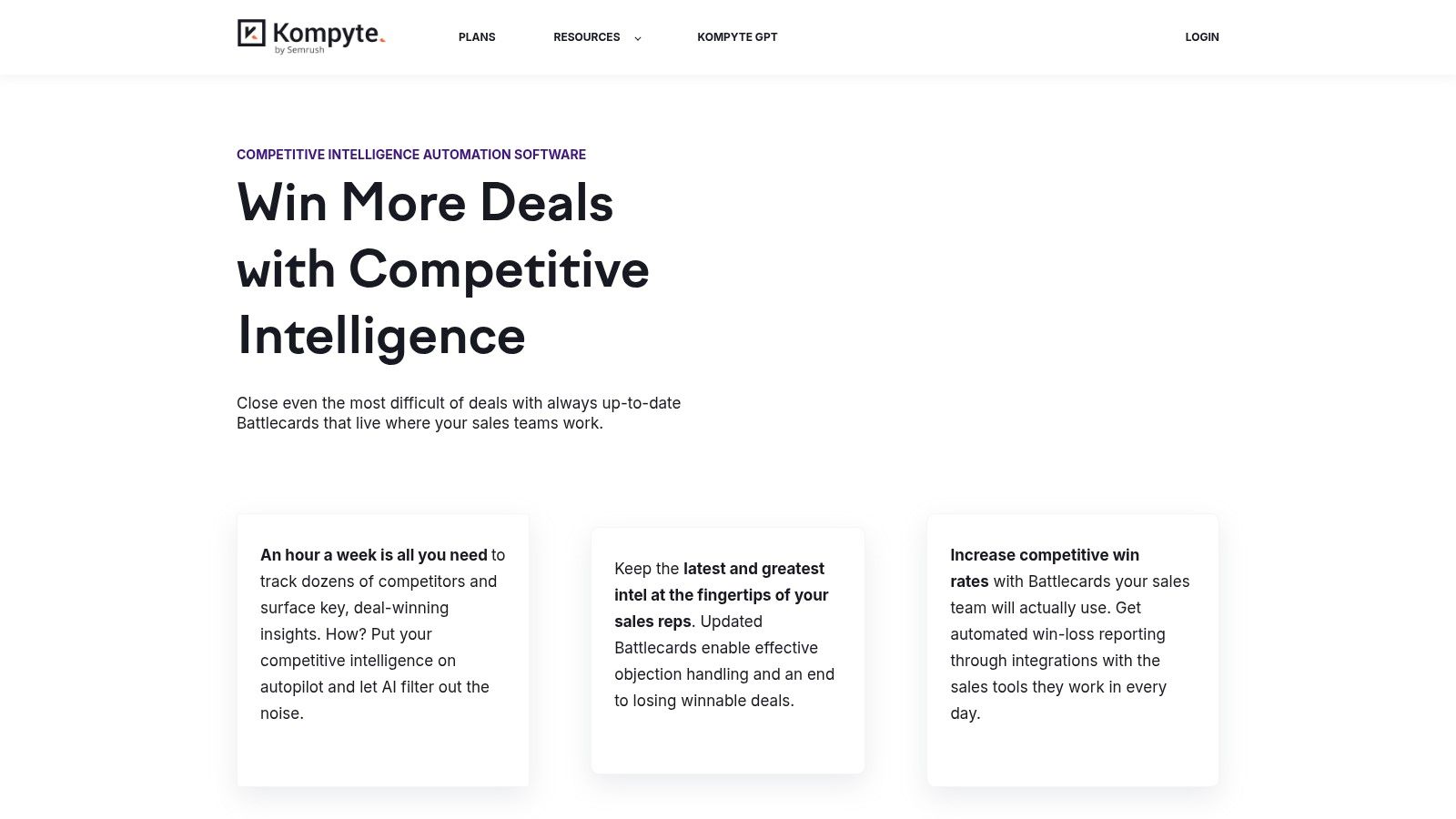
What makes it useful is the emphasis on filtering noise and keeping battlecards updated automatically. That's a real problem in CI. Teams drown in alerts long before they run out of data.
Best use case
I like Kompyte for product marketing and sales enablement teams that need continuous upkeep more than deep strategic analysis. It's practical. It collects signals, summarizes them, and pushes outputs into systems like Salesforce, HubSpot, Slack, and Teams.
That provides an advantage for lean teams. Instead of assigning a human to hunt for every competitor update, you let the platform do the surveillance and reserve human time for interpretation and response.
Limitations
Kompyte still needs stewardship. If no one owns the messaging, the battlecards drift into generic clutter. And if your main need is SEO, traffic estimation, or category-level market sizing, there are better options above.
- It is strongest for continuous, always-on competitor upkeep.
- It suits lean product marketing teams by cutting repetitive collection work.
- It is weak as a standalone strategy suite, so you may still need another platform for search or market analysis.
Visit Kompyte.
8. AlphaSense
AlphaSense is what I'd use for situations more critical than campaign planning. Strategic briefings, big moves, market entry decisions, investor narratives, competitor financial signals. That's the lane.
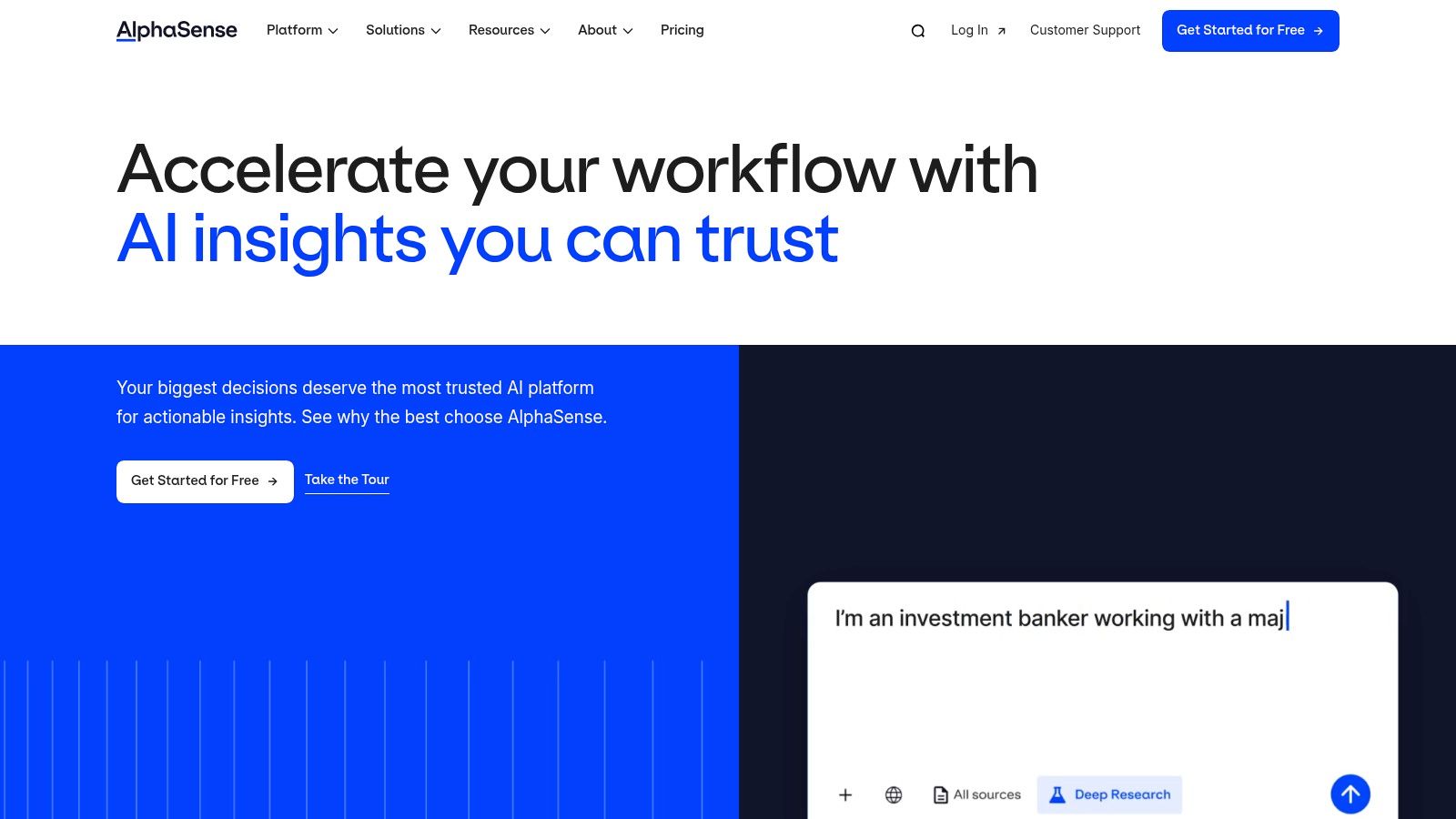
It searches and synthesizes across filings, transcripts, research, expert calls, and news. That gives you a very different kind of intelligence than a standard SEO or paid media platform.
Why strategists like it
According to a 2024 report by McKinsey, companies using AI for competitive analysis achieved a 31% higher return on marketing investment than non-users, and the average cost per insight dropped from $450 in 2019 to $120 in 2024 (verified McKinsey summary). That's the business case for moving from manual research to AI-assisted synthesis, and AlphaSense fits that move at the enterprise end of the spectrum.
This tool is especially useful when you need evidence-backed strategy rather than channel-level optimization. Think investor prep, competitive threat assessment, pricing context, and triangulating where markets are going.
If you want the strategic framing behind that shift, read AI market intelligence as your edge.
Where it's overkill
If you just need keyword gaps, ad intel, or content topics, AlphaSense is too much. It's an enterprise research platform, and it behaves like one.
- It is strongest for strategic and financial competitive context.
- It fits complex markets where public filings and transcripts matter.
- It is too heavy for lightweight marketing ops if you only need web-channel intelligence.
Explore AlphaSense.
9. Contify
Contify sits in a useful middle ground. It's broader than SEO tooling, but usually more operational than a heavyweight research platform. If you need structured monitoring across many source types, Contify is worth a look.
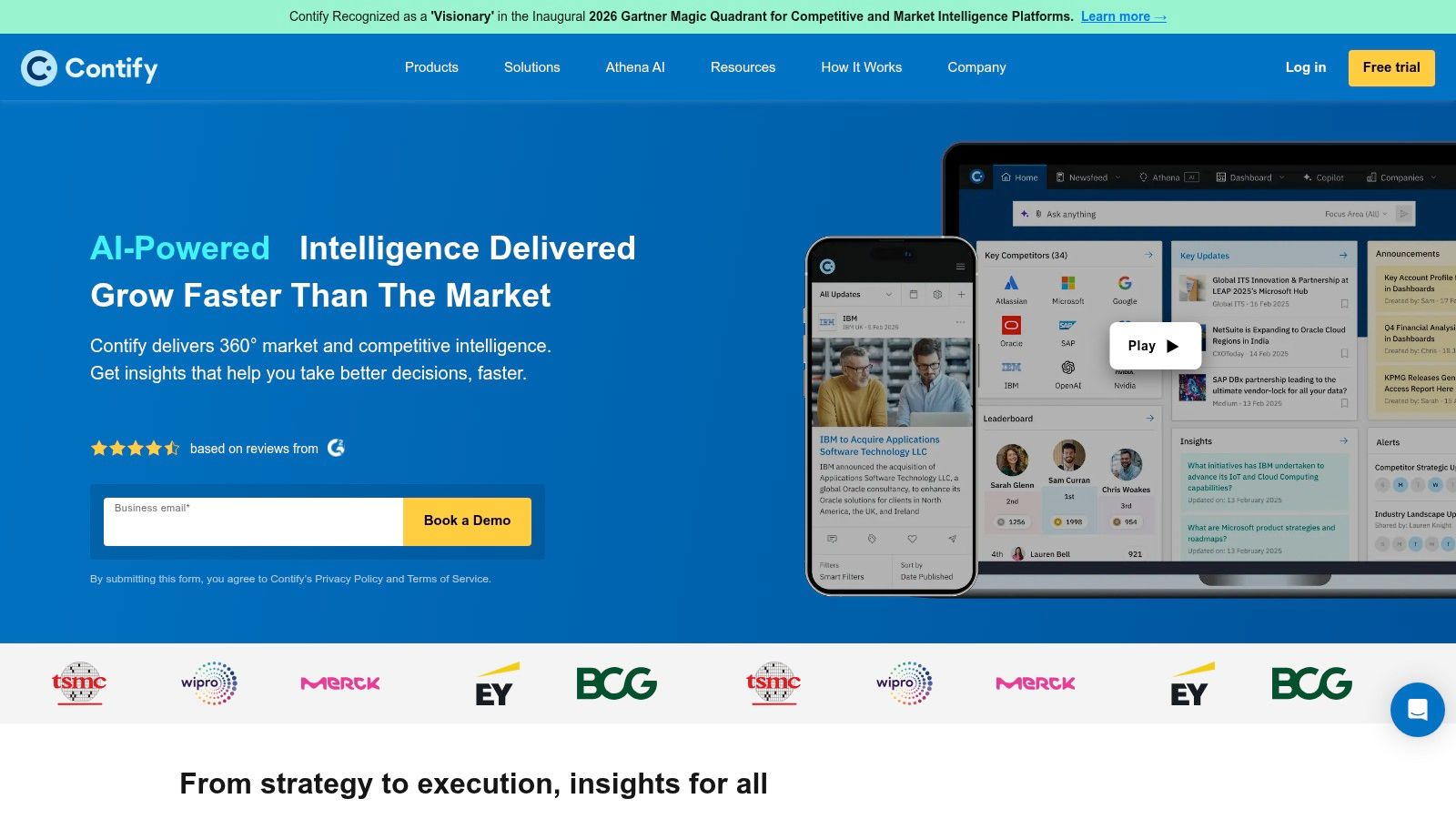
It aggregates signals from a very wide range of sources and applies taxonomy, machine learning, and curation so you get decision-ready updates instead of raw noise.
Where Contify helps
This is useful for B2B teams that care about company sites, news, review platforms, patents, forums, earnings, and adjacent market signals in one place. The managed-services angle is also practical. Smaller teams often need help refining queries, validating outputs, and setting up a mature taxonomy.
That matters because AI tools for competitive analysis don't fail only on collection. They fail on relevance. If your taxonomy is sloppy, your intelligence stream becomes a junk drawer.
Good competitive intelligence depends on naming the market correctly. Categories, rivals, substitute solutions, adjacent threats, and buying triggers all need clear labels.
If you want a stronger foundation for that process, my guide on what market intelligence AI means in practice will help.
Trade-offs
Contify is strong for multi-source monitoring and curation. It's weaker if your primary need is pure SEO auditing or deep search gap analysis.
- It is strongest for broad source coverage beyond search and social.
- It helps if you need curation and structure on top of alerts.
- It is less ideal for SEO-first operators, so pair it with Semrush or Ahrefs if search is central.
Visit Contify.
10. SpyFu
SpyFu is the quick-strike tool on this list. If you need a fast read on a competitor's Google SEO and PPC posture, it's one of the easiest places to start.
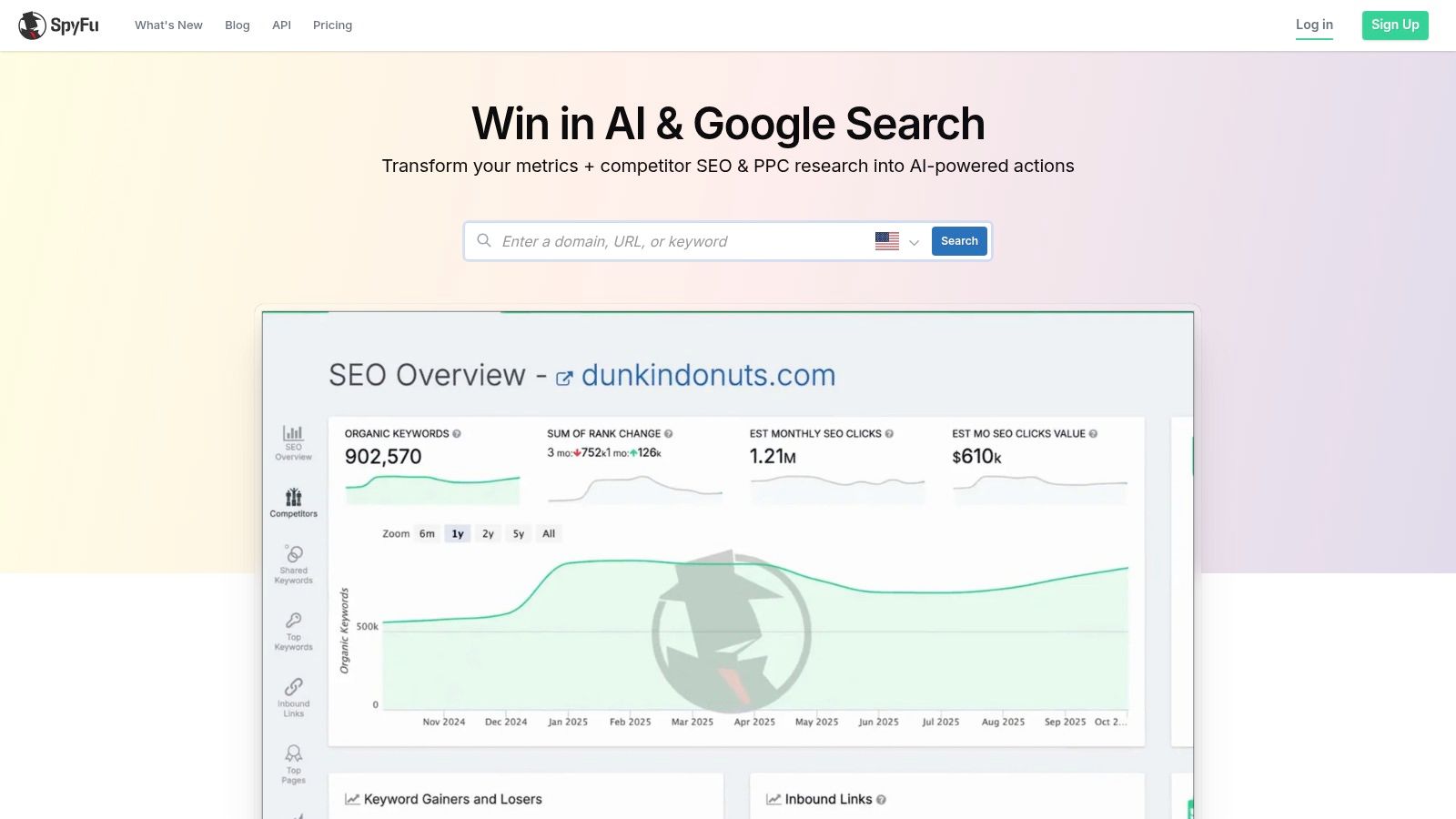
I like SpyFu for marketers who need to see paid keywords, ad copy history, and side-by-side search competition without buying an enterprise platform. It's practical. Open the tool, identify the pattern, and move.
Where it earns its place
Not every company needs a full CI system. Sometimes you need to answer a narrower question. Who is bidding aggressively in your category? How has their ad copy changed? Which keyword clusters are they leaning into that you've ignored?
SpyFu gives you that answer quickly. It's especially good for agencies, SMBs, and lean in-house teams that need search competitor snapshots with less friction.
Where it falls short
It won't give you the broader behavioral, strategic, or sales intelligence of platforms like Similarweb, AlphaSense, Crayon, or Klue. Its lane is narrower. That's fine if your problem is narrow too.
- It is best for fast, marketer-friendly PPC and SEO snapshots.
- It suits budget-conscious teams, with a lower-friction entry than enterprise suites.
- It is not a full intelligence platform, and it is limited if you need cross-channel or strategic analysis.
You can check it out at SpyFu.
Top 10 AI Competitive Analysis Tools Comparison
| Tool | Core focus | Key strengths (UX / quality) | Best for (target audience / use case) | Pricing & access | Why choose (unique selling point) |
|---|---|---|---|---|---|
| Samuel Woods (recommended) | Growth marketing + AI strategy; “bionic” marketing systems | Implementation‑first playbooks, CRO‑driven analytics, multi‑LLM agent designs | Startups, SMBs, agencies, marketing teams wanting pragmatic AI adoption & scale | Bespoke; scoped proposals based on org size & data maturity | Conversion‑grounded AI workflows, templates & workshops that scale creative output without losing brand voice |
| Similarweb | Digital intelligence for web & apps | Proprietary traffic datasets; AI Studio agents; daily behavioral updates | Market & competitive analysts, product & growth teams benchmarking traffic | Quote‑based / enterprise tiers; onboarding advised | Deep web/app panel for traffic, channel & category benchmarking |
| Semrush | All‑in‑one SEO / paid / social + AI visibility | Integrated SEO/paid/content tools; clear docs & community; AI Visibility | SEO, paid media, content teams tracking brand presence across SERPs & AI | Tiered subscriptions; add‑ons for advanced competitive intel | Broad one‑roof stack combining SEO, paid and AI visibility reports |
| Ahrefs | Backlink & SEO competitor research | Massive backlink index; Agent A & AI content helpers; API options | SEO teams, content strategists needing deep link & gap analysis | Subscription tiers; higher tiers for API/advanced use | Best‑in‑class backlink data and growing AI automation for briefs |
| Crayon | B2B competitive‑intelligence & enablement | AI scoring, auto battlecards, win/loss metrics, enablement integrations | Sales, product marketing, enablement teams that need CI workflows | Quote‑based; mid‑market / enterprise focus | Purpose‑built CI workflows that feed reps and enablement tools directly |
| Klue | Competitive enablement hub | Centralized intel, AI battlecards, Salesforce/Slack/Highspot integrations | Sales + PMM teams needing a single compete hub | Sales‑led / enterprise pricing; typically requires an owner | Drives adoption via deep daily‑workflow integrations and templates |
| Kompyte | CI automation & monitoring | AI filtering across many sources; auto‑updated battlecards | Product marketing & sales enablement teams wanting low‑touch CI upkeep | Quote‑based; pricing varies by competitors tracked | Strong “set‑and‑maintain” automation to reduce monitoring overhead |
| AlphaSense | Enterprise market & financial intelligence | Generative search across filings, transcripts, broker research | Executives, strategy, finance teams doing strategic / financial analysis | Enterprise contracts; sales‑led pricing | Depth of enterprise docs and fast, cited synthesis for exec briefings |
| Contify | AI‑native market & CI aggregation | Wide source coverage, taxonomy builder, managed analyst services | B2B teams needing structured multi‑source CI with optional analyst support | Custom pricing; demo & setup required | Managed services + broad coverage to stand up mature CI quickly |
| SpyFu | PPC & SEO competitor research (affordable) | Ad history, paid keyword insights, side‑by‑side comparisons | Marketers mapping PPC strategy and quick search gaps | Lower‑cost self‑serve plans; pay‑as‑you‑go API | Fast, marketer‑friendly PPC snapshots at a lower entry price |
The Real Advantage Comes From the System
Buying software doesn't create an advantage. Building a repeatable intelligence system does.
That's the part too many teams miss. They subscribe to one of these AI tools for competitive analysis, run a few reports, and assume they've modernized. They haven't. They've added another dashboard. The actual shift happens when AI handles signal collection and synthesis, while you handle prioritization, interpretation, and action.
That shift is already visible at scale. In the US and EU, companies using AI for competitive analysis reported a 27% increase in strategic decision-making speed compared with teams relying on traditional methods (verified competitive analysis market summary). Speed alone isn't the point. Faster decisions let you update positioning sooner, counter competitor claims sooner, and deploy campaigns before rivals close the gap.
The adoption curve also tells you this isn't optional for large organizations. By 2025, over 75% of Fortune 500 companies had integrated AI tools into competitive intelligence workflows, up from 12% in 2019 (verified Fortune 500 adoption summary). You don't need a Fortune 500 budget to respond. You do need a better operating model.
My recommended stacks
Here's how I'd build this in practice.
- For a startup, I'd use Semrush or Ahrefs for search competition, SpyFu for quick PPC intel, and an LLM for synthesis and brief creation.
- For a small business, I'd use Similarweb for market context, Semrush for execution, and a simple agent workflow that routes weekly competitor changes into Slack and content briefs.
- For an agency, I'd use Ahrefs or Semrush for channel data, Crayon or Klue for client-facing battlecards where relevant, plus a shared prompt and taxonomy library so every strategist works from the same structure.
- For a large company, I'd use AlphaSense for strategic research, Similarweb for digital benchmarking, and Crayon or Klue to get intel to the sales team.
Agent recipes that actually work
The best workflow is usually boring. That's a compliment. Boring means reliable.
- A weekly threat digest pulls competitor page changes, ad shifts, top review themes, and keyword movement into one LLM prompt. Ask the model to output only what changed, why it matters, and who should act.
- A battlecard refresh agent runs win-loss notes, competitor messaging updates, pricing changes, and objection data through a structured prompt. Push approved output into your sales materials.
- A content gap agent combines Ahrefs or Semrush gap data with your ICP pain points and current offer positioning. Generate briefs that target buyer intent, not vanity traffic.
- An AI visibility monitor tracks where your brand and key rivals show up in AI-generated answers, then compares that narrative to your website messaging and thought leadership content.
The other critical piece is governance. Verified guidance from the U.S. Chamber makes the point clearly. Don't feed privileged or nonpublic information into AI tools, and verify outputs before you act on them. If you skip that, speed becomes a liability instead of an advantage.
A 2023 Gartner study found that 68% of marketing leaders prioritized AI-powered competitive analysis tools (verified Gartner summary). The reason is obvious. Teams want to spot real-time market shifts before those shifts hit revenue. You should want the same thing.
Start small. Pick the tool that matches your biggest constraint right now. If you need search gaps, buy a search tool. If sales keeps losing to the same competitor, buy an enablement-focused platform. If you lack strategic visibility, buy a research platform.
Then automate one workflow. Measure whether decisions get faster, whether responses get sharper, and whether competitive moves stop catching you flat-footed.
That's the main advantage. Not more dashboards. More wins.