
This guide is about how you and I can use these systems to understand customers on a deeper level, automate personalization at scale, and ultimately, turn your email list into a predictable profit center. Shiny new AI features are beside the point.
I’m going to look at the best AI email marketing tools that connect directly to business outcomes.
The core problem these platforms solve is moving beyond manual segmentation and generic blasts. They enable you to create highly contextual, automated campaigns that feel one-to-one, even with thousands of subscribers. But AI isn’t a magic bullet. To truly build an AI-powered revenue engine, it’s critical to understand core marketing principles, such as the importance of strong email subject line best practices that drive higher open rates.
In this guide, you won’t find marketing fluff. Instead, you’ll get a direct, actionable breakdown of the top platforms. For each tool, you’ll find a clear analysis, real-world use cases, and my honest take on its strengths and weaknesses. I’ll show you what works, what doesn’t, and which platform fits the way you actually sell.
1. Mailchimp
If you’re just dipping your toes into email marketing, or you’re an SMB that needs a reliable, all-in-one platform, Mailchimp is often the first stop. It’s been a market leader for years, and for good reason: its user interface is incredibly approachable. They’ve integrated AI to keep up, making it a solid contender among the best AI email marketing tools for those who prioritize ease of use over raw power.
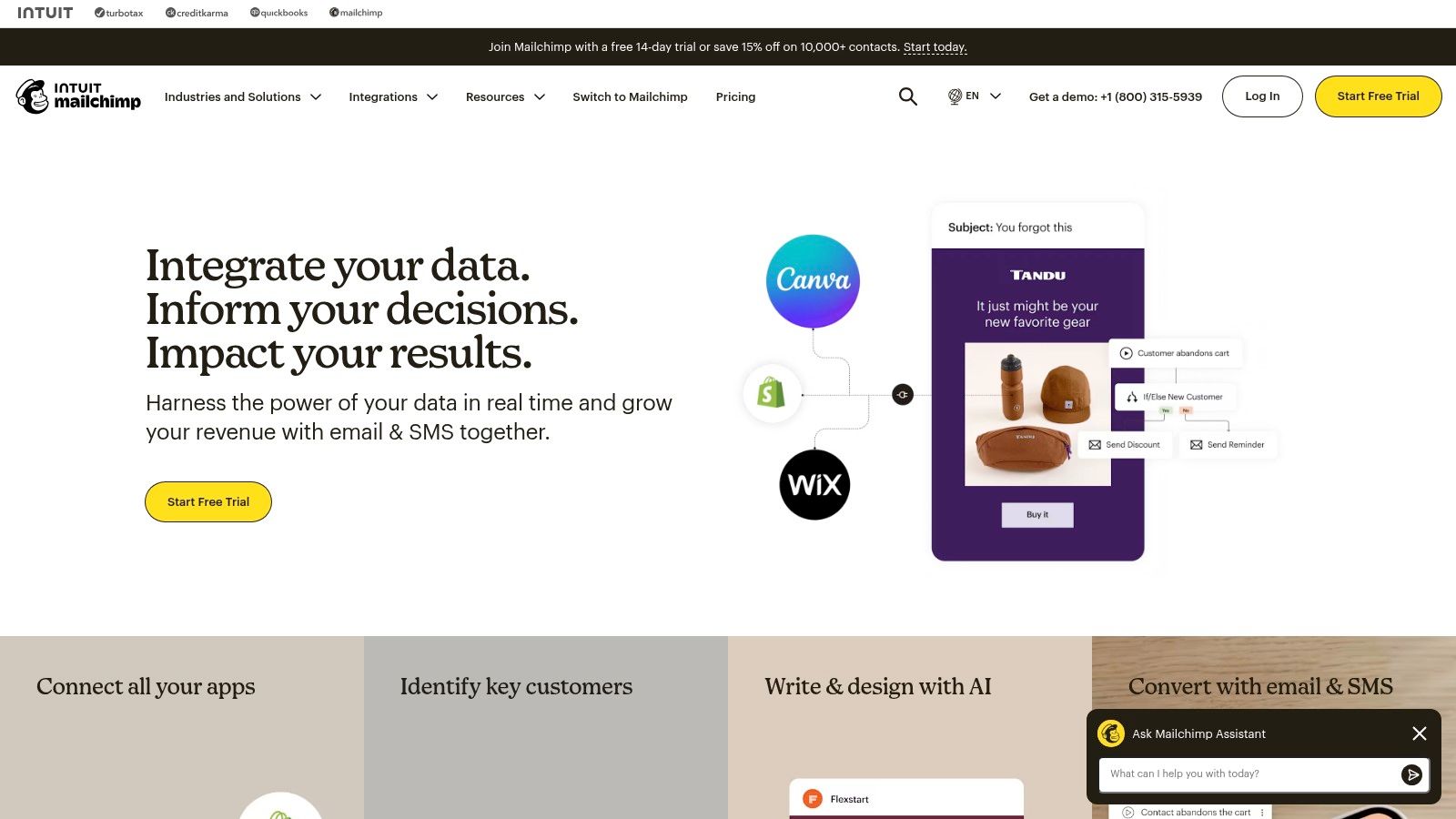
Mailchimp’s AI doesn’t try to reinvent the wheel. It focuses on practical, time-saving applications. The “Write with AI” assistant helps you overcome writer’s block for subject lines and body copy, while its Send Time Optimization analyzes your audience’s past behavior to deliver emails at the moment they’re most likely to engage. This is a foundational step in any serious introduction to AI email marketing.
Key Features & Assessment
- The AI Copy Assistant is good for generating initial drafts and subject line variations. It’s not going to write a masterful, brand-defining email, but it will get you 70% of the way there, fast.
- Send Time Optimization uses your specific audience data to predict optimal delivery times. This feature alone can noticeably lift open rates.
- Predictive Segmentation (Standard Plan+) analyzes customer behavior to predict who is most likely to purchase again, helping you target high-value segments without manual analysis.
Pricing & Best For
Mailchimp’s free tier is generous, but the core AI features are gated behind paid plans, starting with the Essentials plan and getting more powerful with the Standard plan ($20/month base).
It’s best for startups and SMBs who need a user-friendly platform with reliable, built-in AI assistance for core tasks. If you aren’t technical and value a massive integration ecosystem, Mailchimp is a safe bet. However, if you need deep, custom AI-driven workflows, you may hit its limits.
Website: https://mailchimp.com
2. Klaviyo
If you run an ecommerce business, particularly on Shopify, Klaviyo is the platform built for you from the ground up. Klaviyo is a customer data platform with email built in, and it has deeply integrated AI to turn your store’s data into revenue. While other tools are adding AI as a feature, Klaviyo has woven it into its core, making it one of the best AI email marketing tools for direct-to-consumer brands focused on rapid growth.
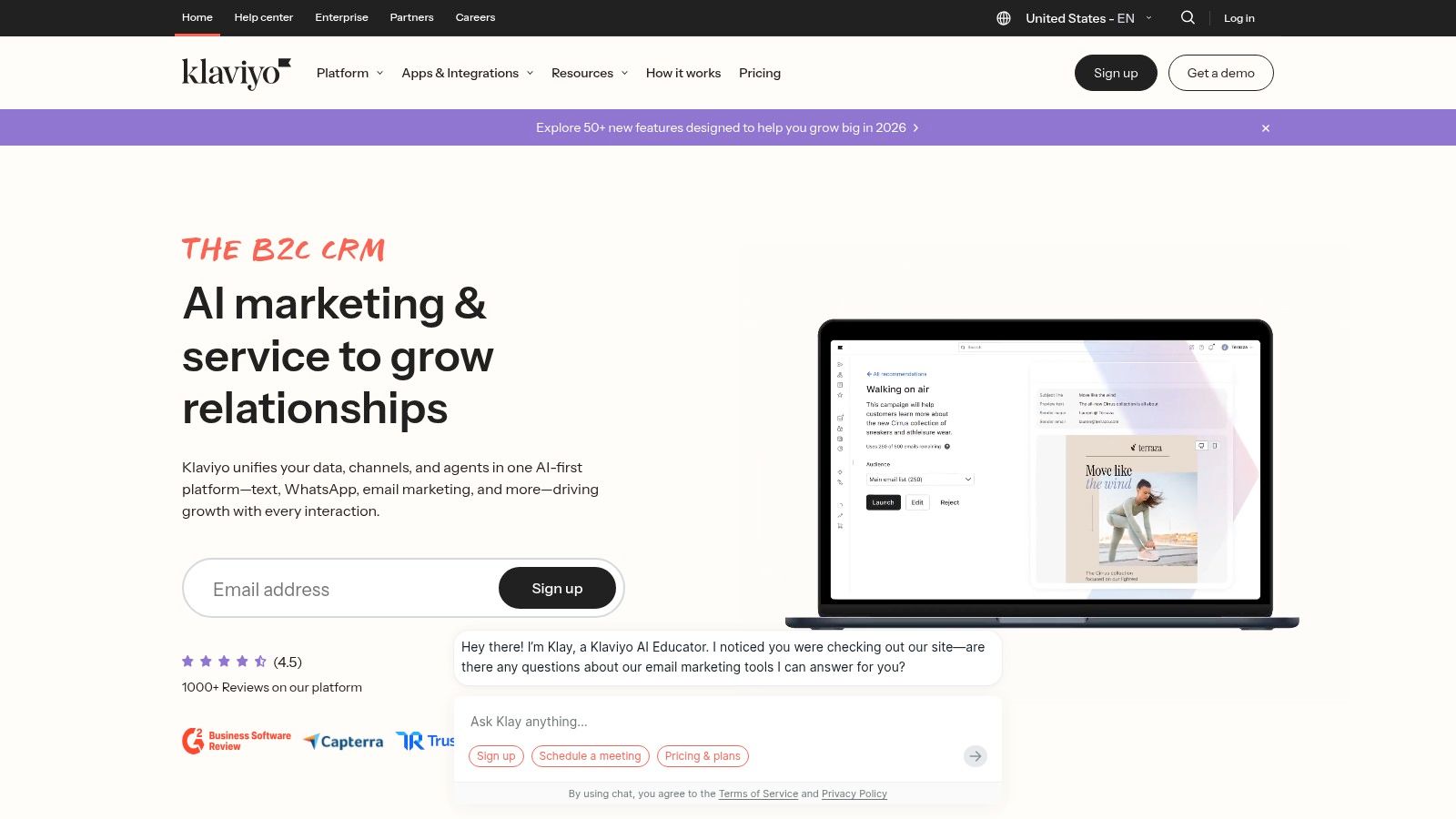
Klaviyo’s AI, branded as K:AI, is designed to give you a massive head start. Its AI-powered agents can build entire campaigns, automation flows, and on-brand content just by analyzing your website. It goes past writing a subject line to generating a ready-to-launch abandoned cart series that reflects your brand’s voice, which saves real setup time.
Key Features & Assessment
- The K:AI Marketing Agent is the standout. It builds multi-step flows and campaigns from a single prompt, pulling in your branding, product info, and customer data. It dramatically cuts down on the manual setup time for core ecommerce automations.
- For subject lines and content, the AI assistant is fine-tuned on ecommerce data. It suggests subject lines that drive opens and generates body copy that understands product benefits and calls to action, all while staying on-brand.
- Klaviyo’s real power comes from its deep ecommerce integrations and its direct connection to platforms like Shopify. This allows its AI to use rich, real-time data for hyper-targeted segmentation and personalization without complex setup.
Pricing & Best For
Klaviyo has a free tier for up to 250 contacts. Paid plans scale based on contact count and email/SMS volume. The costs can climb quickly as you grow, but the ROI is clear if you actually use its automation.
It’s best for ecommerce businesses, especially DTC brands on Shopify, that need powerful, data-driven automation. If your goal is to quickly turn customer data into personalized campaigns that drive sales, and your data is in good shape, Klaviyo is your top choice.
Website: https://www.klaviyo.com
3. HubSpot Marketing Hub
If your email strategy is deeply tied to your customer’s entire journey, HubSpot is the powerhouse you need to look at. HubSpot is a full-stack CRM where email is one component of a much larger machine. Their AI, branded as “AI Assistant,” is embedded across the platform to use this unified data, making it one of the best AI email marketing tools for businesses that prioritize a single source of truth.
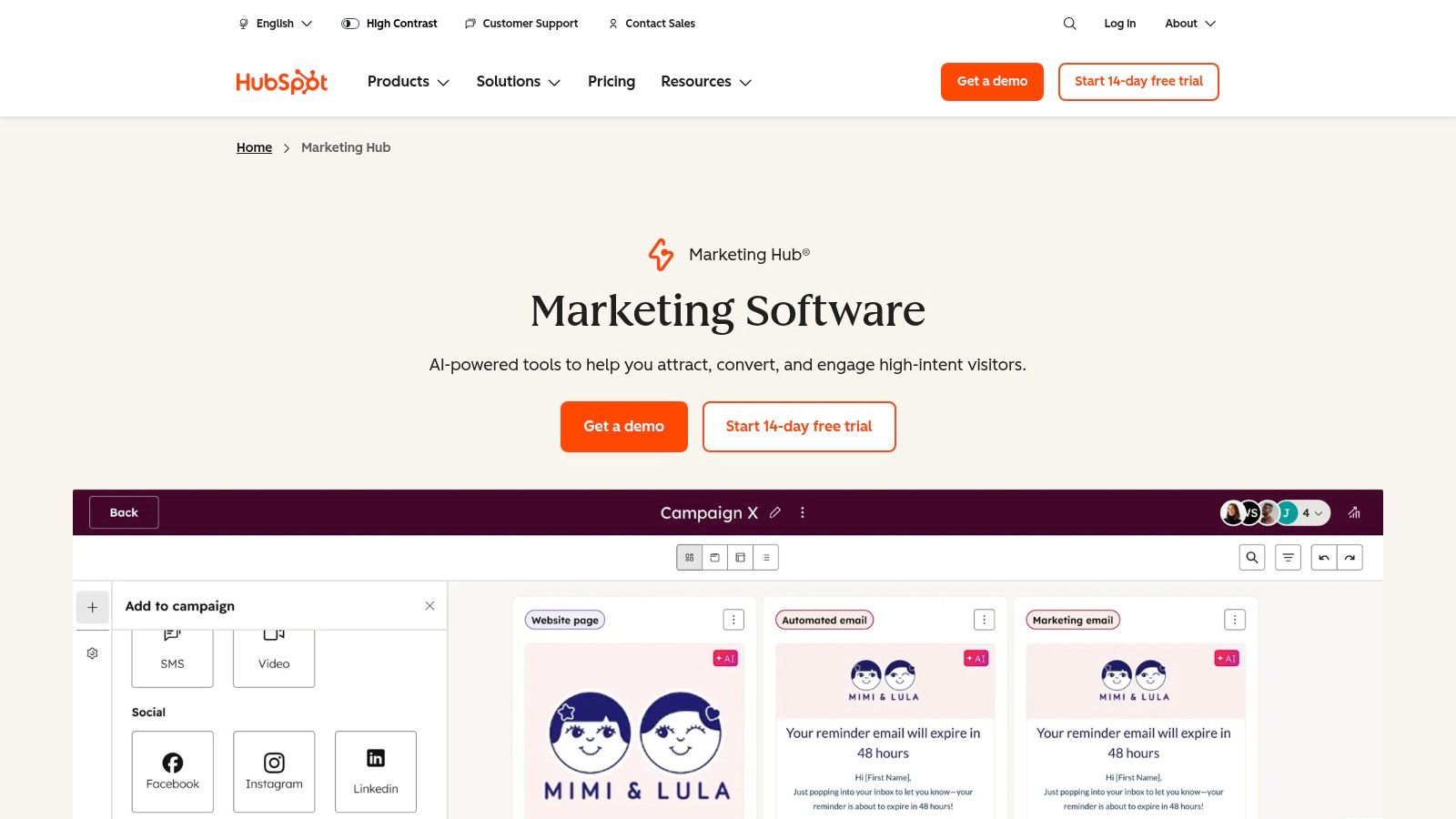
HubSpot’s AI shines when it uses its deep well of CRM data for personalization and targeting. It can generate entire email campaigns, suggest blog post ideas that fuel your nurture sequences, and even create social media copy to promote your content. This moves beyond simple email generation and into a more holistic campaign strategy, a key component in a modern stack of AI marketing automation tools.
Key Features & Assessment
- The AI Content & Campaign Assistant generates drafts for emails, subject lines, landing pages, and even entire campaigns based on a few prompts. It’s highly effective because it understands the context of your existing marketing efforts within the platform.
- CRM-powered personalization is the real advantage here. AI can use deal stages, customer service tickets, and past purchases directly from the CRM to create hyper-relevant email content and audience segments without manual data syncing.
- For predictive analytics and attribution (Pro+), higher-tier plans use AI to forecast lead quality and provide clear reporting on which emails and channels are actually driving revenue. This closes the loop between marketing effort and business impact.
Pricing & Best For
HubSpot offers a free tier, but the powerful AI and automation features are primarily in their Professional and Enterprise plans, which can get pricey and may require an onboarding fee.
It’s best for businesses committed to the HubSpot ecosystem who want a single, unified platform for marketing, sales, and service. If you need your AI to understand the entire customer lifecycle and are willing to pay for a heavier platform, HubSpot is unmatched. The complexity, however, can be a hurdle for a solo operator or a small team.
Website: https://www.hubspot.com/products/marketing
4. ActiveCampaign
If your business lives and dies by automation, ActiveCampaign is where you graduate. It’s always been a powerhouse for complex, trigger-based workflows, but now its “Active Intelligence” layer brings AI directly into those automations. Beyond writing copy, it uses AI to orchestrate entire customer journeys across multiple channels, making it one of the best AI email marketing tools for sophisticated marketers.
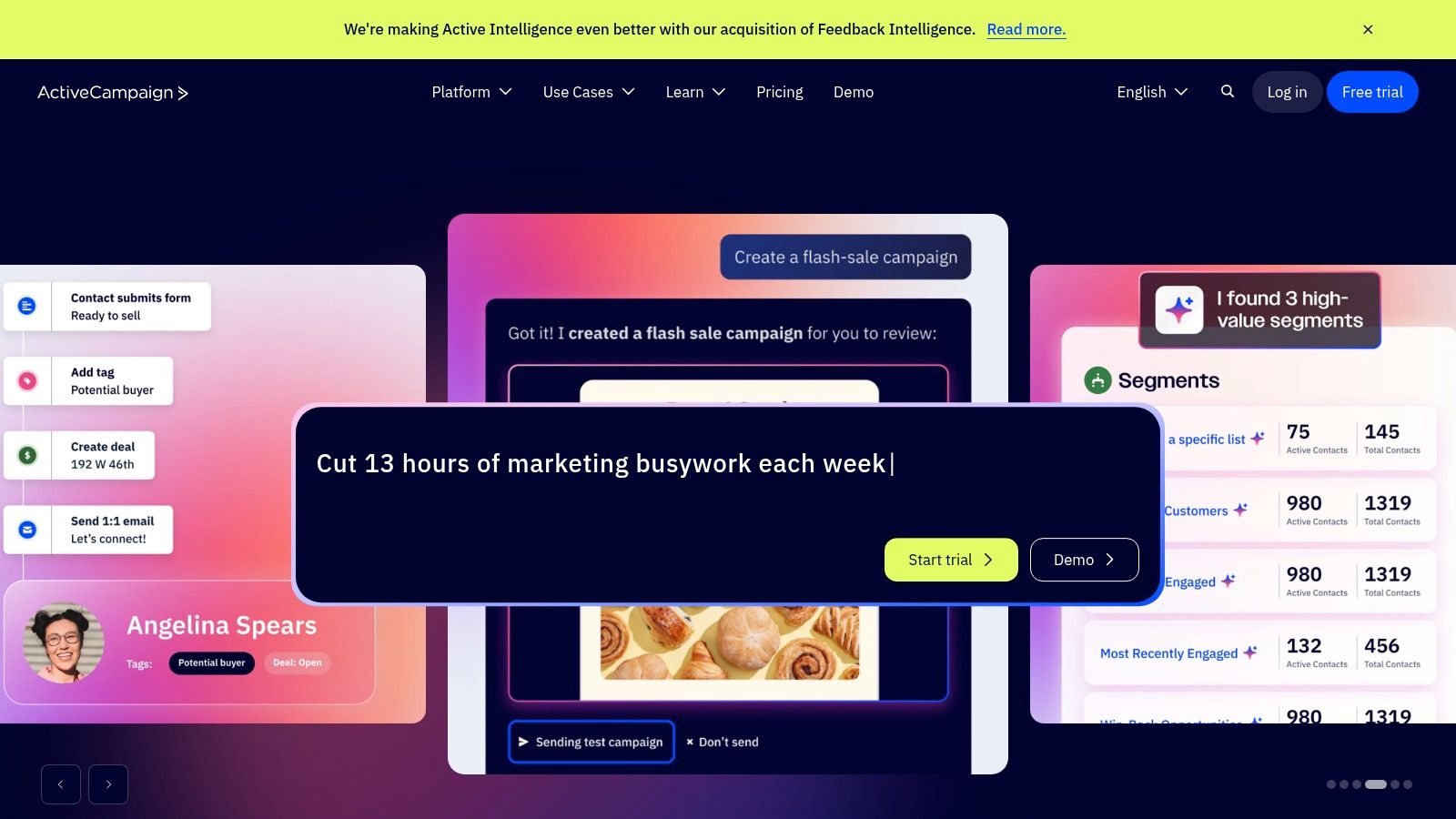
What I find compelling is the AI Campaign Builder. Besides suggesting content, it helps you map out entire campaign sequences based on your goals. You can tell it you want to build a lead nurturing flow, and it will lay out the email steps, delays, and logic. This approach is a core part of how you should think about using AI for marketing, moving from single tasks to entire systems.
Key Features & Assessment
- The AI Campaign Builder is an assistant that helps structure entire multi-step campaigns. It significantly cuts down the initial setup time for complex automations.
- Predictive Sending, as on other platforms, optimizes delivery times based on user behavior. In a platform built on precise timing, this feature matters a lot for engagement within your funnels.
- Multichannel AI integration lets you insert AI-powered steps for email, SMS and other channels within the same workflow, which is a real advantage. It keeps your customer communication consistent.
Pricing & Best For
ActiveCampaign offers a 14-day free trial to test its capabilities. Paid plans are contact-based and start around $29/month, scaling up from there. The real power is in the higher tiers.
It’s best for businesses that are serious about lifecycle marketing and automation. If you need to build complex, multi-channel funnels and want AI to assist in both the creation and optimization of those workflows, ActiveCampaign is your platform. It requires a strategic mindset, but the payoff is large.
Website: https://www.activecampaign.com
5. Brevo (formerly Sendinblue)
If you’re running a business where your contact list is massive but your send volume varies, Brevo’s pricing model is a breath of fresh air. They charge based on emails sent, not contacts stored, which can save many SMBs a lot of money. It’s a multi-channel powerhouse that has smartly layered in AI to stay competitive, making it one of the best AI email marketing tools for value-conscious businesses.
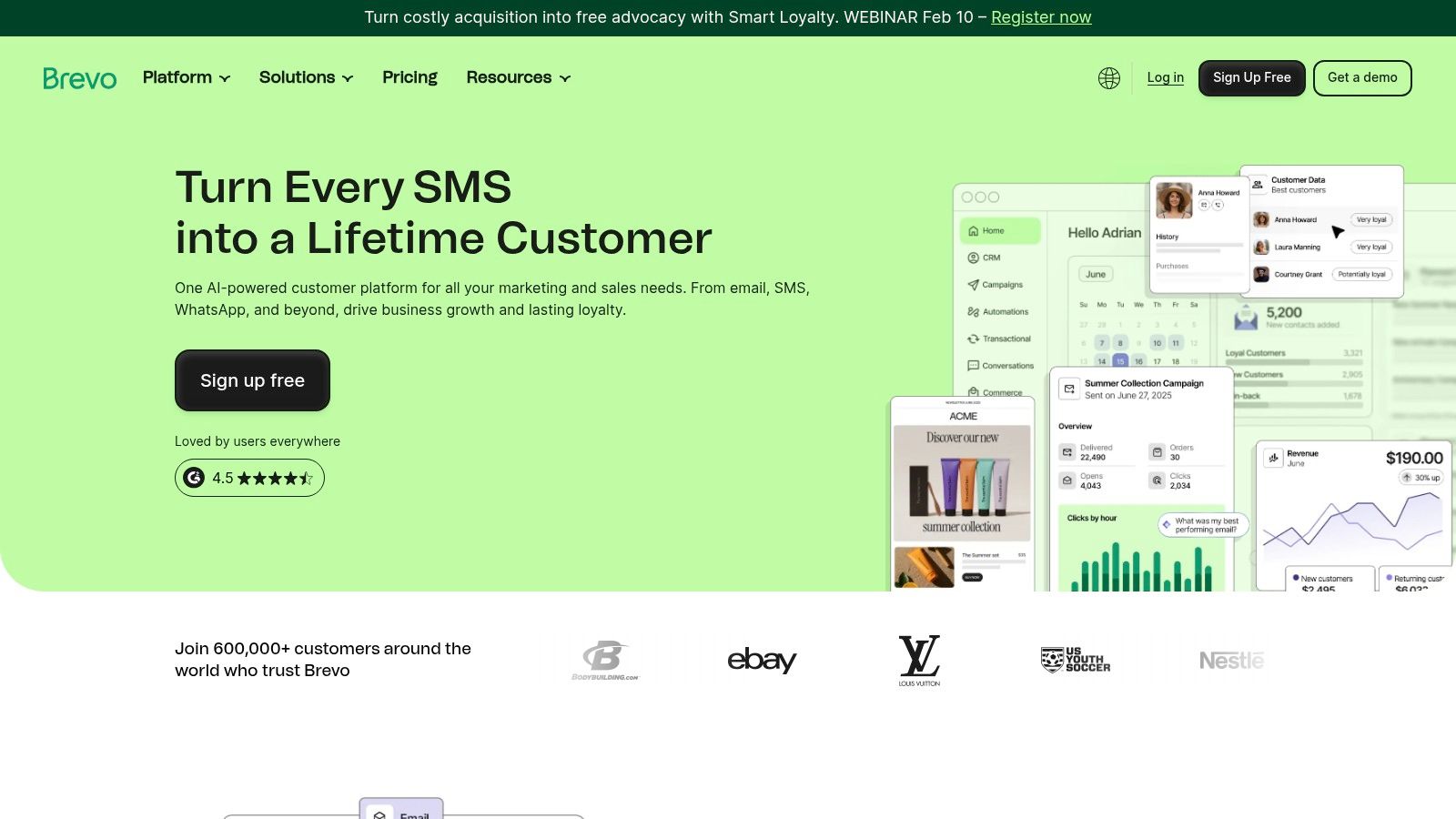
Brevo’s AI, like Mailchimp’s, is focused on practical application rather than futuristic complexity. The AI assistant helps generate subject lines and body copy, and the send-time optimization is a critical tool for maximizing engagement without manual guesswork. This approach makes AI accessible, focusing on solving immediate problems like getting emails opened and read.
Key Features & Assessment
- The AI Content Generator is a solid assistant for brainstorming subject lines and crafting initial email drafts. It’s a great way to kickstart the creative process when you’re staring at a blank page.
- Send Time Optimization (Standard+) analyzes user engagement patterns to automatically send your campaigns at the optimal time for each contact, directly impacting open rates.
- On multi-channel capabilities, Brevo stands out by integrating email, SMS, and WhatsApp marketing. This lets you build more sophisticated, cross-platform automated workflows that meet customers where they are.
Pricing & Best For
Brevo has a generous free plan allowing up to 300 emails per day with unlimited contacts. The core AI features like Send Time Optimization become available on the Starter plan (starting at $25/month for 20k emails) and Business plans.
It’s best for businesses with large contact lists but variable sending needs. If you want an all-in-one marketing platform that includes SMS and chat without breaking the bank on a per-contact basis, Brevo delivers exceptional value.
Website: https://www.brevo.com
6. Omnisend
If your business lives and breathes ecommerce, particularly on platforms like Shopify or BigCommerce, Omnisend is built from the ground up for you. It is an ecommerce specialist rather than a generalist. Its strength lies in combining email, SMS, and push notifications into a single workflow, which matters a lot for customer lifetime value.
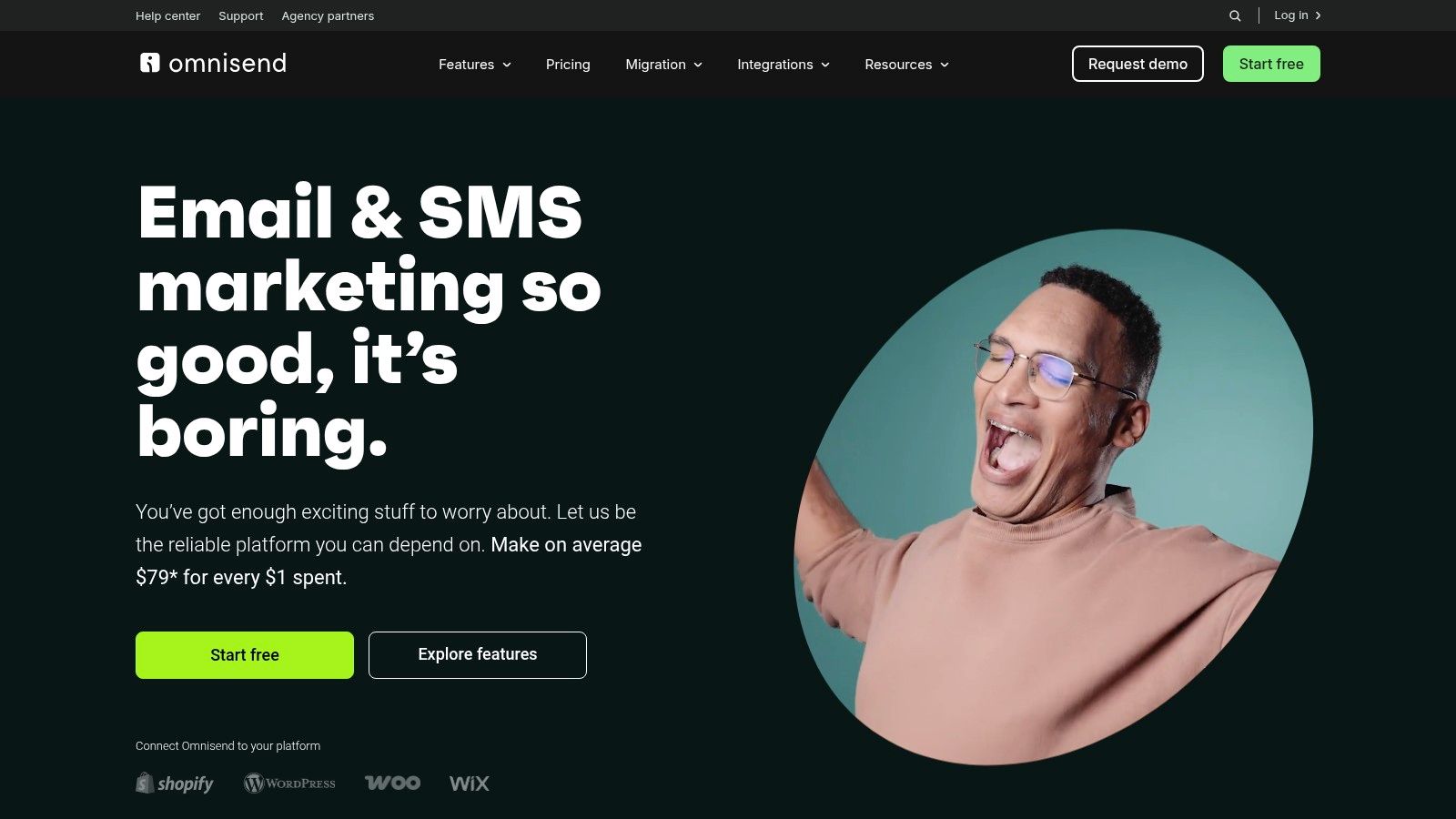
Omnisend’s AI is laser-focused on efficiency for online store owners. Instead of broad, creative AI, it provides practical tools to get campaigns out the door faster and with better results. Its AI subject line and preheader generator is a standout, even suggesting tones that mirror your brand voice. This practical application of AI is a key reason I include it among the best AI email marketing tools for the ecommerce space.
Key Features & Assessment
- The AI-powered subject line tool is surprisingly effective at generating high-converting subject lines and preheaders. It helps you quickly A/B test ideas and avoid stale copy.
- The pre-built ecommerce automations are good design more than AI. The platform comes loaded with proven workflows for cart abandonment, welcome series, and post-purchase follow-ups that are ready to go.
- Consolidated email + SMS reporting provides a unified view of your revenue attribution across channels, helping you understand where your marketing dollars are most effective without manual data wrangling.
Pricing & Best For
Omnisend offers a free plan for up to 250 contacts, making it accessible to start. Paid plans (Standard starts at $16/month) add more features and higher sending limits.
It’s best for ecommerce businesses, especially those on Shopify, BigCommerce, or WooCommerce. If your primary goal is driving sales through lifecycle automation and you need a fast, revenue-focused platform that integrates email and SMS tightly, Omnisend is a top-tier choice. B2B or content-focused businesses will find it too specialized.
Website: https://www.omnisend.com
7. MailerLite
If you’re a creator, blogger, or small business owner who values simplicity and affordability above all else, MailerLite is your platform. It’s lean, clean, and has strategically added AI features without bloating the user experience or the price tag. I see it as the no-nonsense choice for those who need to get a great-looking newsletter out the door fast, with a little AI help to make the copy pop.
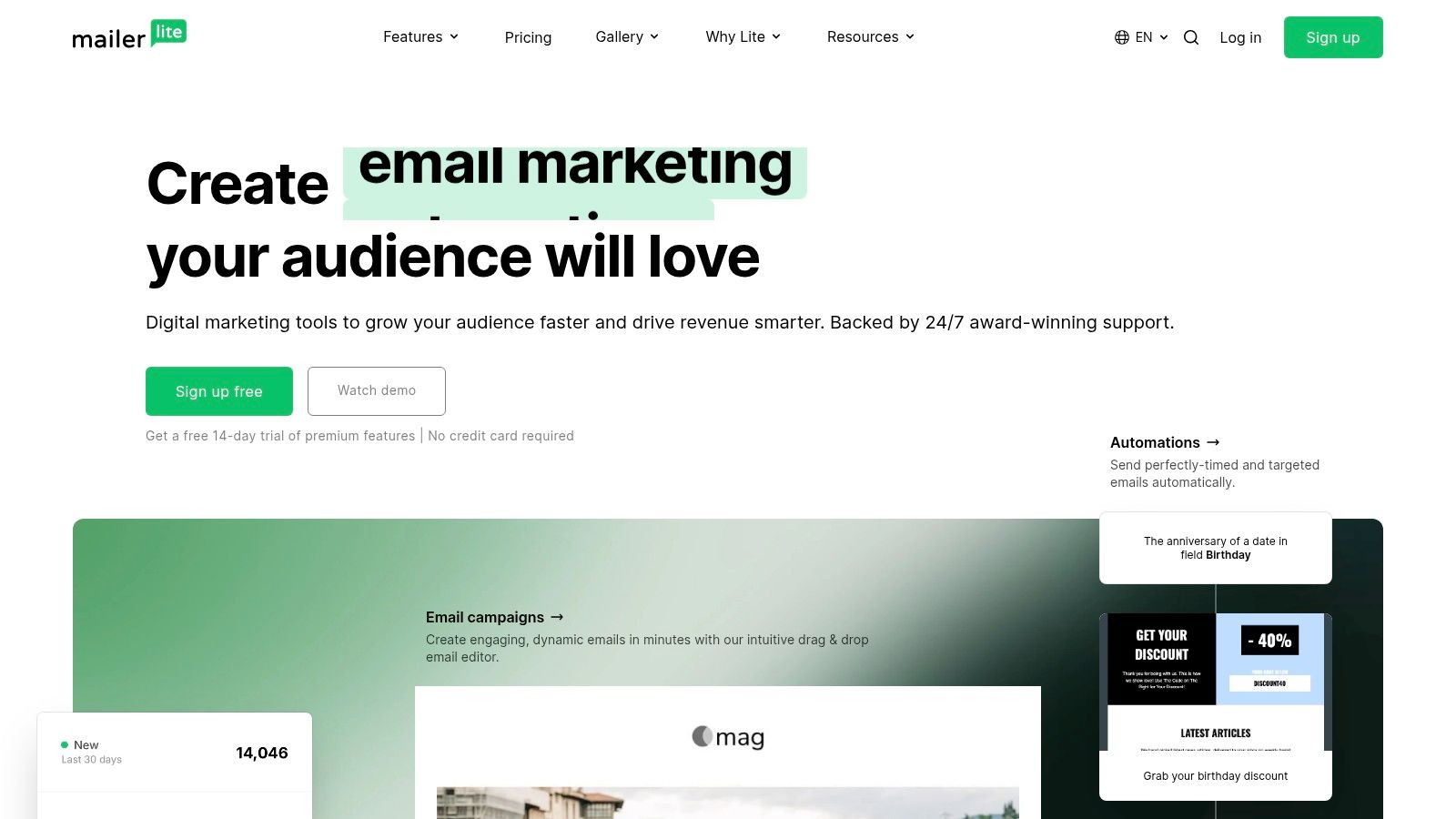
MailerLite’s approach to AI is straightforward and practical, focusing on content creation rather than complex analytics. Its AI writing assistant and subject line generator are baked right into the editor, designed to help you write better emails, faster. This makes it an excellent tool in the best AI email marketing tools lineup for those prioritizing ease of use and content support.
Key Features & Assessment
- The AI Writing Assistant sits directly in the email editor and is great for refining your copy, changing the tone, or generating ideas from a simple prompt. It’s quick and effective for overcoming writer’s block.
- The AI Subject Line Generator provides multiple subject line variations based on your email’s content. A simple but powerful feature for A/B testing and improving open rates with minimal effort.
- “Smart Sending” timing in their automation builder prevents you from overwhelming subscribers by spacing out emails, though it’s less data-driven than true send-time optimization from competitors.
- The website and landing page builder is a significant value-add, allowing you to create a digital home base without needing another service.
Pricing & Best For
MailerLite’s free plan is very generous, and its paid plans are some of the most competitive on the market, starting at just $10/month for the Growing Business tier. AI features have usage limits or credits that vary by plan.
It’s best for creators, freelancers, and small businesses who need an all-in-one platform for emails, landing pages, and websites. If you want a clean interface and helpful AI writing tools without a steep learning curve or high cost, MailerLite is an outstanding choice.
Website: https://www.mailerlite.com
8. Kit (ConvertKit)
If you’re a creator, blogger, or author, you’ve probably heard of ConvertKit. It was built from the ground up to serve the creator economy, focusing on building a direct relationship with an audience rather than just blasting promotions. While not an “AI-first” platform in the way some others on this list are, its new AI features, branded as “Kit,” are designed to augment the specific workflows that creators rely on.
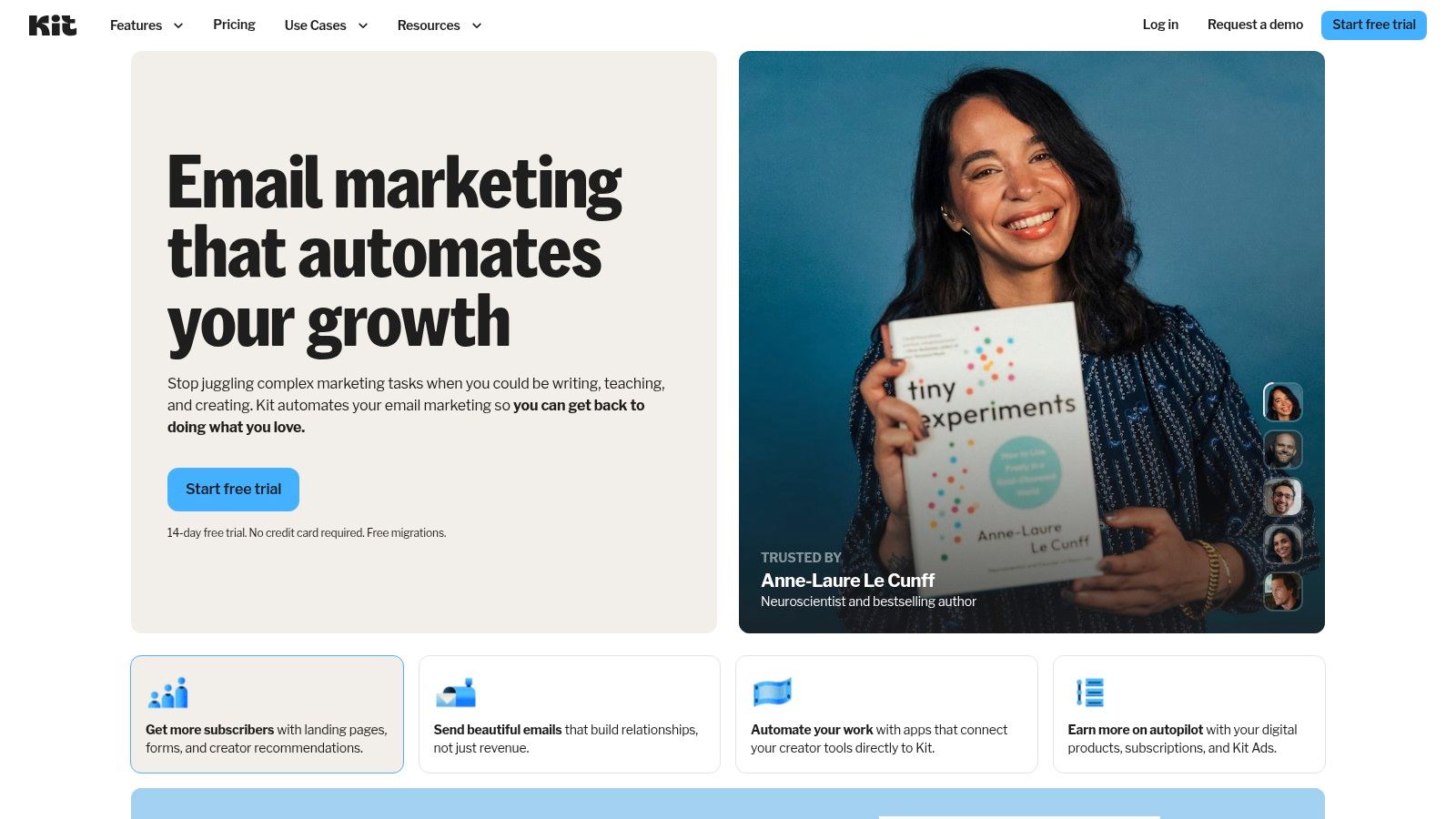
ConvertKit’s AI integrations focus on reducing the friction of content creation. The AI-powered subject line generator and body copy assistant help you quickly draft newsletters, sequences, and broadcasts. It’s less about deep data analysis and more about accelerating the writing process, which is the primary bottleneck for many solo creators. This practical approach makes it a contender among the best AI email marketing tools for this niche.
Key Features & Assessment
- The AI Subject Line Generator creates multiple subject line options based on your email content. It’s a simple but effective way to A/B test ideas and fight writer’s block.
- The AI Email Content Assistant helps expand on ideas, rewrite sections for a different tone, or generate a starting point for your newsletter. It’s tailored to the creator-style, informal communication that ConvertKit is known for.
- Visual automations and sequences aren’t an AI feature, but the simplicity of the visual builder makes it easy to create powerful funnels where AI-generated content can be deployed effectively.
Pricing & Best For
ConvertKit offers a free plan for up to 1,000 subscribers, but the AI features are part of the paid plans, which start with the Creator plan at $29/month. This includes the visual automation builder and free migration services.
It’s best for individual creators, authors, bloggers, and newsletter writers. If your primary business is selling digital products or building a loyal audience through content, ConvertKit’s creator-centric tools and straightforward AI assistance are perfectly aligned with your needs.
Website: https://kit.com
9. Drip
If you’re running an ecommerce business, your needs are different. You need to send newsletters, and you also need to track revenue, segment based on purchase behavior, and automate customer journeys. Drip was built from the ground up for this, making it a powerful, specialized player among the best AI email marketing tools for online stores. It’s less of an all-purpose tool and more of a precision instrument for ecommerce growth.
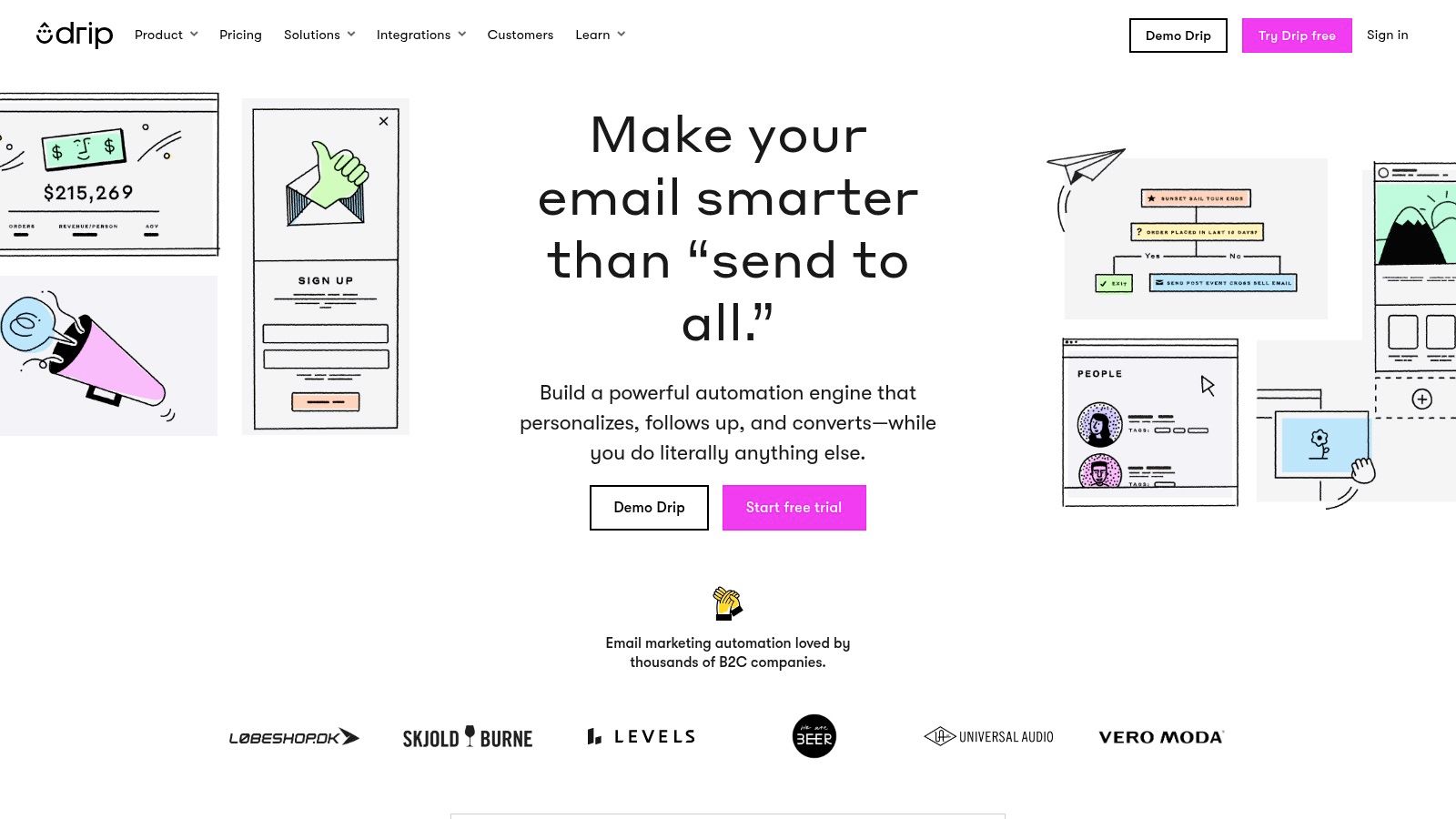
Drip’s strength is in its deep integrations with platforms like Shopify and WooCommerce. Its AI is aimed at revenue-focused automation rather than flashy content generation. The platform excels at building complex visual workflows triggered by specific customer actions, like viewing a product or abandoning a cart. This allows you to create highly personalized, automated campaigns that directly tie back to sales figures.
Key Features & Assessment
- The Visual Workflow Builder is Drip’s core. It allows you to map out sophisticated customer journeys based on real-time behavior, making it easy to visualize and execute complex automation sequences.
- Drip’s deep ecommerce integrations connect directly with Shopify, WooCommerce, and BigCommerce, pulling in product, order, and customer data for hyper-targeted segmentation and triggers.
- The revenue dashboards skip vanity metrics like open rates. Drip puts revenue attribution front and center, showing you exactly which emails and automations are driving sales.
Pricing & Best For
Drip’s pricing is based on the number of active people in your list, starting at $39/month for up to 2,500 contacts. The price scales directly with your list size and email send volume.
It’s best for ecommerce brands obsessed with optimizing for customer lifetime value (LTV). If your primary goal is to turn one-time buyers into repeat customers and you live inside your Shopify dashboard, Drip is purpose-built for you. It’s not the right fit for B2B or content-focused businesses.
Website: https://www.drip.com
10. Mailmodo
What if your emails could act more like apps? That’s the core idea behind Mailmodo. While most platforms treat AI as a content or timing helper, Mailmodo integrates it across a workflow built for interactive AMP emails. This makes it a unique player among the best AI email marketing tools, especially if you want to capture data or drive actions directly within the inbox.
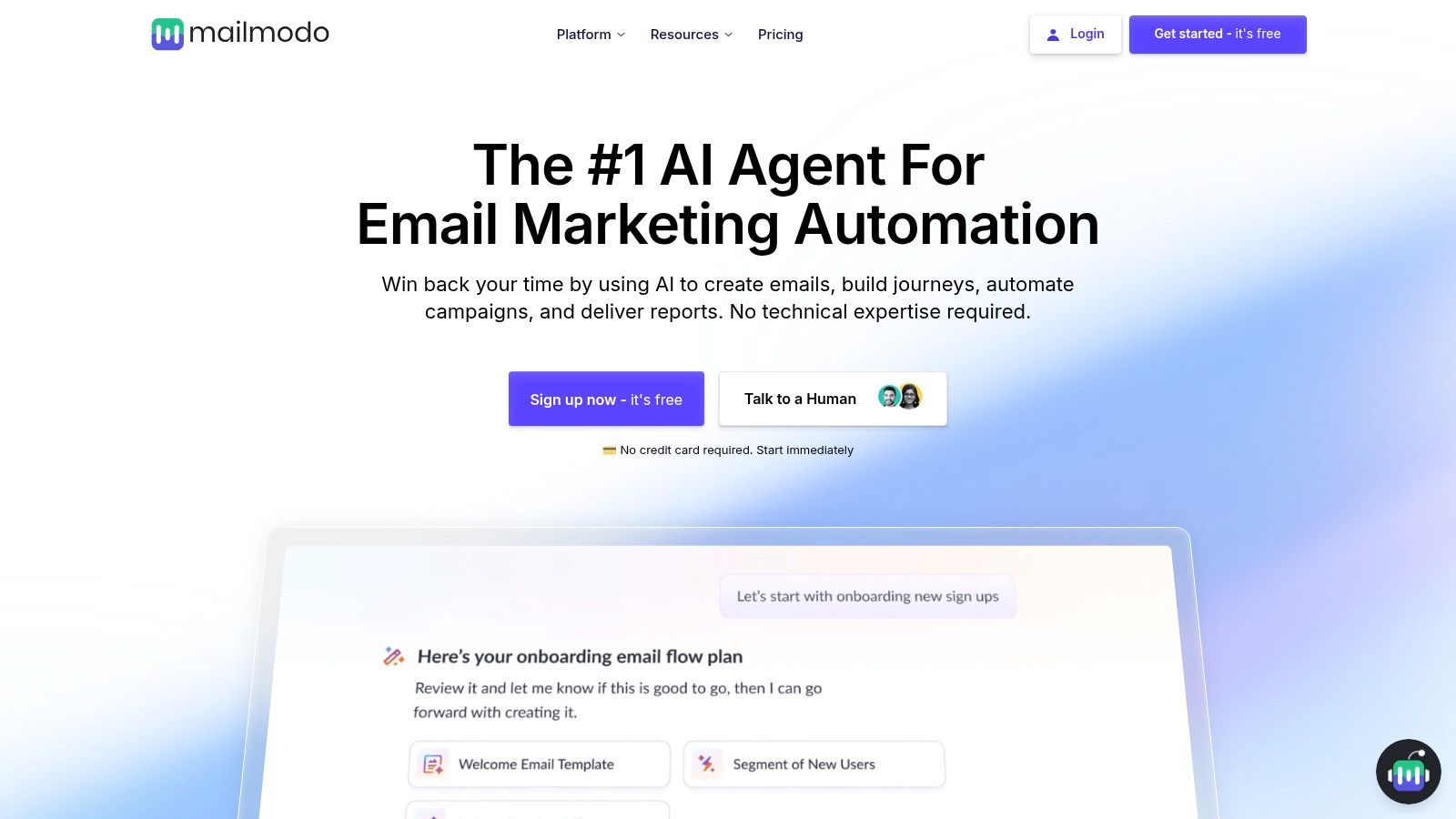
They’ve baked AI helpers into nearly every step. You can generate entire interactive email templates, build out automation flows with natural language prompts, and even ask the AI to analyze campaign performance and suggest new segments. It’s a compelling package if you want to experiment with cutting-edge email formats without getting bogged down in the manual setup. It’s a different way of thinking about what an email can do for your business.
Key Features & Assessment
- The AI template and automation builders are impressive for quickly scaffolding complex campaigns. You can describe a user journey, and the AI will map out a corresponding automation sequence, saving significant setup time.
- With the AI Performance Analyzer, instead of staring at dashboards, you can ask questions like “Which subject lines performed best for my new user segment?” It turns analytics into a conversation, which is a powerful shift.
- AMP for Email support is their standout feature. Creating in-email forms, carts, and calculators dramatically reduces friction. The AI helps generate these components, but remember, AMP isn’t supported by all email clients, so thorough testing is non-negotiable.
Pricing & Best For
Mailmodo offers a free plan for up to 500 contacts. Paid plans with the core AI and AMP features start with the Lite plan at $39/month.
It’s best for ecommerce and SaaS companies focused on reducing user friction and increasing conversions. If you’re willing to embrace interactive emails and want AI assistance to build and analyze these novel campaigns, Mailmodo offers something standard ESPs can’t match.
Website: https://www.mailmodo.com
11. Sendlane
If you run an ecommerce store, you know that your contact list size can fluctuate wildly while your sending habits remain more stable. Sendlane built its entire model around this reality. It’s an email and SMS platform designed for revenue-focused operators who want to pay for what they use, not for dormant contacts, while getting highly attentive, 24/7 support.
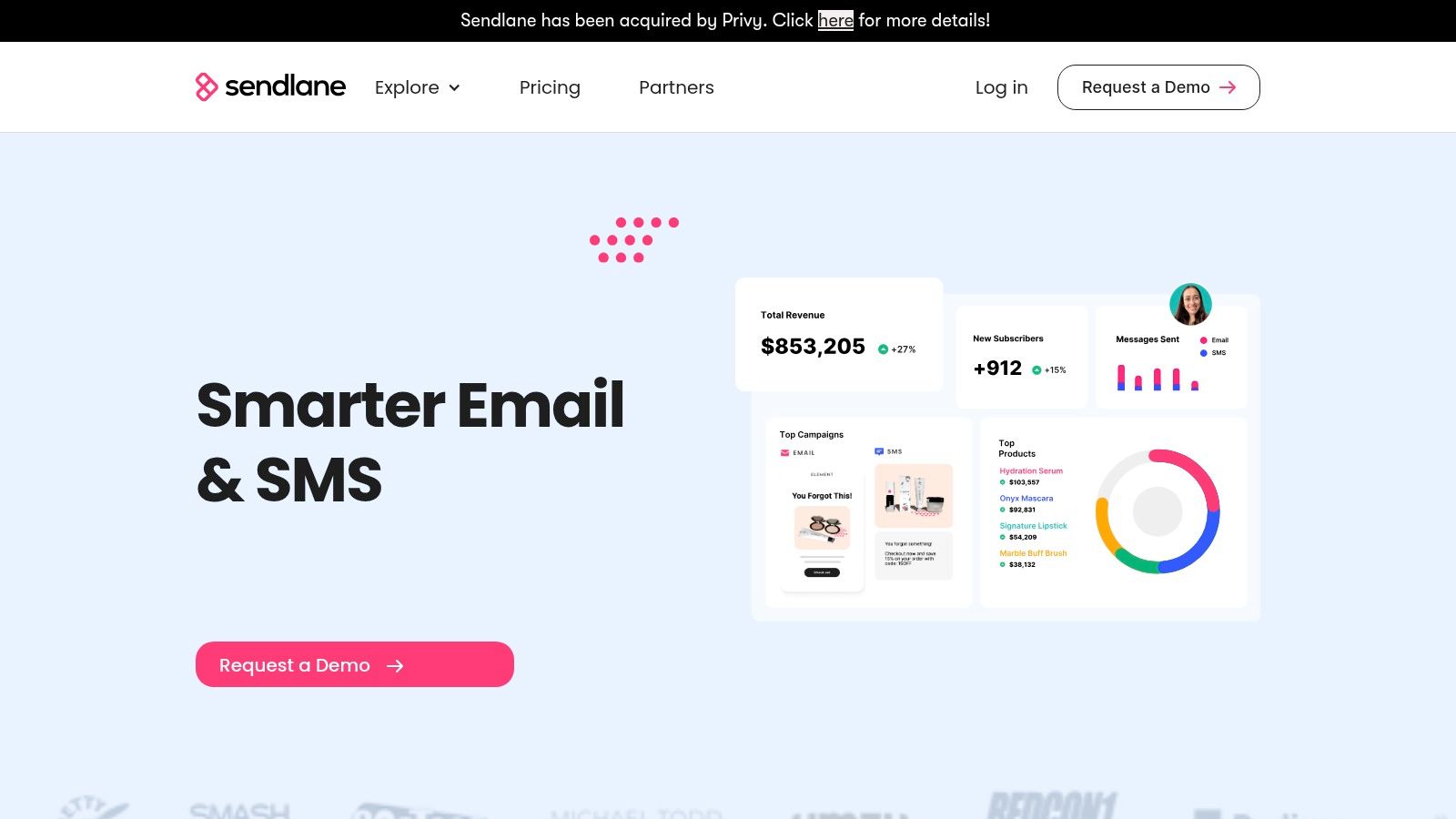
While Sendlane’s AI features are more subtle than a dedicated copy generator, they are woven into its ecommerce automations and segmentation. The platform excels at using behavioral data to trigger intelligent, revenue-driving campaigns. Think of it less as a creative AI assistant and more as an operational AI that optimizes your existing ecommerce workflows, making it a powerful contender among the best AI email marketing tools for brands fixated on ROI.
Key Features & Assessment
- For behavioral automation triggers, the platform’s strength lies in its deep integration with ecommerce platforms like Shopify. It uses customer data to power smart automations for cart abandonment, browse abandonment, and post-purchase follow-ups.
- For deliverability monitoring, Sendlane provides active support to manage sender reputation and ensure emails hit the inbox. It works as a managed service rather than a passive tool, and it helps protect the revenue channel you depend on most.
- Its predictive analytics reporting focuses on revenue attribution, helping you understand which campaigns and automations are actually making you money, allowing for smarter, data-informed decisions.
Pricing & Best For
Sendlane’s model is different. You get unlimited contacts and are billed based on your average sending volume, starting around $100/month for 5,000 sends. Higher tiers include a dedicated CSM and white-glove migration services.
It’s best for established ecommerce businesses that have a large contact list but a predictable sending schedule. If you value responsive, human support and want a platform built specifically to drive online store revenue, Sendlane is a fantastic fit. The pricing model rewards efficient sending over simple list-hoarding.
Website: https://www.sendlane.com
12. G2 (Email Marketing Category)
Okay, this isn’t a tool itself, but a resource so critical for your decision-making process that it belongs on this list. G2 is a peer-review and software marketplace where you can compare the best AI email marketing tools using verified, real-world user feedback. Before you and I commit to a yearly subscription based on a vendor’s marketing copy, this is where you get the ground truth.
Think of it as your strategic reconnaissance platform. It aggregates thousands of reviews, feature lists, and satisfaction scores, allowing you to filter by company size, industry, or specific AI capabilities. This lets you move past the hype and see how these platforms actually perform for businesses like yours. G2 helps you build a data-backed shortlist and gives you the social proof to back your own decision.
Key Features & Assessment
- The up-to-date grids and rankings provide filterable comparison charts that let you quickly see how vendors stack up on features like AI content generation, predictive analytics, and automation.
- Real-user pros and cons are the core value. You can read detailed accounts from actual users about what works well and, more importantly, what doesn’t.
- The side-by-side vendor comparison lets you select a few top contenders and evaluate their features, pricing, and user ratings in a direct, head-to-head format.
Pricing & Best For
G2 is free to use for browsing and research. Vendors pay for upgraded profiles and lead generation, which can influence rankings, so always cross-reference the data.
It’s useful for everyone. Founders, solo marketers and small teams should use G2 as a standard step to validate claims and discover niche tools before purchasing any AI email marketing software. It’s an indispensable resource for due diligence.
Website: https://www.g2.com/categories/email-marketing
Top 12 AI Email Marketing Tools Comparison
| Product | Key features (AI & automation) | UX & analytics | Best for (target audience) | Unique selling point | Pricing model / Cost notes |
|---|---|---|---|---|---|
| Mailchimp | “Write with AI” copy, send-time optimization, templates, multivariate tests | Approachable UI; mature audience analytics | SMBs wanting intuitive all‑in‑one marketing | Broad integrations + beginner-friendly AI tools | Tiered plans; advanced AI on higher tiers |
| Klaviyo | K:AI agents, ecommerce flows, deep segmentation, real‑time dashboards | Deep analytics; fast ecommerce time‑to‑value | Shopify / DTC ecommerce brands | Ecommerce‑first AI agents and prebuilt flows | Pricing scales with profiles & channels (can be costly) |
| HubSpot Marketing Hub | CRM‑powered personalization, AI content/social, attribution & reporting | Single source of truth; strong reporting & training | Teams needing unified CRM + marketing (B2B to enterprise) | Native CRM + enterprise attribution & governance | Free → Enterprise; Pro/Enterprise can be expensive, onboarding fees |
| ActiveCampaign | AI Campaign Builder, predictive sending, SMS/WhatsApp, automation blocks | Deep automation tooling; AI workspace surfaces insights | Lifecycle & multichannel marketers | Powerful automations with AI assistance | Pricing by contact count; value needs setup/strategy |
| Brevo (Sendinblue) | Email‑volume billing, Aura AI content, automation, transactional messaging | Value‑oriented UI; usable free tier; good reporting | SMBs seeking affordable volume‑based email | Charges by emails sent (unlimited contacts) | Email‑volume pricing; advanced AI on higher plans |
| Omnisend | AI subject lines, ecommerce automations, consolidated email+SMS workflows | Fast launch for ecommerce; strong deliverability & revenue reporting | Ecommerce stores (Shopify, BigCommerce, Woo) | Email+SMS lifecycle workflows with ecommerce focus | Competitive entry pricing; upsells for advanced tiers |
| MailerLite | AI writing & subject generator, landing pages, visual automation | Clean UI; quick setup; 24/7 support on paid plans | Creators & small businesses wanting simplicity | Very competitive pricing + built‑in sites/landing pages | Affordable tiers; AI credits/limits vary by plan |
| ConvertKit (Kit) | Visual automations, recommendations network, commerce for paid newsletters | Simple funnels; creator analytics; priority Pro support | Individual creators, newsletters, small teams | Creator monetization + recommendations network | Free → paid; costs scale with list size (recent increases) |
| Drip | Visual ecommerce workflows, revenue dashboards, product/event triggers | Clear LTV/revenue visibility; strong store integrations | Ecommerce brands optimizing lifetime value | Revenue‑centric dashboards and triggers | Pricing scales with active people & send volume |
| Mailmodo | AI template generator, performance analyzer, segment generator, AMP support | Broad AI tools; good for interactive email testing | Teams testing AMP/interactive emails & AI workflows | Emphasis on AMP/interactive email experiences | Varies by plan; AMP requires cross‑inbox testing |
| Sendlane | Unlimited contacts, pay‑for‑sends billing, deliverability monitoring, dedicated CSM | Strong 24/7 support; white‑glove migration options | Revenue‑driven ecommerce operators with large lists | Pay‑for‑sends model + deliverability focus | Billing by average send volume; planning required |
| G2 (Email Marketing) | Review aggregation, grids/rankings, compare tool, editorial roundups | Large vendor coverage; filterable reviews & satisfaction scores | Buyers shortlisting vendors and validating options | Aggregated real‑user reviews & side‑by‑side comparisons | Free to use; sponsored placements may influence ordering |
The Real AI Advantage Is Your Strategy
I’ve just dissected the top AI email marketing tools on the market. From Klaviyo’s ecommerce prowess to HubSpot’s all-in-one ecosystem and ConvertKit’s focus on creators, it’s clear the options are powerful. But after years of implementing these systems, I can tell you a hard truth: buying a subscription to any of these platforms won’t give you a lasting competitive edge.
The tool is just an empty vessel. It’s a sophisticated engine waiting for fuel and a destination. The real, defensible advantage comes from the strategic intelligence you feed it and the operational framework you build around it.
From Feature-Chasing to System-Building
Your competitors have access to the same AI subject line generators and send-time optimization features. The fanciest new AI feature this quarter won’t decide the race. Whoever builds the smarter, faster marketing system will.
Think of it this way: the goal is an intelligent feedback loop, and smarter emails are one output of it. This system ingests customer data from every touchpoint, uses AI to identify patterns and predict behavior, and then automates the next best action, whether that’s an email, a personalized offer, or a notification to whoever handles sales. This is how you move from basic automation to building a genuine market intelligence engine.
Actionable Next Steps: How to Choose and Implement
So, how do you make the right choice and, more importantly, get it right from day one?
-
Define the core problem first. Don’t start with “We need an AI tool.” Start with “We need to increase customer LTV by 20%,” or “We need to reduce cart abandonment by 15%.” Identify the specific business problem first, then evaluate which platform’s AI capabilities are best suited to solve it. An ecommerce brand battling churn needs Klaviyo or Omnisend; a B2B SaaS company with a long sales cycle needs the deep CRM integration of HubSpot or ActiveCampaign.
-
Audit your data hygiene. AI is useless without clean, structured data. Before you migrate, conduct a ruthless audit of your contact lists, properties, and event tracking. A powerful AI tool fed with garbage data will only automate bad decisions faster. A solid foundation is non-negotiable.
-
Integrate beyond email. The most powerful AI insights come from connecting disparate data sources. Your email platform must connect cleanly with your CRM, your ecommerce store, your analytics platform, and even your customer support software. This holistic view is what allows AI to truly understand the customer journey and make accurate predictions. For instance, connecting these systems is essential for implementing advanced lead scoring best practices that truly reflect a prospect’s readiness to buy.
The best AI email marketing tools act as the central nervous system for your customer communication. They multiply what you already do well. Your job is to be the strategist who designs the system your AI-powered tools will run. Buy the tool, then build the engine around it that grows your revenue.