
Your email list probably isn't underperforming because email is weak. It's underperforming because you're treating the list like a broadcast channel instead of a decision system. Organizations often still send one campaign to everyone, maybe with a first name token, then act surprised when engagement slips and revenue stalls.
I don't buy the usual advice that says you need a huge taxonomy, a perfect CRM, and endless persona workshops before you can segment properly. You don't. You need a small number of high-impact segments, clean rules, and a system that updates as customer behavior changes. That's where the substantial gains are.
The basic case is already strong. Segmented campaigns have been reported to generate 14.31% higher open rates and 101% more clicks than non-segmented campaigns. That's not a cosmetic lift. That's the difference between sending noise and sending something buyers care about.
You and I know what this means in practice. Your list can become a live intelligence layer for the business. It can tell you who's warming up, who's drifting away, who's ready to buy again, and who needs a different offer entirely. If you want a broader strategic lens on targeting before you touch campaign logic, read this guide on how to segment your B2B market.
I'm going to give you the email segmentation best practices that matter now. Not theory. Not fluff. The practical stack I'd build if revenue, speed, and competitive advantage were the only things that mattered.
1. Behavioral Segmentation Based on Email Engagement Patterns
Start with behavior. I do not care how polished your personas look if your system cannot detect who is heating up, who is fading, and who is wasting send volume.
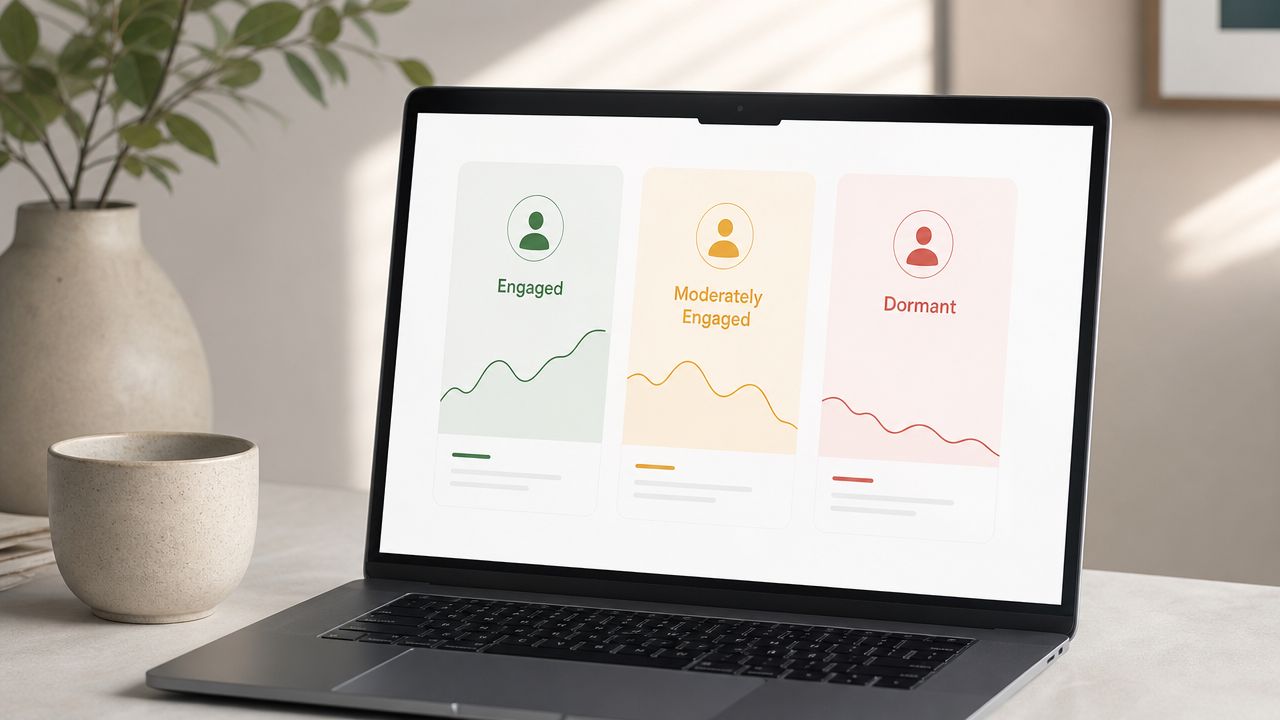
Email engagement patterns give you timing. Timing drives revenue. A subscriber who clicks pricing emails, visits product pages, replies to a campaign, or returns to your site after multiple sends is giving you stronger buying context than a static profile field ever will.
I'd build three operating segments first. Engaged. Slipping. Dormant.
That sounds simple because it should be. The mistake is treating these as static buckets instead of a live decision system that updates daily, or in real time if your stack supports it. Your ESP, CRM, and site tracking should move people automatically as their behavior changes. Manual list pulls are slow, error-prone, and expensive.
Track signals that justify a different action
Use opens with caution. Privacy changes made them weaker. Put more weight on clicks, on-site behavior, reply activity, product views, cart events, purchase recency, and repeat engagement with high-intent content. If you want a sharper framework for structuring those rules, this breakdown of three popular segmentation methods is a useful reference.
Here is the rule I use. If a behavior does not change message, timing, offer, frequency, or channel, it does not deserve its own segment.
That standard cuts a lot of clutter.
An engaged segment should get faster follow-up, stronger conversion CTAs, and more product-specific messaging. A slipping segment should get shorter sequences, clearer value, and friction-reducing proof. A dormant segment should either enter a deliberate reactivation flow or stop receiving regular campaigns before it drags down performance.
If you want to sharpen the signal set behind those decisions, study customer behavior analysis. It helps you connect raw engagement events to intent, drop-off risk, and buying readiness instead of treating clicks like isolated metrics.
Put AI on pattern detection, not just copy generation
AI demonstrates its worth here. I use it to detect movement between states before a human analyst would catch it in a dashboard review.
Start with a scoring model. Weight recent clicks, visit frequency, page depth, purchase activity, reply behavior, and recency of meaningful engagement. Then add machine learning to classify likely converters, likely churn risks, and subscribers whose engagement pattern suggests they need a different sequence altogether.
Now the segment becomes dynamic. An AI agent can watch behavior, update scores, trigger the right journey, suppress the wrong campaign, and alert sales or customer success when a contact crosses a threshold. That is not nicer segmentation. That is a faster operating system for revenue.
Keep the first version tight. Build broad segments you can measure, automate the movement between them, and let AI refine the thresholds after you have enough signal.
2. Demographic and Psychographic Segmentation for Personalized Messaging
Demographics aren't dead. They're just overrated when used alone.
If you sell to different industries, company sizes, roles, regions, or buyer mindsets, you need messaging variation. The mistake is assuming those labels should drive the whole segmentation strategy. They shouldn't. They should shape positioning after behavior has identified relevance.
Use profile data to change the message, not predict intent
In B2B, I care about firmographics like industry, company size, and role because they affect pain points and buying language. A founder reads a message differently than a marketing manager. A healthcare buyer needs different framing than a retail buyer.
Psychographics matter too, especially when your offer competes on worldview as much as function. Some buyers want speed. Some want safety. Some want control. Your copy should reflect that.
If you want to sharpen how message-to-market match works inside segmentation, I'd read my breakdown of three popular segmentation methods. It connects segmentation choices directly to how you position the offer.
You'll also get better results if you pair profile data with observed actions. That's where customer behavior analysis becomes useful. Identity gives context. Behavior gives timing.
Don't collect more fields than you can maintain
Most companies ask for too much data too early, then never govern it.
Start with the few fields that affect offer framing, sales routing, or compliance. For a SaaS company, that might be role, company size, and industry. For ecommerce, it might be geography and broad preference indicators. Then enrich over time through forms, surveys, quizzes, sales notes, and browsing behavior.
A good example is a software company selling the same platform to agencies and in-house teams. The product may be identical, but the email sequence shouldn't be. Agencies care about client throughput and margin. In-house teams care about reporting, alignment, and internal adoption. Same product. Different buying language. Different objections. Different email.
This is one of the most durable email segmentation best practices because it protects relevance without forcing you into endless micro-segments.
3. Purchase History and Product Affinity Segmentation
Past buying behavior is one of the cleanest signals in your stack.
When somebody has already paid you, they've moved beyond curiosity. They've shown fit, trust, and willingness to transact. That means your next email shouldn't sound like a top-of-funnel pitch. It should sound like a smart continuation of the relationship.
Segment by what they bought and what that implies next
I'd separate first-time buyers, repeat buyers, category-specific buyers, and buyers who haven't purchased again within a sensible window for the product. Then I'd map each group to a clear business objective.
For first-time buyers, I want onboarding and confidence-building. For repeat buyers, I want loyalty, replenishment, or cross-sell. For category buyers, I want adjacent products that fit their proven preferences.
A skincare brand can segment customers who bought cleansers but not moisturizers. A DTC coffee brand can create replenishment reminders based on typical consumption patterns. A B2B software vendor can promote add-ons only to accounts that have already adopted the core workflow, instead of blasting upsell pitches to customers who haven't even activated the basics.
Send the next best offer, not the most profitable offer on your calendar.
Let AI handle affinity, not just recency
Recommendation logic becomes valuable. You don't need Amazon-scale infrastructure to do this well. You need a product catalog, order history, and a way to detect co-purchase patterns, repeat intervals, and category affinity.
I'd build simple rules first. Bought X, likely interested in Y. Purchased recently, suppress broad promos for a short period. Purchased from premium line, route toward higher-value follow-up instead of discount-heavy campaigns.
Then I'd layer in AI to rank likely next purchases, identify customers drifting away from their normal buying rhythm, and generate product blocks dynamically inside the email. That turns segmentation from a static list into a revenue engine.
This is often underused because they separate merchandising data from email data. Fix that. When product and customer data live together, segmentation gets sharper and campaign waste drops fast.
4. Lifecycle Stage Segmentation for Targeted Journey Messaging
Lifecycle segmentation fails when you treat it like a static funnel chart.
I want lifecycle stages tied to real operating decisions. Who needs activation help right now. Who is ready for expansion. Who is slipping toward churn. If a stage does not change the message, timing, offer, or owner, it is noise.
Build a small stage model your team can run
Keep the model tight. Subscriber, lead, active prospect, new customer, active customer, at-risk customer, and advocate are enough for many organizations.
Do not start with a bloated taxonomy. Start with a few high-impact stages tied directly to activation, retention, and revenue. Teams execute simple systems. Teams ignore complicated ones.
If you want to connect lifecycle segmentation to automation logic, this guide on email marketing automation strategies is a useful next step.
Assign one job to each stage
Each lifecycle stage needs a single primary outcome.
Trial users need activation. New customers need onboarding and early value. Active customers need stronger usage, expansion, or referrals. At-risk customers need intervention before they disappear. Advocates need easy ways to review, refer, and influence pipeline.
That discipline matters because mixed-stage campaigns always collapse into generic messaging. The copy gets softer, the CTA gets weaker, and performance drops.
A SaaS company is the clearest example. Trial users should get setup help, use-case education, and prompts tied to the first successful action. New paid users should get implementation guidance and confidence-building proof. Mature accounts should get feature depth, workflow expansion, and account growth messaging.
Let AI move people between stages in real time
Lifecycle segmentation becomes a competitive system rather than a manual spreadsheet.
I would use product usage, site behavior, purchase frequency, support tickets, and sales activity to update stage status automatically. A customer who finishes onboarding and expands usage should not wait for a quarterly list cleanup to enter an expansion flow. An account with falling usage and rising support friction should move into an at-risk sequence before churn shows up in the revenue report.
AI models and AI agents make this practical. Models can score stage transition likelihood, such as trial-to-paid, active-to-at-risk, or customer-to-advocate. Agents can trigger the next message, suppress the wrong one, and route edge cases to sales or customer success. That is how you get targeted journey messaging without asking your team to babysit segment lists every week.
The best lifecycle segment is one your systems can update automatically and your team can act on immediately.
5. Win-Back and Re-engagement Segmentation for Inactive Subscribers
Keeping inactive subscribers on every campaign is not caution. It is list decay disguised as growth.
If someone has stopped opening, clicking, or visiting key pages, stop treating them like an active audience member. Put them into a separate re-engagement system with its own rules, its own cadence, and a hard exit. That protects sender reputation, sharpens reporting, and keeps revenue signals clean.
Build an inactivity model, not a static suppression list
I would not run win-back segmentation off one blunt rule alone. I would use engagement recency, site activity, purchase behavior, product usage, and unsubscribe risk to classify inactivity with more precision. A subscriber who ignores email but still browses product pages is different from one who has gone silent everywhere.
Oracle Responsys recommends defining inactivity windows based on your actual send cadence and engagement cycle, then suppressing chronically unresponsive contacts before they drag down performance (Oracle). That is the right operating principle. The threshold should fit your business, but the action should be automatic.
A publisher may trigger a confirmation sequence after a sustained drop in opens. An ecommerce brand may shift low-engagement contacts into a lower-frequency offer stream. A SaaS company may detect dormant leads from both email inactivity and product silence, then send a focused message based on the feature or use case they abandoned.
Let AI decide who deserves another shot
This segment gets more profitable when AI stops you from sending the same desperate win-back email to everyone.
Use models to score reactivation likelihood, likely content interest, and best send time. Use AI agents to assemble the message from prior clicks, viewed categories, last purchased products, or incomplete onboarding steps. If the predicted recovery odds are weak, suppress early. Protect deliverability first. Reach is worthless if the inbox providers stop trusting you.
A short sequence works best. Ask for a clear choice. Reconfirm interest, update preferences, or exit. Do not let disengaged contacts sit in a permanent maybe state.
Klaviyo advises sending the majority of campaigns to your engaged audience and limiting full-list sends to a small share of your calendar (Klaviyo). I agree with that discipline because it forces you to treat inactivity as a risk-control problem, not a volume opportunity.
Your email list is not a trophy. It is an operating asset. Cut the dead weight, let AI identify recoverable demand, and put your sending reputation to work where it can still produce revenue.
6. Device and Content Preference Segmentation for Optimized Delivery
A great offer still loses if the email is annoying to consume.
This is one of the quieter email segmentation best practices because it sounds tactical, but it affects real money. If a subscriber reads on mobile, prefers short-form updates, and only wants promotional messages once in a while, you need to honor that. Otherwise you create friction that never needed to exist.
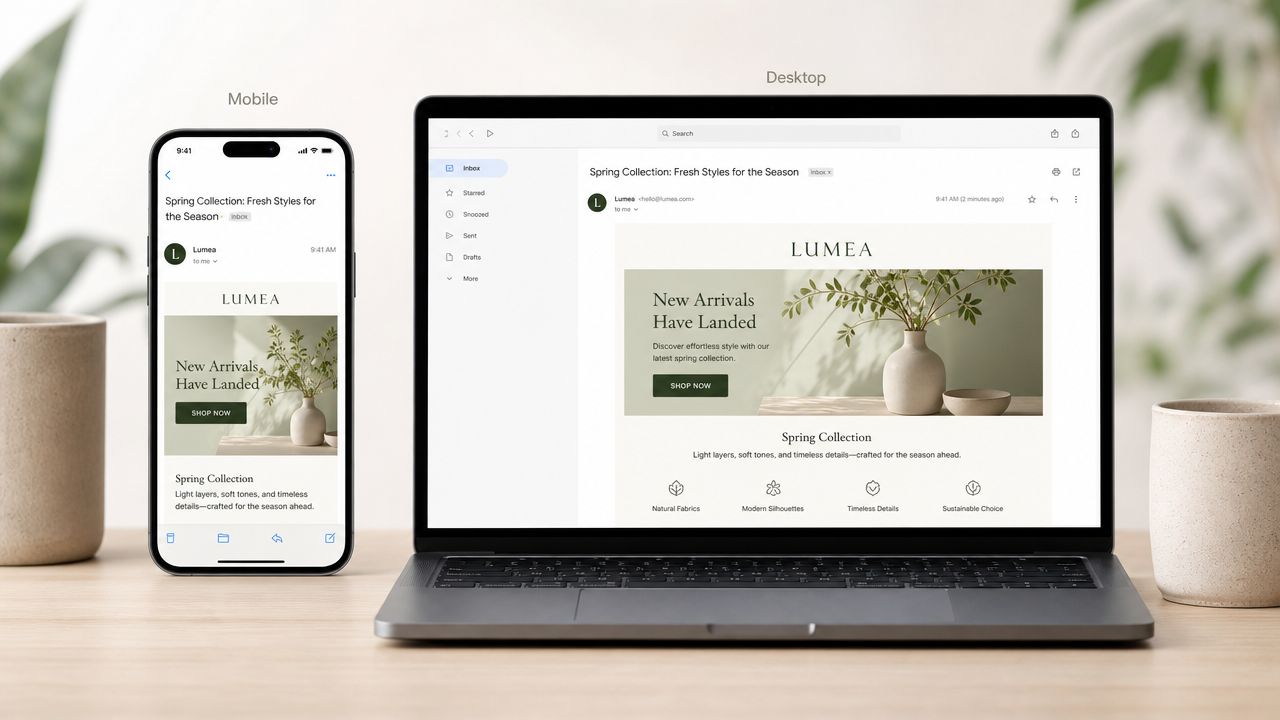
Segment for consumption habits, not just buyer status
I'd track device tendencies, click behavior, content themes, and stated preferences from a preference center. Then I'd use that data to shape layout, send cadence, and content mix.
A founder reading on a phone during commute hours may respond to tighter copy and one decisive CTA. A procurement contact reading on desktop during business hours may prefer fuller detail, documentation links, and comparison content. Same account, different reading context.
Here's where a lot of brands miss the opportunity:
- Frequency preferences: Let subscribers choose digest style versus every update.
- Content preferences: Separate educational content, product updates, and promotional offers.
- Format preferences: Track who clicks video, who clicks long-form resources, and who only responds to direct sales emails.
These aren't vanity settings. They reduce friction and unsubscribe pressure.
Let AI adapt presentation
AI can classify content themes automatically, recommend the best content mix for each user, and adjust send timing based on historical interaction windows. I'd also use it to choose which block appears first in modular email templates based on prior engagement patterns.
A publisher can prioritize analysis for one reader and tactical playbooks for another. An ecommerce brand can push editorial-style product storytelling to one segment and fast promotional tiles to another. A B2B company can give technical buyers deeper specs while executives see business outcomes first.
An obsession with subject lines often leads to overlooking format fit. That's a mistake. Delivery includes experience, not just inbox placement.
7. Revenue and Customer Value RFM Segmentation for Resource Prioritization
RFM is not an academic exercise. It is how you decide who gets budget, who gets retention effort, and who should stop receiving expensive attention.
Recency shows who is still active. Frequency shows habit. Monetary value shows commercial importance. Put those three signals together and you stop treating your list like a flat audience.
I recommend using RFM to drive action, not reporting. High-value recent buyers should get priority inventory access, stronger loyalty treatment, and faster cross-sell paths. New but promising buyers should get onboarding that pushes second purchase speed. Customers with strong historical value but declining recency should get save offers before you waste margin on broad discounts.
The point is resource allocation. A retailer should reserve launch campaigns for repeat category buyers, not casual discount hunters. A SaaS company should push expansion messaging to accounts with high contract value and healthy product usage, while lower-value accounts stay on lighter automation. A service business should move repeat clients into referral, renewal, or retainer tracks instead of sending them basic credibility content they no longer need.
Static RFM models go stale fast.
If you score customers once a quarter and leave them there, your segmentation turns into theater. A stale VIP segment can include buyers who have already drifted. A low-priority segment can hide customers whose buying pattern is accelerating right now. Build this on clean, centralized data and start with two or three segments that clearly change how you spend time and money. The Data & Marketing Association makes the broader case for customer data strategy and responsible data use at https://thedma.org/.
AI makes RFM far more useful because it turns a scoring framework into a live decision system. I use machine learning to detect which customers are likely to move up a value tier, which high-value buyers show early churn signals, and which offer type protects margin without killing conversion. AI agents can then trigger the right play automatically. That could mean escalating a high-risk VIP to a retention flow, assigning a sales follow-up for an expansion-ready account, or suppressing discount emails to customers who keep buying at full price.
That is the competitive advantage. You are not just sorting customers by past value. You are using AI to predict future value and deploy resources before your competitors even see the shift.
8. Language, Regional, and Cultural Segmentation for Global Campaigns
If you market across regions and still send one global email, you're creating avoidable drag.
Language is the obvious layer. Time zone is the next. Cultural context, local seasonality, and consent requirements matter too. When teams ignore these, they don't look efficient. They look careless.
Local relevance beats global convenience
A promotion timed for one market can land badly in another. A product message that feels clear in one region can feel awkward or incomplete elsewhere. Even if English is widely understood, buyer comfort rises when your message matches local expectations.
I'd segment by preferred language first, then region, then time zone, then market-specific context where it materially changes the campaign. That could mean localized creative, different send timing, region-specific product availability, or distinct consent messaging.
An ecommerce brand selling internationally should separate shoppers by language and region before campaign planning starts. A SaaS company with buyers in North America and Europe should adjust send timing and compliance language rather than forcing one campaign standard on both.
Relevance starts before the body copy. It starts with whether the email should have been sent to that person, in that version, at that time.
Use AI for localization, not blind translation
AI can speed up translation, summarize regional campaign performance, and recommend send times by geography. It can also help you detect where global messaging drifts from local buying language.
But don't hand strategic localization over to a model without review. Especially for compliance-sensitive or high-consideration campaigns. Use AI to accelerate adaptation, then let a human approve the final version if brand nuance or legal clarity matters.
This segmentation layer won't always create the fastest visible lift, but it prevents unforced errors. And in competitive markets, fewer unforced errors is a real edge.
9. Lookalike and Propensity Modeling Segmentation for Predictive Marketing
Static segments are fine if you want average results. If you want revenue growth, you need segments that predict behavior before the click, purchase, upgrade, or churn event happens.
I use lookalike and propensity modeling to answer one question: who should get what message next, based on the highest probability of commercial action? That shifts segmentation from audience sorting to decision-making. It also gives AI a real job. The model identifies likely outcomes, your automation acts on them, and your team spends time on the accounts and subscribers most likely to produce revenue.
Model one revenue outcome first
Start with one prediction target. Purchase likelihood. Upgrade likelihood. Churn risk. Re-engagement probability.
That discipline matters.
Teams that try to score everything at once usually end up with noisy models, messy workflows, and no clear operational use. I'd rather see you build one dependable score and connect it to one campaign path than create five scores nobody trusts. If your stack is still immature, use rules-based segments first, then add prediction once your inputs are clean.
If you're evaluating platforms for this, my guide to AI email marketing tools for predictive segmentation workflows will help you separate real modeling and automation capability from surface-level AI branding.
Put the score to work inside the system
A B2B SaaS company can score free users by upgrade probability and push high-propensity accounts into sales-assisted nurture sequences. An ecommerce brand can predict category-level purchase intent and send focused offers instead of wasting margin on broad discounts. A subscription business can identify churn risk early and trigger retention messaging before cancellation intent becomes obvious.
The score itself is not the asset. The asset is the system around it.
Your ESP, CRM, product data, and site behavior need to feed the model and receive the output back in a usable form. That is where AI agents start to matter. They can monitor score changes, trigger campaigns, suppress the wrong offers, alert sales on threshold shifts, and keep segments current without manual list pulls. Done right, this becomes a living segmentation layer, not a spreadsheet exercise your team updates once a quarter.
I want one connected customer view here. CRM activity, website behavior, and product usage or purchase data should update the segment automatically as the customer changes. As noted earlier, that integration work is less exciting than creative. It produces more revenue.
Prediction tied to action gives you an edge. Prediction sitting in a dashboard gives you reporting.
9-Point Email Segmentation Best Practices Comparison
| Strategy | Implementation complexity | Resource requirements | Expected outcomes | Ideal use cases | Key advantages |
|---|---|---|---|---|---|
| Behavioral Segmentation Based on Email Engagement Patterns | Medium–High, tracking, scoring, dynamic lists | Analytics, CRM/ESP integration, tracking infrastructure, privacy review | Higher open/CTR, improved conversions, churn alerts | Active newsletters, engagement optimization, retention campaigns | Real-time personalization, ROI uplift, reduced unsubscribes |
| Demographic and Psychographic Segmentation for Personalized Messaging | Medium, forms, enrichment, layered attributes | Data collection, enrichment services, content/templates | More relevant messaging, improved CLV and targeting | B2B targeting, persona-driven campaigns, regional offers | Tailored creative, supports A/B testing, strong persona foundation |
| Purchase History and Product Affinity Segmentation | Medium, transaction sync and product-level tracking | Clean transactional CRM, product catalog, recommendation engine | Higher AOV, repeat revenue, better upsell/cross-sell | E‑commerce, subscription replenishment, merchandising | Direct revenue attribution, effective cross-sell and upsell |
| Lifecycle Stage Segmentation for Targeted Journey Messaging | Medium, define stages, triggers, automated workflows | CRM integration, automation tooling, stage-specific content | Improved funnel conversion, reduced email fatigue, better handoffs | SaaS trials, onboarding, full-funnel nurture programs | Aligns messaging to journey, predictable forecasting |
| Win-Back and Re-engagement Segmentation for Inactive Subscribers | Low–Medium, inactivity rules and win-back flows | Campaign templates, analytics, incentives for testing | Recover some dormant users, cleaner list health | Large dormant lists, cost-conscious retention efforts | Cost-effective recovery, insights on churn drivers |
| Device and Content Preference Segmentation for Optimized Delivery | Medium, device detection, dynamic rendering | Preference center, responsive templates, extensive testing | Improved mobile UX, higher engagement, fewer bounces | Mobile-first audiences, diverse content formats | Better rendering, respects subscriber preferences, accessibility |
| Revenue and Customer Value (RFM) Segmentation for Resource Prioritization | Medium, RFM scoring and tiering | Financial/transactional data, scoring models, CLV tools | Focused ROI, VIP uplift, prioritized retention | Businesses with clear transactions, loyalty programs | Data-driven prioritization, identifies at-risk high-value customers |
| Language, Regional, and Cultural Segmentation for Global Campaigns | High, localization, timezone, compliance handling | Translation/localization teams, legal/compliance, regional ops | Higher engagement in local markets, compliant expansion | International scale-ups, multi-region marketing | Cultural relevance, compliant localization, improved brand perception |
| Lookalike and Propensity Modeling Segmentation for Predictive Marketing | High, ML models, retraining, scoring pipelines | Historical data, data science expertise, model infrastructure | Higher conversion for high-propensity segments, efficient spend | Mature datasets, acquisition scaling, churn prediction | Predictive targeting, uncovers non-obvious patterns, efficient allocation |
From Segmentation to Market Domination
These aren't just email segmentation best practices. They're components of an intelligent marketing system.
Your competitors are still blasting broad campaigns because broad campaigns are easy. They don't require clean data, disciplined suppression, lifecycle logic, or predictive scoring. They also don't create much advantage. They create activity. That's not the same thing as progress.
The companies that win with email don't win because they send more. They win because they listen better. They connect customer behavior, product usage, purchase signals, regional context, and engagement history into one operating layer. Then they act on it faster than everyone else.
That's where AI earns its place. Not as a novelty writing assistant. As a system that updates segments in real time, spots churn risk early, ranks likely buyers, personalizes product or content blocks, and keeps your team focused on the audiences that matter most. Used well, AI turns segmentation from a marketing task into a competitive weapon.
Start smaller than you think. One of the most practical recommendations across the verified guidance is to begin with only a few high-impact segments and let them update dynamically as behavior changes. That's the right move. Pick the segmentation model with the clearest business payoff.
If you're an ecommerce brand, that might be purchase history and product affinity. If you're a SaaS company, it's often lifecycle stage and engagement. If you're selling into multiple buyer types, demographic and psychographic overlays may matter more than is typically recognized. If your list is bloated and inbox placement is slipping, win-back and suppression need immediate attention.
Then execute ruthlessly. Tie every segment to a different message, timing rule, or campaign decision. If a segment doesn't change action, delete it. If a rule can't update automatically, simplify it until it can. If your data is messy, fix the fields that influence revenue first and ignore the rest for now.
I'd also be honest about trade-offs. Don't build predictive models if you don't have enough trustworthy behavioral data. Don't localize every campaign if regional differences don't materially change conversion. Don't create tiny micro-segments your team can't measure or maintain. Complexity feels smart right up until it starts slowing down output and corrupting decisions.
You don't need a perfect stack. You need a living one.
If you want help designing that system, Samuel Woods publishes practical guidance on AI-driven growth, segmentation, automation, and message-to-market fit. That's useful if you're trying to turn a decent email program into a smarter operating system for revenue.
One segment at a time. One automation at a time. One data connection at a time.
That's how you stop sending campaigns and start building advantage. For teams also working on deliverability and tone control in AI-assisted outreach, this piece on bypassing AI detection for emails adds a useful operational angle.