
Stop creating content. Start optimizing it.
Everyone is obsessed with using AI to create content faster. That's a race to the bottom. It floods the internet with more mediocre articles, weak landing pages, and recycled ad copy that your buyers ignore.
You and I know that's not how you win.
The edge isn't volume. It's precision. The smartest teams use AI tools for content optimization to improve what already matters. Search visibility, conversion paths, message clarity, internal linking, metadata, page structure, and distribution fit. That's where revenue shows up.
The market has already moved. In one industry snapshot, 62% of B2C marketing leaders said their organizations use generative AI for content creation and optimization, while non-AI blog creation fell from 65% to 5%, according to these content marketing adoption statistics. If you're still treating AI as a side experiment, you're already behind.
That doesn't mean you should buy every shiny platform. It means you should build an optimization stack that makes every published asset work harder. And if you also need stronger authority signals around that content, pair these tools with the right tools for auditing and link building.
Table of Contents
- 1. Samuel Woods
- 2. Surfer SEO
- 3. Clearscope
- 4. MarketMuse
- 5. Frase
- 6. Semrush SEO Writing Assistant
- 7. Scalenut
- 8. Outranking
- 9. NEURONwriter
- 10. GrowthBar now part of SEOptimer
- Top 10 AI Content Optimization Tools Comparison
- Your Next Move From Tools to Systems
1. Samuel Woods

If you want software only, skip this and go straight to Surfer or Clearscope. If you want a competitive system that turns AI into revenue, I put Samuel Woods first for a reason.
Most companies don't have a tool problem. They have a workflow problem. They publish disconnected assets, chase rankings without tying them to conversions, and let AI generate copy without building any market intelligence loop around it.
Why I put Samuel Woods first
Samuel Woods operates like a Fractional Chief AI Officer, not a SaaS dashboard. That's a different category, and for founders or CMOs it matters more than another content score. The value is in building bionic marketing systems that connect research, prompting, optimization, automation, and conversion thinking into one operating model.
He's been working with machine learning since 2016 and generative AI since 2019. That experience shows up in the way his frameworks focus on applied use, not AI theater. You get practical methods for long-form content, landing pages, email, social, campaign ideation, and agent-driven workflows that use company context instead of generic prompts.
Practical rule: Don't buy a content optimizer if your team still can't explain how a blog post turns into pipeline. Fix the system first.
I also like the body of work behind the brand. The site has tactical guides, agent use cases, automation playbooks, and operating models for companies that need to move faster without trashing brand voice. Pricing isn't public, which is a downside. But if you're choosing between a cheap tool and a system that changes how your team executes, I wouldn't pretend those are equal decisions.
When to use this approach
Use Samuel Woods when you're dealing with any of these realities:
- Your team is stuck in AI experimentation: You have prompts everywhere, but no repeatable process.
- You need optimization tied to revenue: You're done measuring success by rankings alone.
- Your data is scattered: You need AI agents and automations that can pull context from your stack.
- You want founder-level impact: Small teams need systems that multiply output without enterprise overhead.
Don't choose this route if you only need a lightweight editor to polish blog posts. This is for teams that want to redesign how content gets planned, optimized, distributed, and measured.
2. Surfer SEO
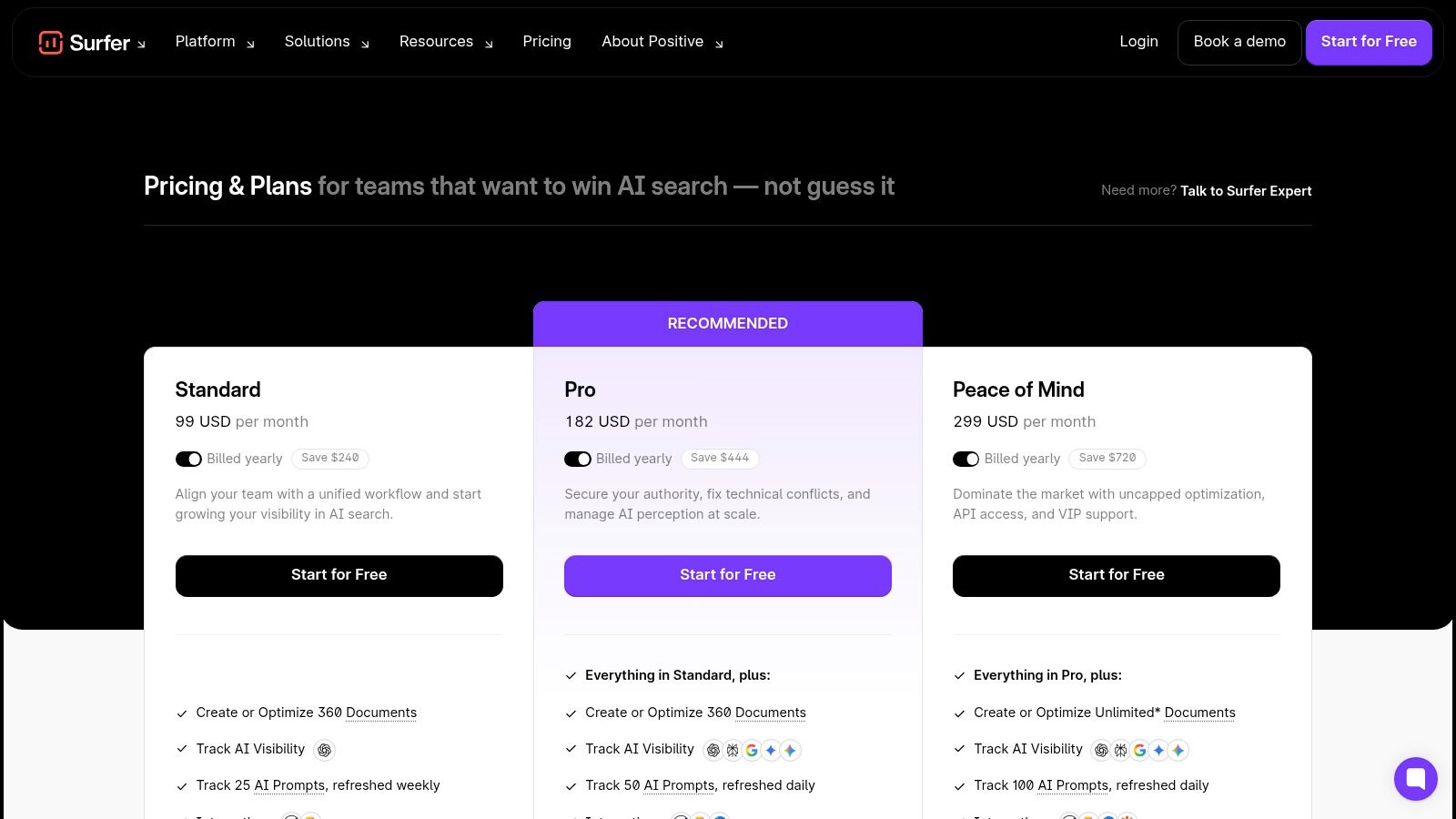
Surfer SEO is one of the easiest AI tools for content optimization to deploy fast. That's why a lot of teams start here. The Content Editor gives writers immediate guardrails, and the scoring system makes optimization visible instead of subjective.
What I like is the bridge between classic on-page work and newer AI visibility tracking. Surfer isn't just trying to help you rank in standard search results. It also pushes into monitoring visibility across AI search environments, which matters now that optimization isn't only about blue links.
Where Surfer actually wins
Surfer wins when your bottleneck is execution discipline. Writers need direction. Editors need consistency. SEO leads need a repeatable way to review content without line-editing every draft.
Its real strength is operational clarity:
- Live scoring: Writers can improve drafts while they work instead of waiting for post-production feedback.
- Structured recommendations: Term coverage and content guidance reduce guesswork.
- AI visibility angle: It helps teams think beyond Google rankings alone.
The limitation is straightforward. Surfer can make teams over-optimize if nobody is in charge of editorial judgment. Google's guidance on AI-generated search visibility makes that risk very clear. Pages need to be crawlable, people-first, technically sound, and eligible for indexing and snippets, according to Google's AI optimization guidance. If your team starts generating endless near-duplicate pages for every query variation, you're not being strategic. You're creating cleanup work.
Surfer is strongest when a smart editor uses it as a compass, not a command center.
If you already have strong writers and a solid technical SEO base, Surfer is a sharp choice.
3. Clearscope
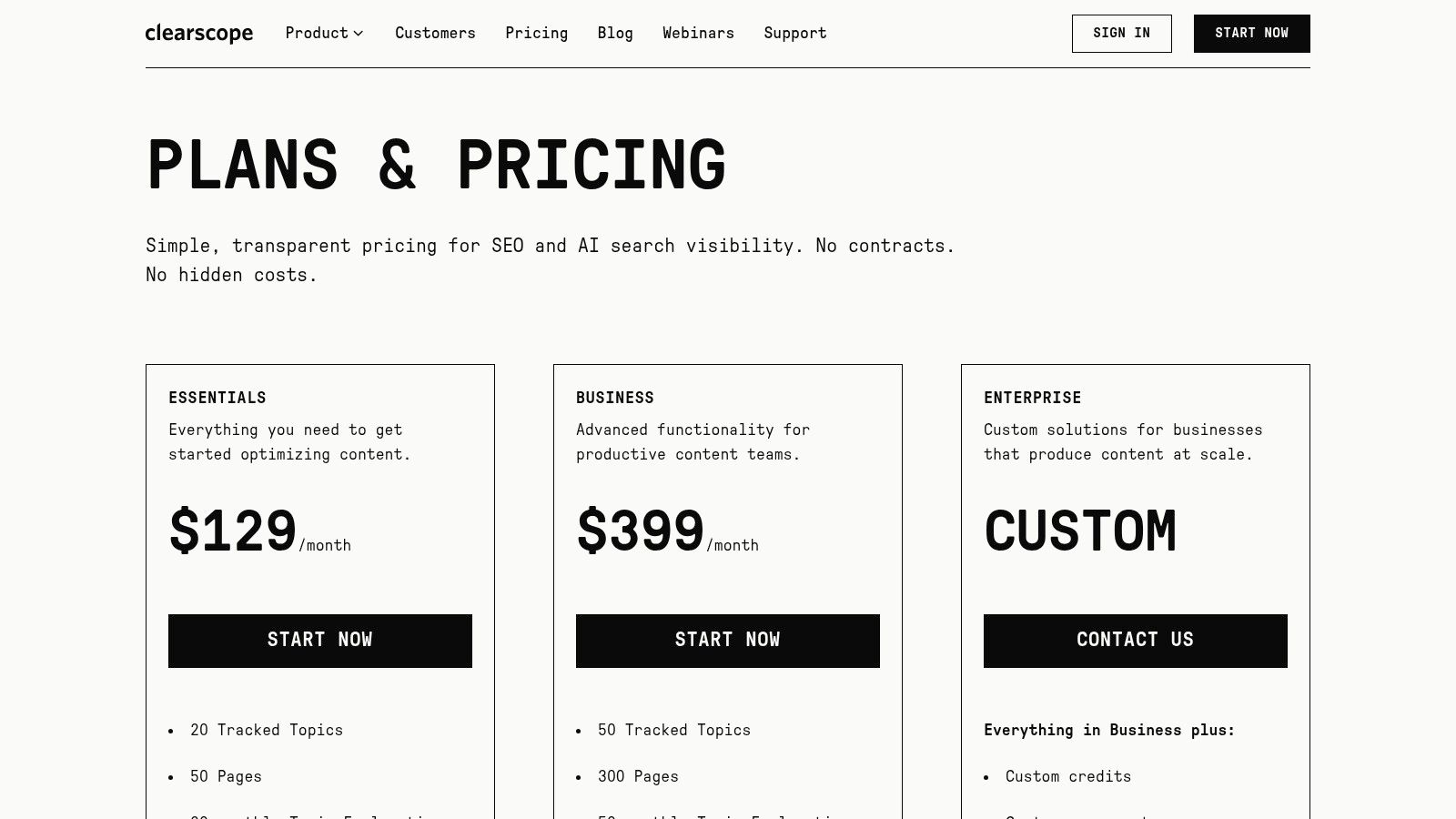
Clearscope is the tool I recommend when you need less noise and better writing behavior. Some platforms try to do everything. Clearscope stays focused, and that focus is exactly why many editorial teams stick with it.
The Content Grade is easy to understand. The editor is clean. The integrations with Google Docs and WordPress reduce friction for writers who don't want to live inside a new platform all day.
Why writers like Clearscope
This is one of the few optimization tools that doesn't feel like it's fighting the writing process. If you've got an in-house team or freelance bench that already writes well, Clearscope helps them tighten relevance and coverage without dragging them into a cluttered workflow.
I use Clearscope for teams that need disciplined optimization with minimal retraining:
- Cleaner editor experience: Good for writers who resent SEO tools.
- Focused recommendations: Strong for topic coverage and readability alignment.
- Easy adoption: Helpful when change management is a major challenge.
The trade-off is obvious. Clearscope isn't your all-in-one search stack. You won't use it for deep backlink work, heavy technical diagnostics, or broad research operations. That's fine. Not every tool needs to be a Swiss Army knife.
If your problem is content quality control inside an editorial workflow, Clearscope is one of the safest picks.
4. MarketMuse

MarketMuse is not the tool I hand to a solo founder writing one article a week. I use it when a company has a real content library, real topic breadth, and real consequences for content decay or overlap.
It shines at portfolio-level thinking. Inventory analysis, topic modeling, prioritization, and optimization across many URLs. That's where it earns the price.
Where MarketMuse earns its keep
If you're trying to build authority across clusters instead of polishing isolated posts, MarketMuse gives you a better planning layer than simpler editor-first tools. It helps teams decide what to refresh, what to consolidate, and what to publish next.
That matters because modern optimization has moved beyond keyword coverage. Recent thinking on content gaps now includes semantic gaps, intent gaps, format gaps, value gaps, and even parsing gaps where useful information is trapped in images instead of accessible HTML structures, as explained in this guide to modern content gap analysis. That's exactly the kind of strategic lens MarketMuse supports.
If you're exploring agent-driven ways to scale this process, I also like pairing this kind of planning with a stronger AI agent for content marketing approach so recommendations don't just sit in a dashboard.
Large libraries don't fail because teams lack ideas. They fail because nobody prioritizes what to optimize, merge, or retire.
Don't use MarketMuse if you need simplicity. Use it when your site is large enough that planning mistakes are expensive.
5. Frase
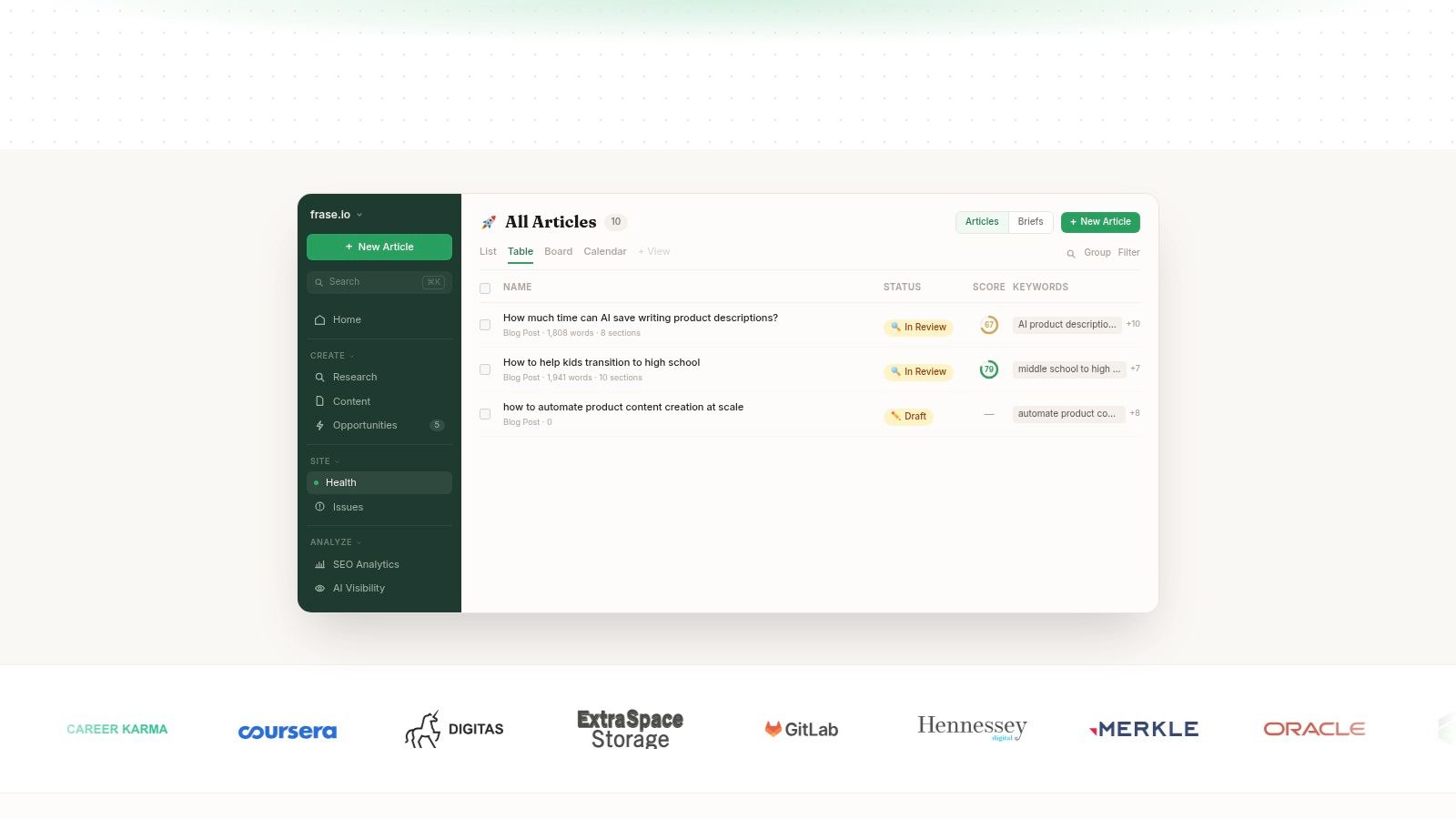
Frase is a strong pick for lean teams that need research, briefs, optimization, and drafting in one place. It doesn't try to look elegant. It tries to get work done.
I like Frase for startups, solo operators, and smaller marketing teams that can't justify stitching together multiple tools yet. The brief builder is fast, the optimization workflow is practical, and the writing support helps teams move from idea to publishable draft without bouncing across tabs.
Why Frase works for lean teams
A key value here is compression. Research, outline generation, optimization scoring, and content workflows sit close together. That cuts friction, which is often the hidden cost in content operations.
Frase is especially useful if you're still maturing your AI writing process. If that's you, build stronger foundations with a clear AI for content creation workflow so your drafts don't turn into generic sludge.
Its limitations are manageable:
- The interface can feel busy: Some teams need time to settle into it.
- Research depth is lighter: Enterprise SEO teams may want more advanced planning tools.
- You still need judgment: Fast brief generation doesn't guarantee differentiated content.
This is a practical machine for shipping content efficiently. If your team values speed and consolidation, Frase gives you a lot of utility.
6. Semrush SEO Writing Assistant
Semrush SEO Writing Assistant makes the most sense if you're already inside the Semrush ecosystem. If you aren't, I wouldn't force it.
This is an in-editor optimization layer for Google Docs, WordPress, and Microsoft Word. That matters because adoption is easier when you don't ask writers to change their environment. You bring optimization to where the writing already happens.
Best fit for existing Semrush users
SWA is useful when your team already uses Semrush for broader SEO work and wants a connected content review process. You get SEO scoring, readability guidance, tone checks, and AI-assisted rewrite help in place.
The bigger issue is specialization. Compared with dedicated optimizers, the recommendations can feel more generic. That's common in broader suites. They solve more categories, but each category may go less deep.
I also wouldn't let SWA become your definition of optimization. Content has to perform after publication, not just during drafting. If your next bottleneck is reach, not writing quality, sharpen your content distribution strategy instead of obsessing over another incremental content score.
One market signal is hard to ignore. Adoption has clearly gone mainstream. In one B2B snapshot, 67% of marketers said they use AI for creation and design, 59% use it for optimization and targeting, and 58% use it for performance analytics, according to this report on rising AI adoption in content marketing. That means your competitors aren't just drafting with AI. They're tuning and measuring with it too.
If you're a Semrush shop, SWA is convenient. Convenience is its real selling point.
7. Scalenut
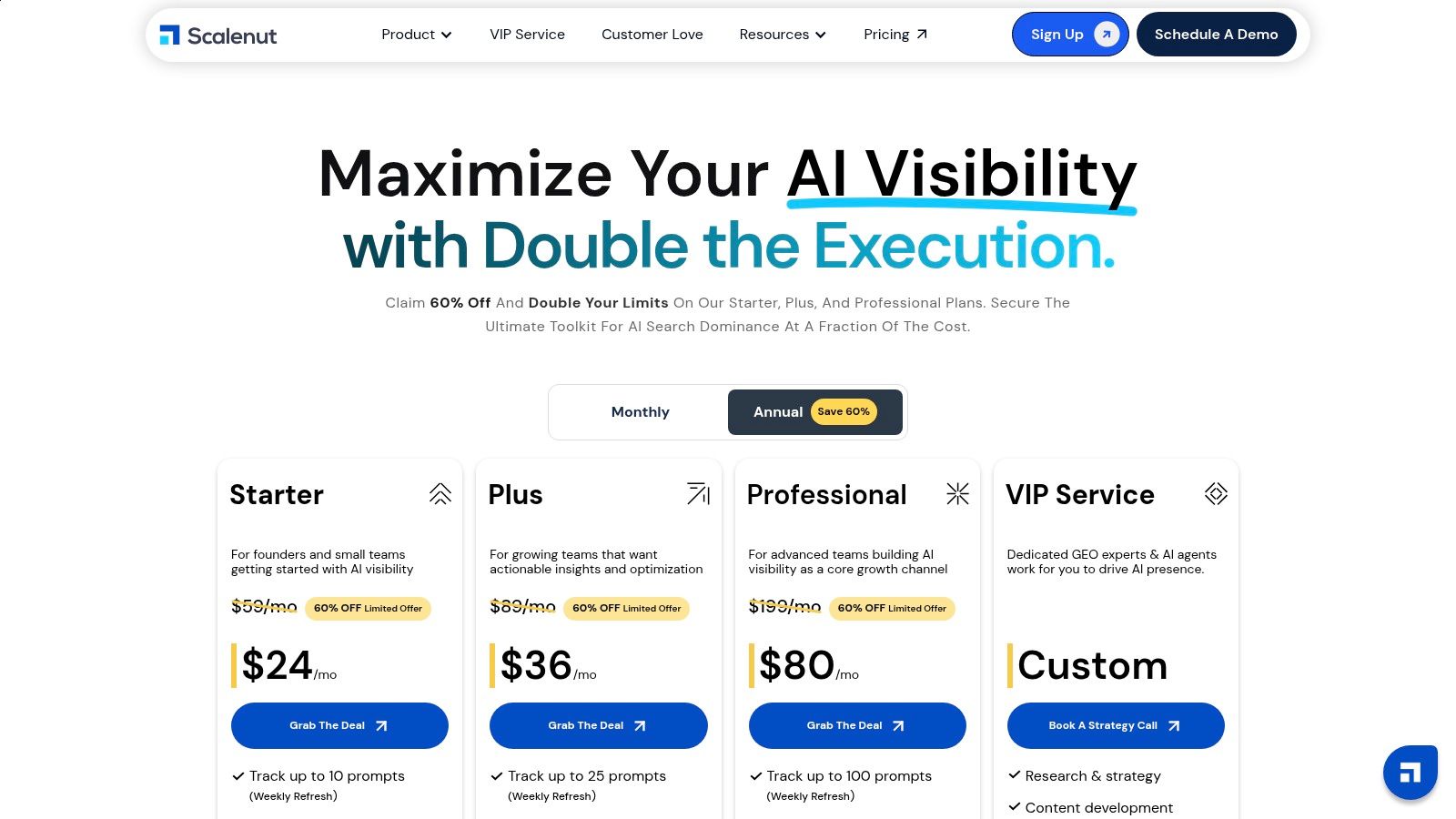
Scalenut is for teams that want one platform to handle planning, drafting, optimization, auditing, and internal linking. That's attractive when your operation is growing and your process is still messy.
I don't rank it first for polish. I rank it well for coverage. It gives mid-market teams a broader workflow than many editor-only tools, and that can remove a lot of operational drag.
The advantage of an end-to-end flow
Scalenut's value is momentum. Keyword clustering leads into drafting. Drafting leads into optimization. Optimization ties into audits and publishing. That's easier to manage than a tool stack held together with habits and hope.
For teams trying to scale content production while staying visible in changing search environments, that broader operating model matters. The business case is getting stronger too. The market for generative AI in content creation was estimated at USD 14.8 billion in 2024 and is projected to reach USD 80.12 billion by 2030, with a CAGR of 32.5%, according to Grand View Research's generative AI content creation market report. That tells me these platforms are moving from experimental spend to core budget line.
The downside is interface density. Some users will find it busy. Specialist editors also tend to feel smoother if pure writing workflow is your main concern.
Use Scalenut when breadth matters more than elegance.
8. Outranking
Outranking is a good tool for teams that want more guidance and less improvisation. Some optimizers throw data at writers and hope they sort it out. Outranking gives a more directed research-to-draft path.
That's useful when you're working with junior writers, distributed freelancers, or content managers who need guardrails. Its brief creation and real-time optimization support make it easier to keep work aligned with search intent and page structure.
Best for guided optimization
I like Outranking when the team needs a stronger process layer but doesn't want a heavyweight enterprise platform. It helps with briefs, structure, keyword mapping, internal links, and on-page scoring in one workflow.
Where it falls short is ecosystem depth. You won't mistake it for a giant SEO suite, and you still need other tools for advanced technical work or broader competitive intelligence. But that's not a dealbreaker if your main pain point is publishing inconsistent pages.
A simple way to think about it:
- Choose Outranking if process is your bottleneck: It gives writers and editors a guided path.
- Skip it if research depth is your bottleneck: You may need a larger platform.
- Skip it if technical SEO is your bottleneck: This isn't the right primary tool.
Outranking helps teams reduce content chaos. Sometimes that's the most impactful action.
9. NEURONwriter
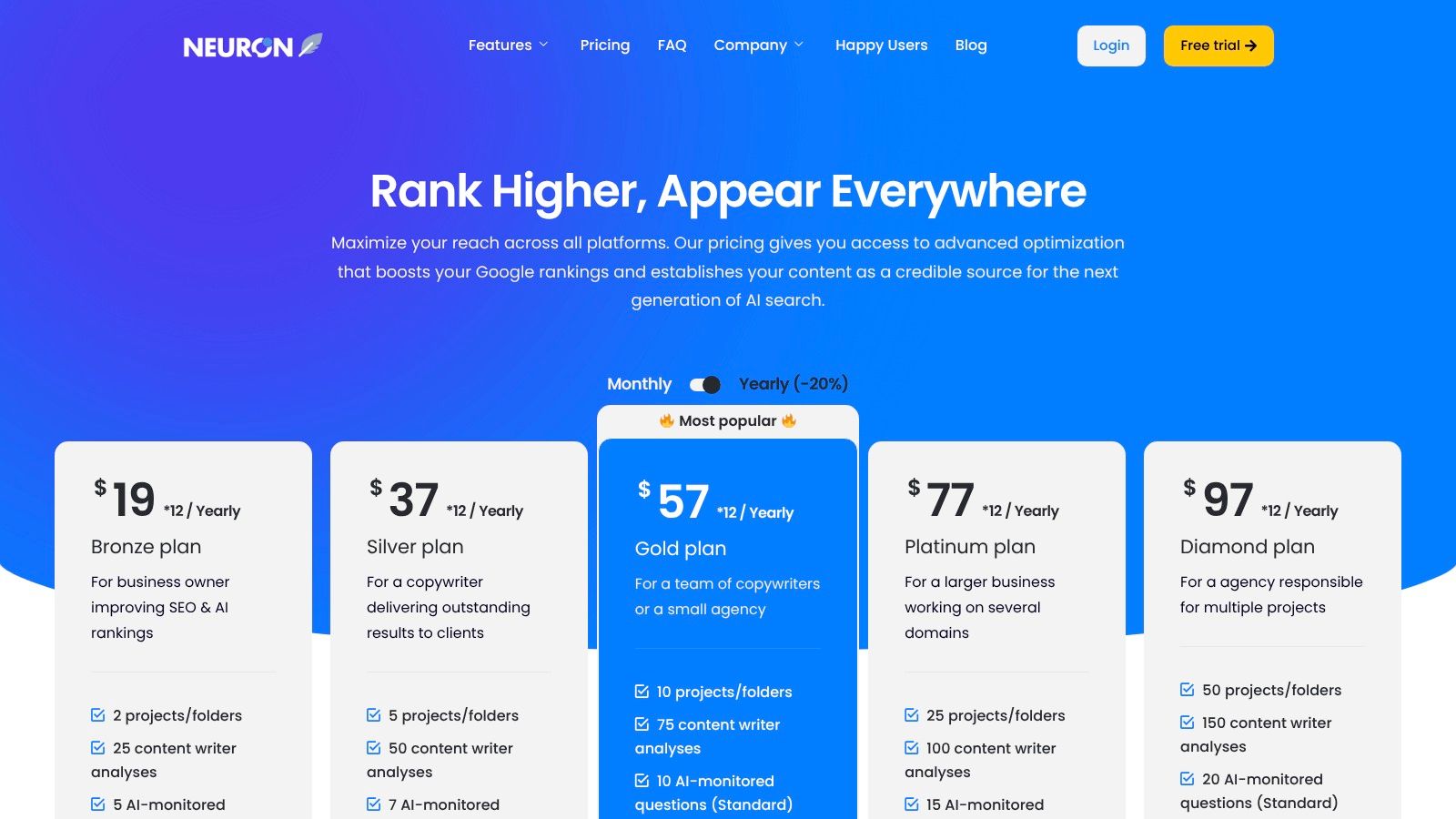
NEURONwriter is the budget-conscious pick I recommend most often to freelancers, consultants, and SMBs. It gives you the core optimization experience without forcing you into premium pricing territory.
That matters because not every business needs the most advanced suite. A lot of teams primarily need a better process for refreshing posts, improving semantic coverage, and tightening page relevance.
The budget play
NEURONwriter works best when you want practical SEO writing guidance at a lower cost of entry. The editor is approachable, and the competitor analysis plus semantic suggestions are enough for many smaller teams to improve output quality.
I especially like it for content refresh workflows. Older pages often need structural cleanup, better term coverage, and clearer alignment with current intent. NEURONwriter supports that kind of maintenance well.
If your budget is tight, don't buy prestige. Buy the tool your team will actually use every week.
The trade-off is research depth. Backlink data and broader keyword intelligence are more limited, so many teams pair it with another SEO product. That's normal. Low-cost tools don't need to do everything. They need to solve the highest-value problem reliably.
If you're early in your content operation, NEURONwriter is a sensible choice.
10. GrowthBar now part of SEOptimer
GrowthBar is built for speed. Outlines, long-form drafts, optimization suggestions, audits, and lightweight collaboration. If your team publishes often and doesn't want a heavy setup, it can do the job.
The acquisition context matters, though. Since it's now part of SEOptimer, I would verify the current product direction before making it central to your stack. Tools in transition can improve fast, but they can also shift under your feet.
Where GrowthBar fits
I like GrowthBar for bloggers, lean content teams, and SMB operators who want transparent usage and quick output. It's a practical option if your content engine depends on velocity and you don't need enterprise research depth.
This is not where I'd go for strategic authority building across a massive content library. It's where I'd go when a small team needs to publish, optimize, and collaborate without a lot of overhead.
Use it if these are your priorities:
- Fast drafting: You want outlines and long-form support quickly.
- Simple optimization: You need helpful guidance without a steep learning curve.
- Lean operations: Your team values straightforward workflows over advanced complexity.
Don't use it as your only serious SEO system if your business depends on deep research, technical diagnostics, or large-scale topic planning.
Top 10 AI Content Optimization Tools Comparison
| Option | Core focus | Best for (Target audience) | UX / Workflow | Value & Pricing | Unique selling point |
|---|---|---|---|---|---|
| Samuel Woods (Recommended) | Building “bionic” marketing systems: market intelligence + reasoning AI + automation | Founders, CMOs, growth teams, SMBs needing measurable growth | Hands‑on playbooks, workshops, custom implementations; requires data readiness | Custom consulting; ROI/CRO focused (no public pricing) | Agent‑driven market‑intelligence neural networks; pragmatic, implementation‑first frameworks |
| Surfer SEO | Live Content Editor with NLP/entity targets + AI search visibility tracking | Writers and SEOs optimizing drafts for search & LLM visibility | Prescriptive live scoring and editor suggestions | Subscription (best annual value); mid‑market | Real‑time content score + LLM/AI visibility monitoring |
| Clearscope | Clean editor and “Content Grade” for topic/entity coverage | Writers and small agencies that want simple, reliable optimization | Seamless Google Docs / WordPress add‑ons; minimal learning curve | Premium pricing; editor‑focused | Lightweight, trusted content grading and integrations |
| MarketMuse | Content inventory, topic modeling, briefs and Optimize editor | Large content teams and enterprises managing many URLs | Research‑first workflow for planning and prioritization at scale | Higher price point; enterprise focus | Deep topic clustering and content planning / prioritization metrics |
| Frase | SERP research → brief generation + AI writer + optimization | Solo writers and small teams seeking all‑in‑one briefs to publish | Fast brief creation and CMS workflows; interface can feel busy | Competitive pricing for small teams | Rapid brief→draft→publish workflow with AI writing |
| Semrush SEO Writing Assistant (SWA) | In‑editor SEO, tone & readability guidance with AI assists | Semrush customers who edit in Docs/WordPress/Word | Write‑where‑you‑work with real‑time scoring and Ask AI prompts | Included with Semrush subscription (bundle) | Tight integration with Semrush ecosystem and editor add‑ons |
| Scalenut | GEO AI Editor, keyword clusters, audits and auto‑publish | Mid‑market teams needing end‑to‑end planning to publishing | End‑to‑end workflow with Action Center; UI can be dense | Mid‑market pricing; frequent updates | GEO‑centric editor + auto‑publish to WordPress/Shopify |
| Outranking | SERP‑informed briefs + AI editor with live on‑page scoring | Teams wanting guided research‑to‑draft workflows | High‑quality briefs, drafting and internal linking aids | Mid‑range plans | Strong brief quality and Grammarly compatibility |
| NEURONwriter | Budget content optimizer with semantic term suggestions | Freelancers and SMBs on a budget | Straightforward editor; light learning curve | Budget‑friendly plans with large document allowances | Best price‑to‑value for small teams updating content at scale |
| GrowthBar (now SEOptimer) | AI outlines, long‑form drafting and optimization tips | Bloggers and lean content teams with volume needs | Fast ramp‑up, Chrome extension, brand‑voice features | Transparent usage‑based tiers; verify post‑acquisition changes | Quick SERP‑informed outlines and clear output quotas |
Your Next Move From Tools to Systems
A list of tools is just a list. The true advantage comes from choosing one tool that fits your bottleneck, then wiring it into a repeatable system your team can run.
That's the part most companies skip. They buy software before they define the operating model. Then six months later, they have scores, suggestions, dashboards, and no clear lift in pipeline. That isn't an AI problem. It's a management problem.
One blind spot I see constantly is measurement. Teams still judge content optimization by rankings, readability, and keyword coverage alone. That's incomplete. Recent guidance on AI-driven optimization warns that visibility gains don't automatically prove conversion impact, which is why I push teams to connect optimization decisions to signups, purchases, demo requests, or whatever your actual business outcome is, as discussed in Optimizely's view on AI for content optimization.
So here's the move I recommend.
Pick one platform based on your immediate constraint. If your writers need better guardrails, choose Surfer or Clearscope. If your content estate is large and messy, choose MarketMuse. If you're lean and need consolidation, choose Frase or Scalenut. If you need strategy and implementation depth, start with Samuel Woods.
Then tighten the system around it:
- Define one primary outcome: Leads, signups, demos, purchases.
- Choose one publishing workflow: Brief, draft, optimize, review, publish, measure.
- Set one review cadence: Refresh underperforming assets on a schedule.
- Tie optimization to distribution: Great pages still need reach.
You don't need ten AI tools for content optimization. You need one tool used consistently inside a system that your competitors can't match. That's how you build a bionic business. Faster decisions, sharper messaging, better conversion paths, and less wasted motion.
And once that system is running, expand carefully. Add supporting layers where they amplify effectiveness, not novelty. For many teams, that means improving distribution after optimization. If that's your next bottleneck, study the current range of best social media growth tools.
The winners won't be the teams that publish the most. They'll be the ones that optimize every important asset, measure what matters, and keep compounding the edge.